Apple Unveils Apple Watch Series 12 and Ultra 4 with Groundbreaking Health AI and Audio Intelligence
Apple's latest smartwatches introduce a 24-fold increase in Heart Rate Variability monitoring and novel AI features like Live Rewind and Siri Recap, setting a new industry benchmark for wearable health and productivity.
✨ This content was summarized and interpreted by AI; it may contain errors — please verify accuracy with the original sources. Learn more
Listen to this story
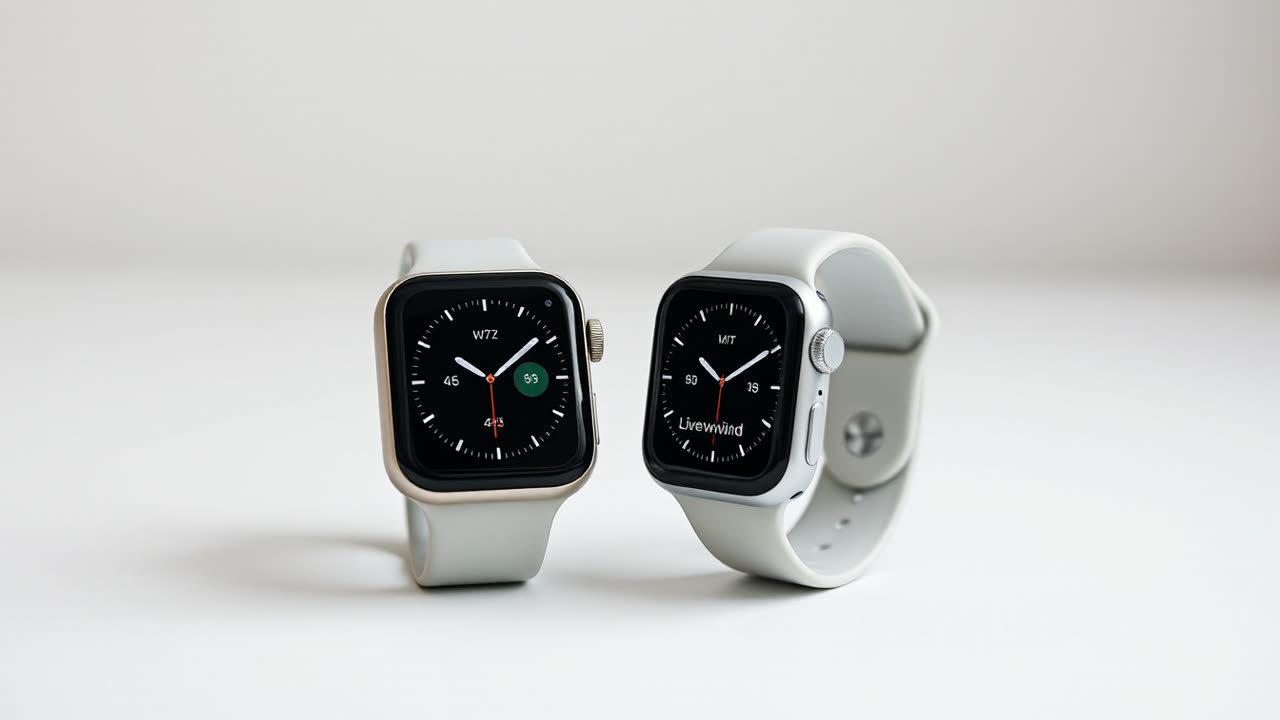
The Apple Watch Series 12 and Apple Watch Ultra 4, unveiled at the "Surprise and shine" event, represent a significant leap forward in wearable technology, particularly in their advanced health sensing capabilities and groundbreaking AI integration for audio transcription and summarization. These new models feature a "Health Sensing System" with upgraded optical and electrical heart sensors, enabling what Apple claims is "the most accurate heart rate sensing in a wearable". This system now measures Heart Rate Variability (HRV), a critical indicator of stress and recovery, every five minutes—a 24-fold increase in frequency compared to previous generations. The watches also introduce a new readiness score and a more comprehensive Vitals overview, integrating HRV into a holistic health picture.
Beyond enhanced biometric data, the Series 12 and Ultra 4 introduce "Audio Intelligence" features, including "Live Rewind" and "Siri Recap". Live Rewind allows users to double-press the Digital Crown to view the previous 15 seconds of a conversation as a text snippet on the watch, while Siri Recap provides AI-generated summaries of conversations, focusing on relevant points rather than full transcriptions. These features, designed with on-device processing and end-to-end encryption for iCloud storage, aim to balance utility with user privacy.
The impact of these advancements on users is profound. The dramatically improved heart rate and HRV monitoring offer a more granular and proactive approach to personal health. Users gain deeper insights into their physiological responses to stress, exercise, and recovery, potentially allowing for earlier detection of health anomalies and more informed lifestyle adjustments. The readiness score, a new addition, simplifies complex biometric data into actionable daily guidance, helping users understand their body's capacity for activity or rest. This shift empowers individuals to move beyond reactive health management to a more predictive and preventive model.
For the industry, these new Apple Watch models set an aggressive new benchmark, particularly in the convergence of advanced health tracking and sophisticated on-device AI. Previously, smartwatches like the Apple Watch Series 9 and Ultra 2 offered robust health features including ECG, blood oxygen measurement, temperature sensing, and sleep tracking. Competitors like the Samsung Galaxy Watch 6 series also provide advanced sleep coaching, personalized exercise analysis, and comprehensive heart health monitoring, including irregular heart rhythm notifications. Google's Pixel Watch 2 improved heart rate accuracy and introduced continuous electrodermal activity (cEDA) for stress monitoring. Garmin's Fenix 7 series, known for its ruggedness, boasts enhanced biometrics, more accurate VO2 max, heart rate, blood oxygen, and continuous stress monitoring.
However, the Series 12 and Ultra 4 push these capabilities significantly further. The 24x increase in HRV measurement frequency surpasses anything currently available in consumer wearables, offering a level of physiological insight previously confined to specialized medical devices. The integration of "Audio Intelligence" also marks a new frontier. While current smartwatches like the Apple Watch Series 9 offer on-device Siri for faster responses and the ability to access and log health data, and some smartwatches leverage AI for health insights, the Series 12 and Ultra 4's ability to passively transcribe and summarize conversations ("Live Rewind," "Siri Recap") is a novel application of AI in a wearable context. This feature, while raising privacy considerations, could revolutionize productivity, accessibility for the hearing impaired (via sound recognition), and memory retention, effectively turning the watch into an intelligent personal assistant that actively processes ambient information.
Compared to their hypothetical predecessors, the Series 11 and Ultra 3 (which would likely have built upon the Series 9 and Ultra 2's capabilities, adding incremental improvements in processing power, display brightness, and perhaps more refined existing sensors), the Series 12 and Ultra 4 represent a generational leap driven by a new "S11 chip" and a vastly more capable "Health Sensing System". The Series 9, for instance, featured an S9 SiP with a 4-core Neural Engine and a display up to 2,000 nits. The Ultra 2 also saw improvements in its S9 SiP, with a 30% faster GPU and a Neural Engine twice as fast as its predecessor. The Series 12 and Ultra 4 clearly leverage even more advanced silicon to power their intensive AI and sensing tasks, including background heart rate readings every 5 seconds.
Looking ahead, the trajectory set by the Apple Watch Series 12 and Ultra 4 suggests a future where wearables transition from passive data collectors to proactive, intelligent health and productivity co-pilots. Expect further advancements in non-invasive glucose monitoring and blood pressure sensing, which are persistent areas of research for wearables. The AI capabilities will likely expand, moving towards more predictive analytics for health conditions and even more seamless, context-aware assistance. The emphasis on on-device processing and end-to-end encryption for AI features will become a critical differentiator, as privacy concerns grow alongside the increasing sophistication of ambient intelligence. Apple's "Audio Intelligence" also hints at how the company might address privacy in future wearable form factors, such as smart glasses. The competitive landscape will intensify, forcing rivals to accelerate their own AI and sensor integration to keep pace with Apple's innovative blend of health, accessibility, and personal intelligence.
FACTS: How the new Apple Watches compare to the last-gen models — Apple rolled out the Apple Watch Series 12 and Apple Watch Ultra 4 at the "Surprise and shine" event. The new watches feature sizable improvements to the health sensors and tracking, plus the ability to recite audio transcriptions and summa (kaynak: The Verge AI, https://www.theverge.com/gadgets/990508/apple-watch-series-12-ultra-4-spec-comparison)