Apple Unveils iPhone 18 Pro, Pro Max with Groundbreaking Camera, A20 Pro Chip, and First Foldable iPhone Duo
Apple's latest flagship iPhones introduce a revolutionary 48MP Fusion Main camera, advanced on-device AI with the A20 Pro chip, and debut the company's first foldable device, the iPhone Duo, marking a significant shift in its product strategy and pricing.
✨ This content was summarized and interpreted by AI; it may contain errors — please verify accuracy with the original sources. Learn more
Listen to this story
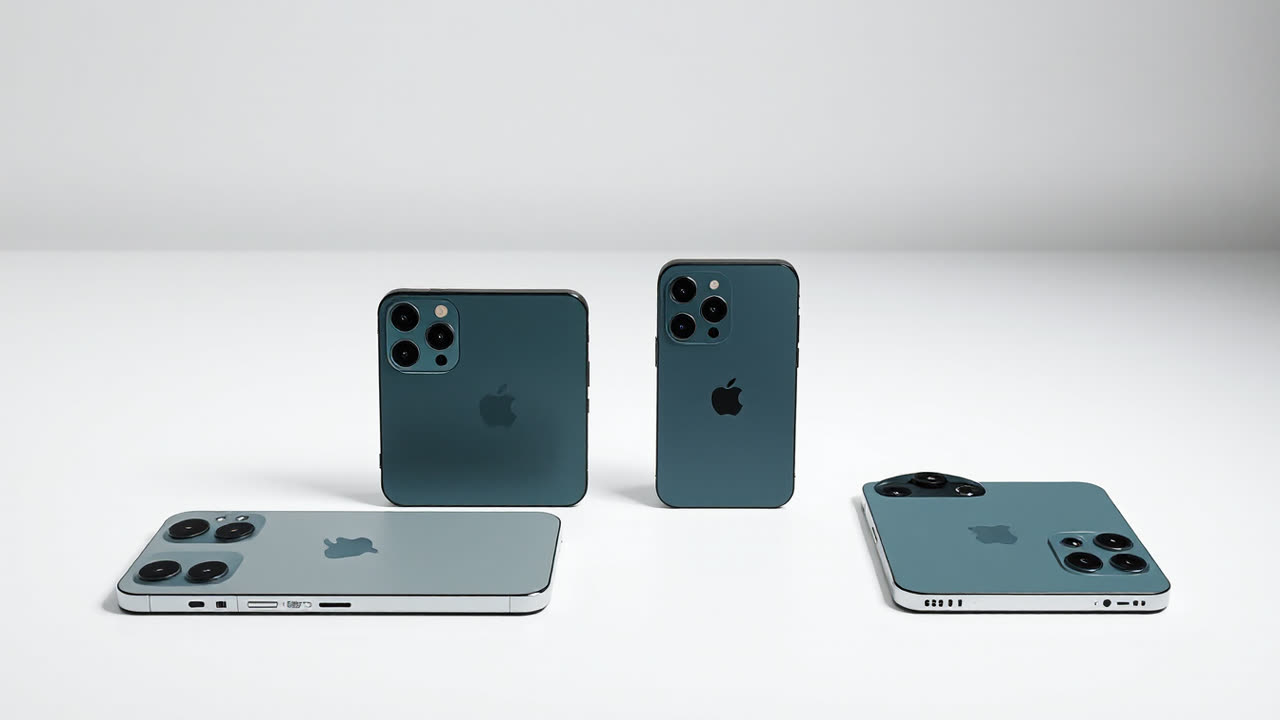
Apple has unveiled its iPhone 18 Pro and iPhone 18 Pro Max, introducing a groundbreaking 48MP Fusion Main camera with variable aperture, a significant leap in on-device AI capabilities powered by the new A20 Pro chip, and the longest battery life ever seen in an iPhone. Announced on September 9, 2026, with pre-orders beginning September 12 and general availability from September 18, these new models start at $1,199 for the iPhone 18 Pro and $1,299 for the iPhone 18 Pro Max, marking a $100 price increase over their predecessors. This launch also saw the introduction of Apple's first foldable device, the iPhone Duo, though the standard iPhone 18 model was notably absent, signaling a potential shift in Apple's traditional release strategy.
The core of the iPhone 18 Pro’s advancements lies in its photographic prowess and AI integration. The new 48MP Fusion Main camera, a first for iPhone, features a mechanical variable aperture that smoothly transitions between different f-stops (e.g., ƒ/1.48, ƒ/1.8, ƒ/2.8, ƒ/4.0), allowing for unprecedented creative control over depth of field and light intake. This innovation enables better low-light photography, crisper details in group shots, and more nuanced control for professional users, who can manually adjust aperture, shutter speed, and white balance through new Pro controls in the Camera app. Complementing this is an 18MP Center Stage selfie camera and a 48MP Ultra Wide lens with macro support, along with a 48MP Telephoto camera offering 12MP 8x optical zoom on the Pro models. Video capabilities are also enhanced with cinematic-style effects applicable after capture, 4K Dolby Vision HDR time-lapse, and AI-powered Smart Focus Tracking for moving subjects. A new Apple Reference Image feature provides image authentication, verifying that photos were captured by the iPhone camera and are not AI-generated.
Underpinning these features is the A20 Pro chip, built on a cutting-edge 2-nanometer process technology, which Apple touts as setting a new benchmark for mobile computing. The A20 Pro boasts a 6-core CPU with two "super cores" that are 20% faster than the A19 Pro, a 7-core GPU that is up to 40% faster, and a new Dual 16-core Neural Engine, doubling the AI processing power of the A19 Pro with a total of 32 cores. This significant boost in AI performance is crucial for the deeply integrated Siri AI, powered by Apple Intelligence in iOS 27, which is designed to be profoundly more personal, capable, and conversational, leveraging on-device processing for enhanced privacy and security. Siri AI, rolling out in beta in English with iOS 27, can search Mail and Messages, interpret on-screen content, use camera context, and interact with over 300,000 third-party apps.
The impact of these advancements on users is substantial, offering a genuinely more powerful and versatile mobile experience. The variable aperture camera provides tools previously limited to professional-grade equipment, democratizing advanced photography. The enhanced on-device AI, particularly with the new Siri AI, promises a more seamless and intelligent interaction with the device, moving beyond simple commands to contextual understanding and proactive assistance. For instance, Siri AI can now utilize the camera for context, allowing for more intuitive interactions. Battery life has also seen a significant leap, with the iPhone 18 Pro Max offering up to 45 hours of video playback and 30 hours of typical use, while the iPhone 18 Pro manages up to 36 hours of video playback and 24 hours of typical use, partly due to the A20 Pro's efficiency and larger battery designs. Fast charging is also improved, with up to 50% charge in about 15 minutes for wired charging and 30 minutes for wireless charging.
Industrially, Apple's moves intensify competition, particularly in the premium smartphone segment. The introduction of the iPhone Duo, Apple's first foldable, directly challenges Samsung's long-standing dominance in the foldable market, potentially expanding the category to a broader audience. The iPhone 18 Pro's camera innovations, especially variable aperture, push rivals like Samsung's Galaxy S26 Ultra and Google's Pixel 11 Pro to innovate further in photographic hardware beyond mere megapixels. While the Galaxy S26 Ultra still boasts a 200MP main camera and the Pixel 11 Pro offers a sharper display (3,600 nits peak brightness vs. iPhone 18 Pro's 3,000 nits) and a promising camera setup, Apple's A20 Pro chip arguably maintains a performance lead over rivals like Google's Tensor G6. The strategic decision to delay the standard iPhone 18 until early 2027, focusing on higher-margin Pro models and the new foldable for the initial launch, suggests Apple is prioritizing profitability and supply chain management amidst rising component costs. This could also create a second annual peak for iPhone sales, altering the traditional smartphone release calendar.
Looking ahead, Apple's emphasis on on-device AI with the A20 Pro and Siri AI suggests a future where personal context and privacy are paramount, potentially setting a new standard for intelligent personal assistants. The expansion of Apple Intelligence to 16 languages and Siri AI to multiple languages beyond English by October indicates a global push for this advanced AI experience. The foldable iPhone Duo hints at a broader diversification of Apple's hardware portfolio, potentially leading to more experimental form factors and a deeper integration of its ecosystem across various device types. However, the $100 price increase for the Pro models, reaching $1,199 and $1,299 respectively, coupled with analyst warnings about potential stock weakness post-launch and a projected decrease in total iPhone 18 production compared to the previous year, indicates that Apple is navigating a delicate balance between innovation, cost, and market demand. The success of this strategy will depend on whether consumers perceive the significant advancements in camera, AI, and battery life as sufficient justification for the higher price point, and how effectively Apple's integrated ecosystem can differentiate itself in an increasingly competitive and AI-driven smartphone landscape.