Apple Unveils Watch Series 12 and Ultra 4 with "Audio Intelligence," Redefining Wearable Memory
Apple's latest Watch models introduce AI-powered 'Audio Intelligence' to passively summarize daily conversations, transforming the device into a personal memory assistant and signaling a major strategic shift into ambient computing.
✨ This content was summarized and interpreted by AI; it may contain errors — please verify accuracy with the original sources. Learn more
Listen to this story
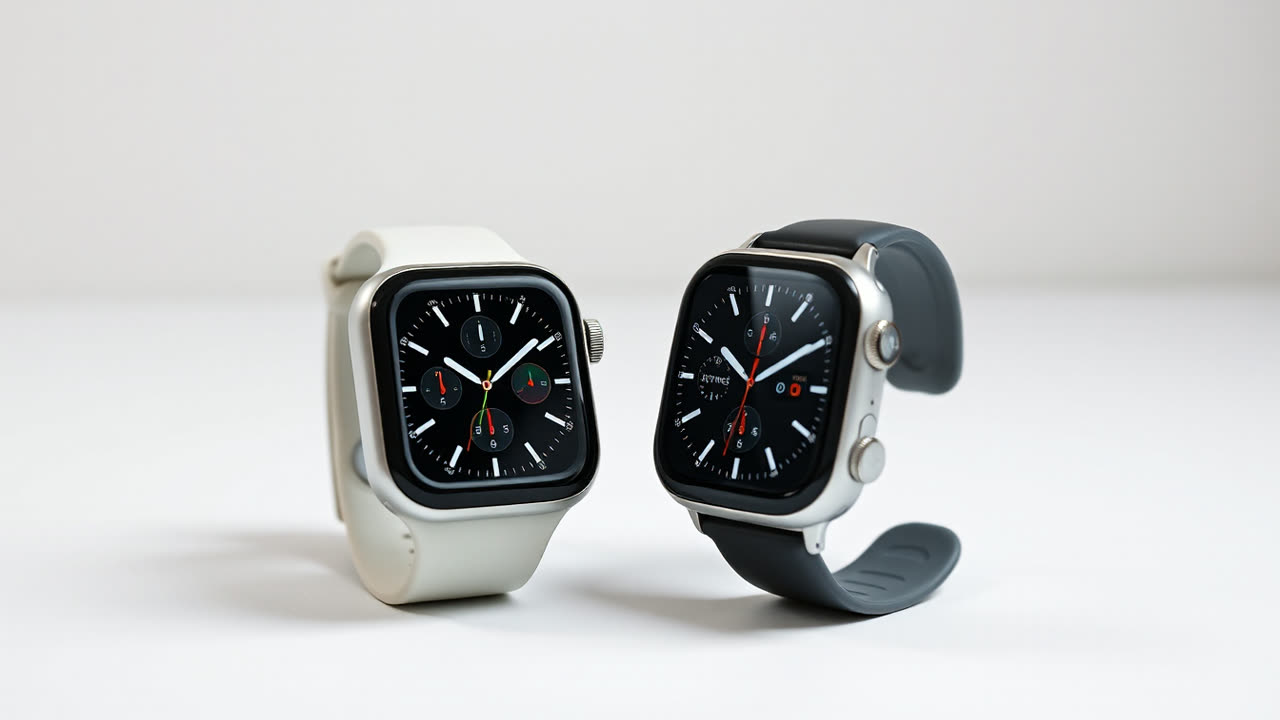
Apple's unveiling of the Watch Series 12 and Watch Ultra 4 today, September 9, 2026, marks a pivotal moment, not for iterative hardware improvements, but for a bold leap into "Audio Intelligence"—a suite of AI-powered features designed to passively capture and intelligently summarize daily conversations and interactions, fundamentally reshaping the wearable's role from a health tracker to a personal, proactive memory assistant. This groundbreaking functionality, allowing users to "rewind moments" and "remember details" from their day, positions Apple directly against the burgeoning wave of dedicated AI wearables and signals a significant strategic shift in the company's approach to ambient computing.
The core of this innovation lies in the Watch's enhanced on-device processing capabilities and a sophisticated neural engine, which continuously listens for spoken interactions, transcribing and analyzing them in real-time, then distilling key information into digestible summaries accessible on the watch face or through a companion app. For instance, a user might receive a notification at the end of the day recapping "Key discussion points from the morning team meeting: Project X deadline moved to Friday, remember to follow up with Sarah on budget". This moves beyond simple voice recording, employing advanced natural language processing to identify salient facts, action items, and names, thereby offering a highly contextual and personalized memory aid. The Watch Series 12 starts at $499, while the more robust Ultra 4, designed for extreme environments, begins at $799, both available for pre-order today and shipping next week.
The implications for users are profound, potentially alleviating the cognitive load of remembering myriad daily details and freeing mental bandwidth for more creative or strategic tasks. Professionals could benefit from instant recall of meeting specifics, students from lecture summaries, and individuals from remembering casual social commitments. However, the "Audio Intelligence" also raises substantial privacy concerns. While Apple emphasizes on-device processing and end-to-end encryption for any cloud-synced data, the very act of a device constantly listening to private conversations will undoubtedly spark debate about data security, consent, and the potential for misuse, even if unintentional. Apple's success will hinge on transparent communication about data handling and robust user controls, allowing granular permission settings for recording and summarization.
Compared to prior generations, which focused primarily on fitness tracking, health monitoring (ECG, blood oxygen), and basic smart notifications, the Series 12 and Ultra 4's AI upgrade represents a paradigm shift. Previous Apple Watches offered voice dictation and Siri interactions, but never the passive, intelligent summarization of ambient audio. This new capability directly challenges emerging AI-first wearables like the Humane AI Pin and Rabbit R1, which prioritize AI interaction and context awareness over traditional smartwatch functions. While those devices have struggled with practical integration and a clear value proposition, Apple integrates its AI directly into a mature, widely adopted ecosystem, leveraging existing user habits and a proven hardware platform. Unlike its rivals, which often require explicit prompts, Apple's approach appears more ambient and anticipatory, aiming for seamless integration into daily life rather than requiring a new interaction paradigm.
Looking ahead, Apple's foray into "Audio Intelligence" is likely just the beginning of a broader strategy to embed generative AI deeply within its ecosystem, moving towards a more proactive and context-aware user experience across all its devices. We can anticipate future iterations expanding beyond audio to integrate visual cues from cameras on other Apple devices, creating a richer, multimodal understanding of a user's day. This could lead to a truly personalized digital assistant that anticipates needs, offers timely reminders, and even drafts communications based on observed interactions, blurring the lines between personal memory and digital augmentation. The immediate challenge for Apple will be to refine the accuracy of its summaries, navigate the complex ethical landscape of pervasive listening, and convince users that the convenience outweighs the inherent privacy trade-offs. If successful, this move could solidify the Apple Watch's position as the indispensable hub of personal intelligence, extending Apple's influence deeper into the fabric of daily human experience.