Apple Vision Pro Achieves Medical Milestone in Hip Surgery with FDA-Authorized Stryker Software
Apple's spatial computing device successfully guided a hip arthroscopy procedure using Stryker's FDA-authorized SportSuite Vision software, marking its critical entry into the operating room.
✨ This content was summarized and interpreted by AI; it may contain errors — please verify accuracy with the original sources. Learn more
Listen to this story
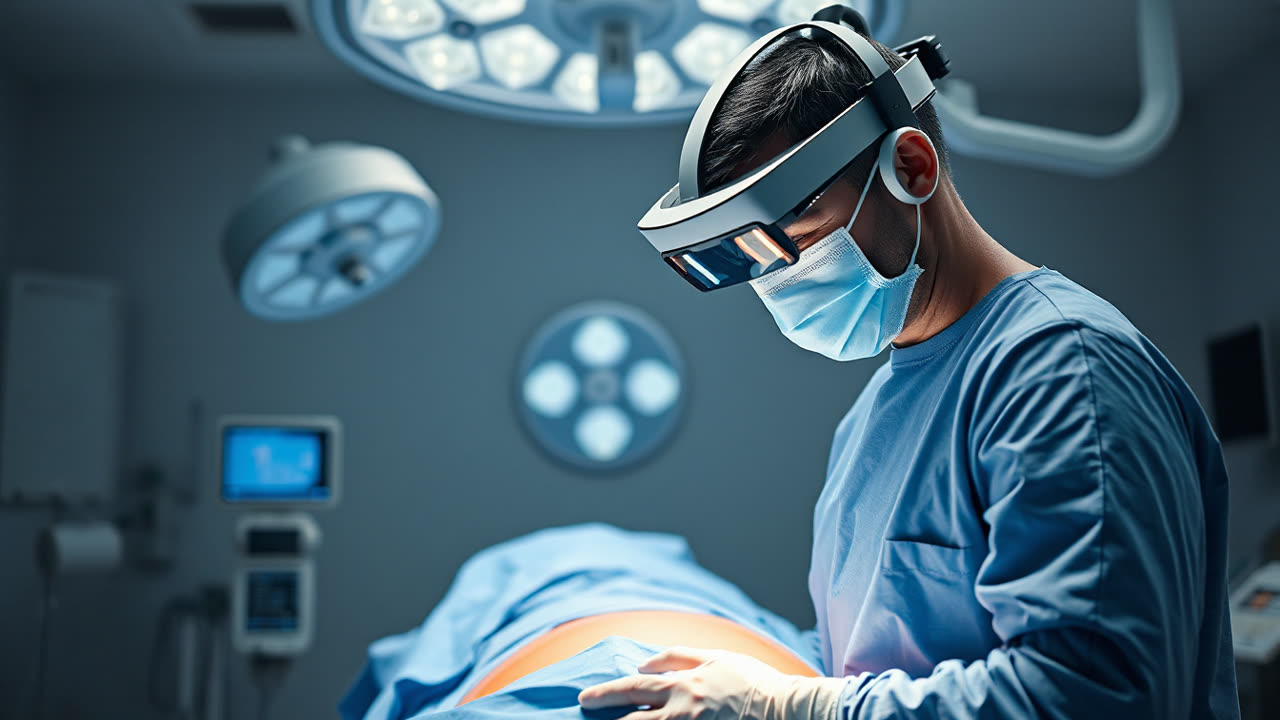
The Apple Vision Pro achieved a significant medical milestone with its successful deployment in a hip arthroscopy procedure, leveraging Stryker's SportSuite Vision software, which received De Novo authorization from the FDA in July. This landmark event marks a tangible, high-stakes application for Apple’s spatial computing device beyond its initial consumer and enterprise productivity focus, thrusting it into the operating room as a critical surgical aid. The procedure, performed by Dr. Benedict Nwachukwu at Hospital for Special Surgery (HSS) in New York, utilized the Vision Pro to overlay digital information directly onto the surgeon’s field of view, providing real-time anatomical insights and guidance during the complex minimally invasive surgery.
This integration of spatial computing into orthopedic surgery is transformative, offering surgeons an unprecedented level of precision and data visualization that fundamentally alters the surgical workflow. Traditionally, surgeons rely on external monitors, requiring them to constantly shift their gaze between the patient and screens, which can disrupt focus and introduce micro-delays. With SportSuite Vision on the Vision Pro, crucial data such as patient-specific anatomy, surgical plans, and instrument tracking information are seamlessly integrated into the surgeon's direct line of sight, superimposed onto the actual surgical field. This "eyes-up" approach minimizes cognitive load, enhances spatial awareness, and potentially reduces operative time and improves outcomes by ensuring instruments are precisely positioned and procedures are executed according to plan. For patients, this could translate into less invasive surgeries, quicker recovery times, and a reduced risk of complications.
The FDA's De Novo authorization for Stryker’s SportSuite Vision is particularly significant. Unlike 510(k) clearance, which applies to devices substantially equivalent to existing ones, De Novo authorization is granted to novel low-to-moderate risk devices for which no predicate exists, establishing a new regulatory classification. This signals the FDA's recognition of the unique capabilities and safety profile of this spatial computing application in a clinical setting, paving the way for broader adoption of similar technologies. Stryker, a global leader in medical technology, has long been at the forefront of surgical navigation, with its Mako SmartRobotics system already well-established for robotic-assisted orthopedic procedures. The SportSuite Vision software represents an evolution of this expertise, moving from fixed robotic platforms to a more portable, immersive AR interface.
While augmented reality (AR) and virtual reality (VR) have been explored in medicine for training and planning for years, their direct, real-time application in critical surgical navigation has faced hurdles related to latency, accuracy, regulatory approval, and user experience. Prior AR surgical navigation systems often relied on less powerful hardware or tethered solutions, limiting their practicality. The Apple Vision Pro, with its high-resolution displays, advanced spatial tracking, and powerful R1 chip designed for near-zero latency, addresses many of these challenges, providing a robust platform for demanding medical applications. Its untethered design allows for greater mobility in the operating room, and its intuitive interface, familiar to many clinicians from Apple’s ecosystem, could ease adoption barriers. Competitors in the broader surgical AR space, such as Medivis with its SurgicalAR platform, or various research initiatives exploring Microsoft HoloLens in surgery, have demonstrated potential. However, the combination of Apple's hardware prowess, Stryker's established medical market presence, and critical FDA authorization positions SportSuite Vision uniquely to accelerate the integration of spatial computing into mainstream surgical practice.
Looking ahead, the successful deployment and regulatory approval of SportSuite Vision on the Apple Vision Pro marks a pivotal moment for both medical technology and spatial computing. This initial success in hip arthroscopy is likely just the beginning. The principles of overlaying critical data onto a surgeon's field of view are transferable across numerous surgical specialties, from neurosurgery to cardiovascular procedures, where precision and real-time information are paramount. We can anticipate a rapid expansion of similar FDA-approved applications, potentially leading to a new era of "assisted surgery" where human skill is augmented by seamless digital intelligence. For Apple, this validates the Vision Pro's potential as a professional-grade tool far beyond entertainment, potentially opening vast new markets in healthcare. However, challenges remain, including the high cost of the Vision Pro ($3,499), the need for extensive surgeon training, and ensuring seamless integration with existing hospital IT infrastructure and data privacy protocols. The next phase will involve rigorous clinical studies to quantify improved patient outcomes and cost-effectiveness, paving the way for widespread adoption and solidifying spatial computing's role as an indispensable tool in modern medicine.