Apple Wallet's Digital Driver's Licenses See Widespread US Expansion
The integration of driver's licenses into Apple Wallet has steadily expanded across the United States, offering a convenient and secure digital alternative to physical identification for residents in a growing number of states.
✨ This content was summarized and interpreted by AI; it may contain errors — please verify accuracy with the original sources. Learn more
Listen to this story
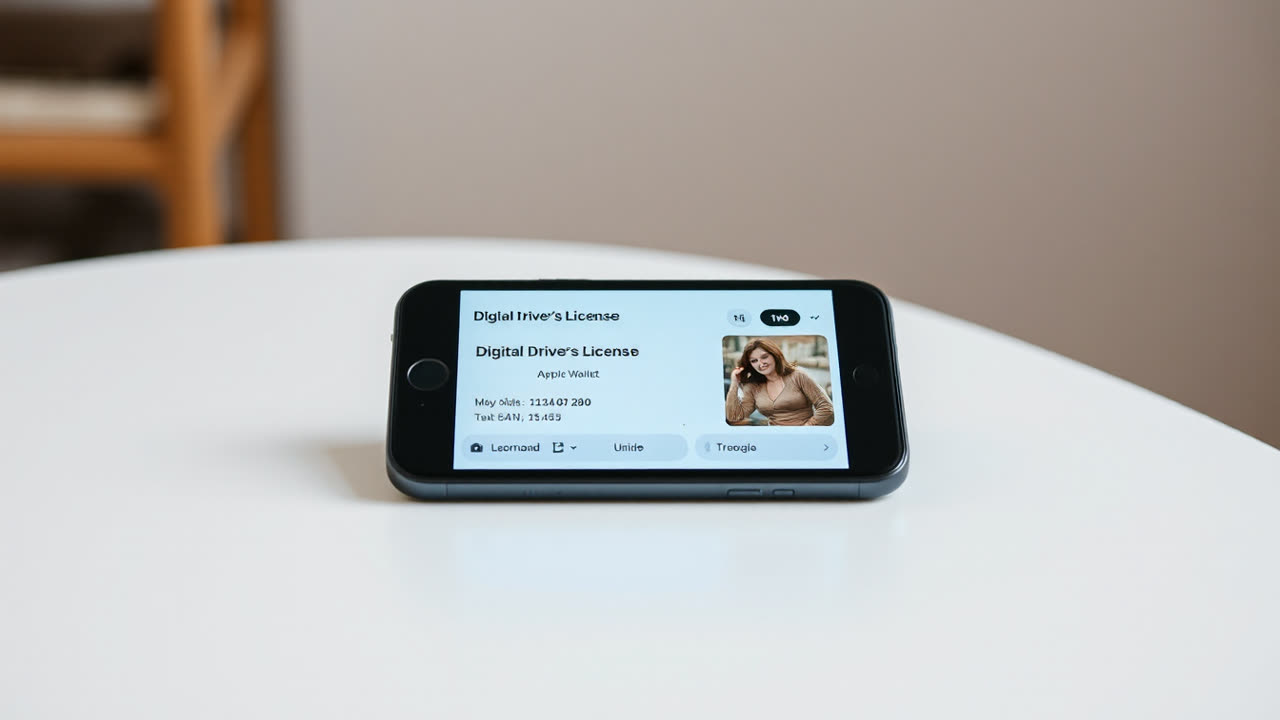
The integration of driver's licenses into Apple Wallet has steadily expanded across the United States, offering a convenient and secure digital alternative to physical identification for residents in a growing number of states. As of late 2026, over a dozen states and territories, including Arizona (since March 2022), Maryland (May 2022), Colorado (November 2022), Georgia (May 2023), Ohio (July 2024), Hawaii (August 2024), California (September 2024), Iowa (October 2024), New Mexico (December 2024), Montana (August 2025), North Dakota (September 2025), West Virginia (October 2025), Illinois (November 2025), Arkansas (May 2026), Oklahoma, Virginia, and Puerto Rico, enable users to store a digital version of their driver's license or state ID on their iPhone and Apple Watch. Utah is also an early adopter of mobile IDs with broad in-state usability, and its integration into Apple Wallet is anticipated. Looking ahead, North Carolina's DMV plans to introduce support for Apple Wallet in early 2027. Beyond state-issued IDs, Apple also launched a "Digital ID" feature in November 2025, allowing U.S. passport holders to add their passport information to Wallet, which offers a universal identification method independent of state-specific rollouts.
Adding a driver's license or state ID to Apple Wallet is a straightforward process, initiated by opening the Wallet app on an iPhone (iPhone 8 or later with iOS 15.4 or later is generally required, though some states like California demand iPhone XS or later with iOS 17.5). Users tap the "Add Card" button, select "Driver's License or ID Cards," and choose their state. The process involves scanning the front and back of the physical license in a well-lit area and then verifying identity through a series of facial movements and a selfie, which are encrypted and evaluated for fraud prevention. The credential is then securely stored on the device's Secure Enclave, requiring biometric authentication (Face ID or Touch ID) for access and presentation.
This technological shift carries significant implications for both users and the broader identity verification industry. For users, the primary benefit is unparalleled convenience. Carrying a physical wallet becomes less essential when a driver's license, alongside payment cards and transit passes, resides securely within a device many already carry everywhere. The security architecture is also a major advantage over traditional physical cards. Digital IDs are encrypted, and personal information is only shared after explicit user authorization via Face ID or Touch ID. Crucially, Apple and the issuing state authorities do not track when or where a digital ID is presented. Furthermore, selective disclosure allows users to share only the necessary information (e.g., confirming age without revealing a full address), enhancing privacy during transactions. This contrasts sharply with physical IDs, which often expose all personal data regardless of the information required.
The industry impact is equally profound. The move towards mobile driver's licenses (mDLs) represents a critical evolution in digital trust infrastructure. These government-issued digital credentials, cryptographically signed by the issuing authority, are substantially more difficult to counterfeit than traditional plastic cards, offering enhanced security for relying parties. The Transportation Security Administration (TSA) has been a key early adopter, accepting Apple Wallet IDs at over 250 airports nationwide for domestic travel identity verification. This streamlines airport security, allowing travelers to tap their iPhone or Apple Watch on an identity reader and consent to share their information, often with an accompanying photo capture by the TSA for comparison. Beyond airports, select businesses and organizations are beginning to accept these digital IDs for in-person age and identity verification, and the functionality is extending to participating apps and online services.
While Apple leads in this space, it operates within a broader ecosystem. Google Wallet and Samsung Wallet also support digital driver's licenses and state IDs in various states, with the TSA accepting IDs from multiple platforms. Some states also maintain their own dedicated mobile ID applications, demonstrating a fragmented but converging landscape for digital identity. The American Association of Motor Vehicle Administrators (AAMVA) plays a crucial role in standardizing mDLs, advocating for touchless transactions, selective information release, and data protection.
Despite the growing adoption and robust security features, the widespread utility of digital IDs is still evolving. Users are still advised to carry their physical ID, as digital versions are not yet universally accepted by law enforcement or in many other scenarios where proof of identity or age is required. Cybersecurity experts also raise valid concerns about device dependency; the loss, theft, or compromise of a single device could create significant challenges for identity access, even with Apple's hardened security. Privacy advocates worry about the potential for increased identity checks and expanded surveillance, despite Apple's assurances of user control and data isolation.
Looking ahead, the trajectory for digital IDs in Apple Wallet points towards continued, albeit gradual, expansion. The fragmented state-by-state rollout is a bottleneck, but momentum suggests that most U.S. states will eventually support mDLs, potentially reaching near-complete coverage by 2030. The focus will shift from mere availability to broader acceptance across various sectors, including retail, healthcare, and government services. Innovations in digital age verification could also see these IDs being used for age-restricted purchases like alcohol delivery or even access to sensitive online services, as hinted by discussions around AI model access. The ongoing challenge will be to balance the undeniable convenience and enhanced security of digital identification with privacy considerations and the need for universal acceptance, ensuring that this technological leap truly empowers users without inadvertently creating new vulnerabilities or expanding surveillance capabilities.
FACTS: How to add your driver's license to Apple Wallet and where you can use it — Your Apple Wallet can hold more than cards; those in certain states can also store a digital copy of their driver's license. (kaynak: Engadget, https://www.engadget.com/2252801/how-to-add-drivers-license-apple-wallet/)