Apple Watch Gets 'Siri Recap' for Ambient AI Summaries, Sparking Privacy Debate
Apple's new Siri Recap feature for Apple Watch Series 12 and Ultra 4 offers on-device AI summarization of daily events and conversations, raising significant privacy questions despite a 'privacy-first' design.
✨ This content was summarized and interpreted by AI; it may contain errors — please verify accuracy with the original sources. Learn more
Listen to this story
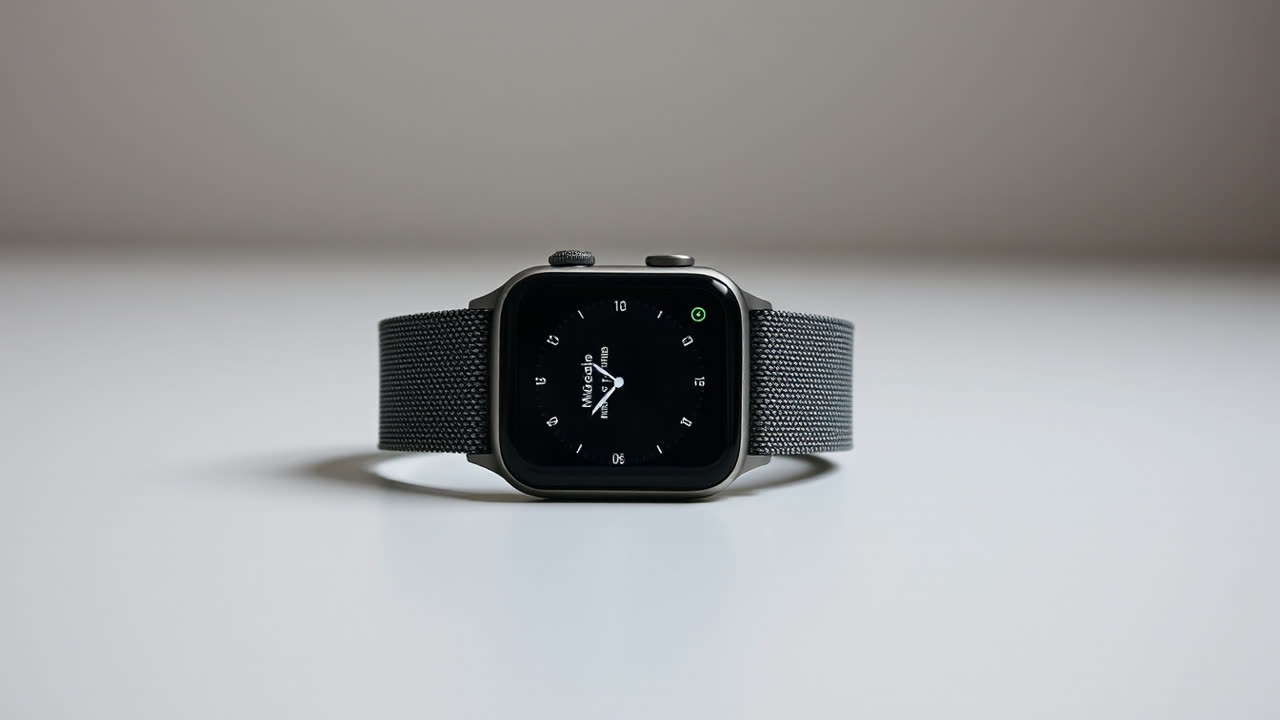
Apple has unveiled Siri Recap, a groundbreaking new Audio Intelligence feature for the Apple Watch Series 12 and Apple Watch Ultra 4, designed to summarize daily events and conversations without storing raw audio. This aggressive move into ambient AI positions the Apple Watch as an always-listening personal assistant, a significant shift from its traditional role as a health and fitness tracker. The feature leverages a new Health Sensing System and the S11 chip in the latest Watch models, along with "Private Cloud Compute" servers, to process audio and other sensor data on-device, generating high-level summaries of interactions and activities. Users can activate Siri Recap to run all day, on-demand, or in specific locations, with the generated summaries stored in a redesigned Siri app.
The implications for users are substantial, offering a powerful tool for information retention and productivity. Imagine attending a day of back-to-back meetings: Siri Recap could distill hours of discussion into key decisions, action items, and important takeaways, eliminating the need for meticulous note-taking and allowing for greater presence in conversations. This extends beyond professional settings, potentially aiding in remembering details from personal conversations, appointments, or even casual recommendations. For individuals with memory challenges or those who are deaf or hard of hearing, the "Audio Intelligence" suite, which also includes Sound Recognition for alerts to sirens or doorbells, and Live Rewind to replay the last 15 seconds of a conversation, represents a significant accessibility advancement. The ability to recall missed details could fundamentally change how users interact with their environment and retain information, enhancing daily efficiency and reducing cognitive load.
However, the "always-listening" nature of Siri Recap immediately raises profound privacy concerns, echoing past debates around smart speakers and other ambient recording devices. Apple is acutely aware of this, emphasizing a "privacy-first" approach. The company asserts that Siri Recap does not store audio recordings or generate transcripts, and that the raw audio is processed live and immediately discarded, inaccessible even to Apple itself. The processing is said to occur on-device, leveraging secure audio processing hardware in the Apple Watch Series 12 and Ultra 4. This on-device processing architecture is crucial, as it theoretically keeps sensitive personal data from leaving the user's control. Yet, the perception of a device constantly listening remains a hurdle, with some likening it to a "wearable surveillance system" or drawing parallels to dystopian sci-fi scenarios. Apple's success will hinge on transparent communication and demonstrable security, as user trust is paramount for widespread adoption of such an intimate technology.
Comparing Siri Recap to existing solutions, apps like Granola offer similar AI-powered summarization, primarily for virtual meetings. Granola, a desktop-first AI notepad, captures device audio to generate summaries, action items, and follow-up drafts, often blending user notes with a full transcript. A key distinction is Granola's "no-bot" model, where it records device audio in the background without a visible participant, shifting the burden of consent disclosure to the user. While effective for focused meeting environments, Granola typically works on computers and iOS, and often relies on full transcripts. Siri Recap, conversely, operates directly on the Apple Watch, integrating ambiently across a user's entire day and explicitly *not* storing audio or providing transcripts, aiming for a broader, more seamless integration into daily life rather than just scheduled meetings. This on-wrist, continuous, and audio-discarding approach is Apple's unique answer to the pervasive AI summarization trend, which has also seen growth in contact centers and executive productivity tools.
This launch signifies a pivotal moment in Apple's broader AI strategy, indicating a strong pivot towards "agentic tools" and on-device intelligence. The Apple Watch, with its constant proximity to the user, is becoming a primary interface for this vision, moving beyond health metrics to offer comprehensive personal assistance. This strategy could serve as a testing ground for future AI wearables, particularly smart glasses, where always-on audio and visual intelligence will be even more central. The future trajectory suggests an Apple ecosystem where AI proactively anticipates user needs, offering contextual assistance and insights without explicit prompts. The company will likely continue to refine the underlying AI models, enhance the contextual understanding of Siri Recap, and potentially expand its capabilities to other devices, all while navigating the delicate balance between utility and privacy. The success of Siri Recap will not only shape the future of the Apple Watch but also set a precedent for how ambient AI is integrated into our most personal technologies.