Apple Watch on Android: A Limited Reality Thanks to Third-Party Apps
Third-party applications like Merge Watch now allow Android users to pair their Apple Watch, offering a functional workaround for cross-platform compatibility despite significant limitations.
✨ This content was summarized and interpreted by AI; it may contain errors — please verify accuracy with the original sources. Learn more
Listen to this story
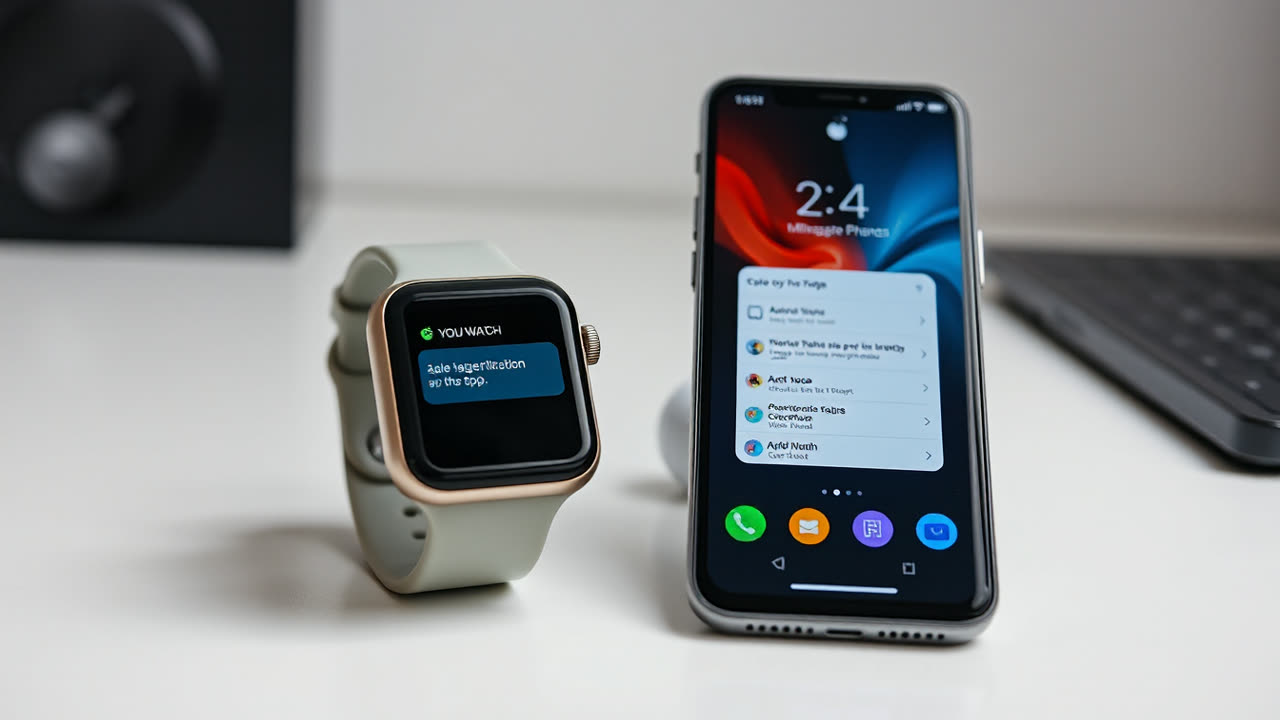
For users transitioning from iPhone to Android, the once-unthinkable prospect of retaining their Apple Watch has become a limited reality, thanks to third-party applications like Merge Watch, which facilitates a cross-platform connection previously considered impossible. This innovative solution, available on both the Apple Watch App Store and Google Play Store, allows Android users to pair their Apple Watch, offering a lifeline for those deeply invested in Apple's wearable ecosystem but opting for an Android smartphone. However, this newfound compatibility arrives with significant caveats, positioning it as a functional workaround rather than a seamless integration.
The core functionality of Merge Watch involves an initial, unavoidable setup of the Apple Watch with an iPhone, which is crucial for activation, Apple ID linking, app installation, and cellular enablement for LTE models. Once configured, the Merge Watch app is installed on both the Apple Watch and the Android device, requiring extensive permissions for Bluetooth, health data, notification access, and battery optimization. This process then allows for notification mirroring from the Android phone to the Apple Watch, enabling users to receive alerts for calls, text messages, and social apps directly on their wrist. Furthermore, basic independent functions such as step counting, heart rate monitoring, and internal Apple Watch apps continue to operate, with health data syncing to Google Fit. Cellular-enabled Apple Watch models can also make and receive calls and texts independently if the SIM card is moved to the Android device, though full iMessage support is absent.
This development matters profoundly for users, particularly those who value the Apple Watch's polished experience and advanced health tracking but are drawn to the flexibility or features of Android phones. It mitigates the financial and experiential burden of having to abandon a premium wearable, such as the Apple Watch Series 10, which starts at approximately $399. Yet, the experience is far from ideal. Critical features like Apple Pay, direct app downloads and updates, full messaging capabilities (including WhatsApp and SMS from Android), and comprehensive Siri commands remain largely inaccessible or severely limited without a paired iPhone. Notifications, while mirrored, can suffer from delays, and the Android phone may still buzz simultaneously, indicating a less sophisticated notification management system compared to native iOS integration. The Merge Watch app itself reportedly operates on a monthly subscription model, adding a recurring cost to this compromised experience.
From an industry perspective, this workaround underscores the enduring appeal of the Apple Watch, which, despite its "walled garden" ecosystem, remains a dominant force in the global smartwatch market. In Q1 2026, Apple commanded a 23% market share, with shipments increasing by 21% year-over-year, showcasing its robust growth even as the overall market saw a slight decline in Q2 2026. This contrasts with Android-based smartwatches, which collectively held a 28% market share in 2025. Apple's deliberate design choice to integrate the Apple Watch deeply within its iOS ecosystem, employing proprietary protocols and software, makes official Android compatibility highly unlikely; internal efforts like "Project Fennel" aimed at cross-platform support were reportedly canceled.
This situation also highlights the competitive landscape for Android smartwatch manufacturers. Rivals like Google and Samsung continue to enhance their offerings to provide compelling, natively integrated experiences for Android users. The Google Pixel Watch 3, launched on September 10, 2024, starts at $349 for the 41mm Bluetooth model and runs Wear OS 5 (with Wear OS 6 expected later in 2025). It boasts improved heart rate accuracy, Bluetooth 5.3, Wi-Fi 5GHz, Ultra Wideband for Watch Unlock, faster charging, and deep Google app integration, including Nest Doorbell live feeds and AI-powered Call Screening Assist. Similarly, the Samsung Galaxy Watch 7, released on July 24, 2024, starting at $299.99 for the 40mm variant, integrates Galaxy AI features like an "Energy Score" for wellness tracking. These devices offer seamless pairing, full app management, and comprehensive health data syncing within the Android ecosystem, features that third-party Apple Watch solutions cannot replicate.
Looking ahead, the emergence of apps like Merge Watch, while imperfect, will likely continue to exist as long as a significant user base desires Apple's hardware design and certain core functionalities outside its native ecosystem. However, these solutions will always be constrained by Apple's stringent platform policies and proprietary technologies. For most Android users, the practical choice in 2026 remains a smartwatch designed specifically for their operating system, such as those running Wear OS, which offer a full, uncompromised feature set and deep integration. The global smartwatch market is projected for substantial growth, from $95.81 billion in 2026 to $600.19 billion by 2034, at a compound annual growth rate of 25.78%. This booming market will continue to incentivize both Apple and Android manufacturers to innovate within their respective ecosystems, making true cross-platform synergy for premium wearables a distant, if not impossible, dream for the foreseeable future.