Aptera's Solar EV Verified: 4.75 kWh Daily Energy Harvest Confirmed by TÜV Rheinland
Aptera's solar electric vehicle can generate an impressive 4.75 kWh of usable energy daily from the sun, a figure now independently verified by TÜV Rheinland, establishing a new benchmark for energy harvesting in personal vehicles.
✨ This content was summarized and interpreted by AI; it may contain errors — please verify accuracy with the original sources. Learn more
Listen to this story
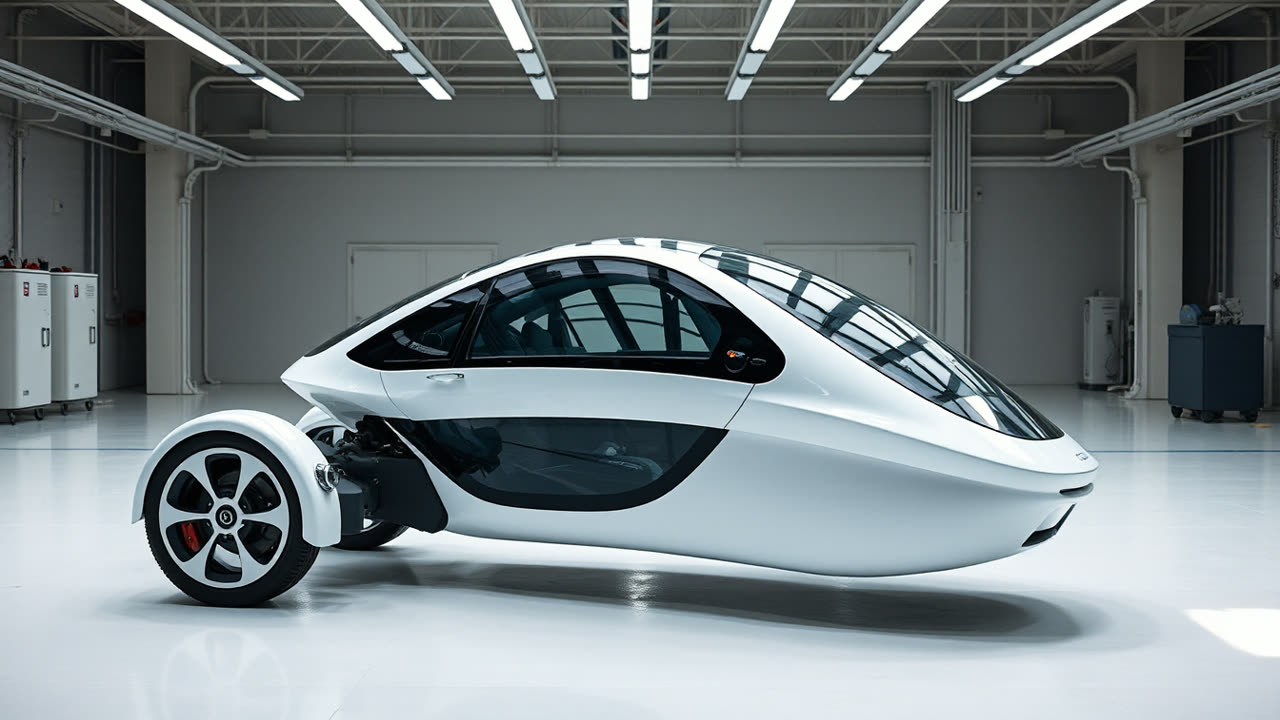
Aptera's solar electric vehicle can generate an impressive 4.75 kWh of usable energy daily from the sun, a figure now independently verified by TÜV Rheinland, the esteemed 150-year-old German testing and certification body. This validation marks a pivotal moment, shifting the conversation around solar-integrated transportation from theoretical potential to independently confirmed practical capability, and establishing a new benchmark for energy harvesting in personal vehicles. The implications extend far beyond a mere technical specification, signaling a tangible step towards genuine energy independence for daily commuters and a significant disruption to the established EV charging paradigm.
This independently verified energy yield translates directly into substantial daily range without reliance on grid power. For Aptera's lightweight, aerodynamically optimized three-wheeler, which boasts an efficiency of roughly 10 miles per kWh, 4.75 kWh could provide up to 47.5 miles of additional range each day. This capability fundamentally alters the ownership proposition, particularly for drivers with average daily commutes, many of whom travel less than 30 miles. Such users could theoretically operate their vehicle for extended periods, or even indefinitely, without ever needing to plug into a charging station, effectively making grid charging an optional convenience rather than a necessity. The freedom from charging infrastructure, especially in areas with limited public chargers or for users with no home charging access, represents a profound liberation that no conventional EV currently offers.
The significance of TÜV Rheinland's stamp of approval cannot be overstated. In an industry often characterized by ambitious claims and nascent technologies, a rigorous, third-party validation from an organization with such a long-standing reputation for impartiality and technical expertise lends immense credibility. It moves Aptera's solar charging claims out of the realm of startup hype and into the domain of verified engineering achievement. This validation is crucial for consumer confidence, investor interest, and regulatory acceptance, paving the way for broader adoption and potentially influencing future design standards for solar integration in vehicles. It also provides a clear, verifiable metric against which other solar EV aspirants will inevitably be measured.
Aptera's approach contrasts sharply with other ventures into solar integration. While some conventional EVs, like certain Hyundai Ioniq 5 and Kia EV6 models, offer small solar roof panels, their output is typically minimal, often only enough to power ancillary systems or trickle-charge the 12V battery, contributing negligible range. Even more ambitious projects, such as the now-defunct Sono Motors Sion or the struggling Lightyear, aimed for significant solar contributions but faced substantial hurdles in scaling production and achieving commercial viability. Lightyear, for instance, pivoted its strategy after its Lightyear 0 proved prohibitively expensive, focusing instead on a more accessible Lightyear 2. Aptera's unique design, prioritizing extreme efficiency through its lightweight composite body, three-wheel configuration, and ultra-low drag coefficient (a claimed Cd of 0.13), is integral to making its solar yield so impactful. Its integrated solar panels cover a larger, more optimized surface area than typical car roofs, allowing for this impressive energy capture. The vehicle’s battery packs, ranging from 25 kWh to 100 kWh, provide overall ranges from 250 to 1,000 miles, making the daily solar contribution a substantial top-up rather than a primary energy source for long trips, but a game-changer for daily use.
Looking ahead, this independent verification is likely to accelerate Aptera's production roadmap. The company has been working towards delivering its Launch Edition vehicles, with significant pre-order numbers suggesting strong consumer interest. As of early 2026, Aptera was still refining its manufacturing processes and supply chain, with initial deliveries anticipated later in the year. This validation could attract further investment, solidify partnerships, and potentially expedite the transition from pilot production to mass manufacturing. The success of Aptera, underpinned by verified performance, could also spur greater innovation across the automotive sector. Mainstream manufacturers, who have largely shied away from significant solar integration due to cost, complexity, and perceived low yield, might now revisit their strategies. The potential for vehicles to offset a portion of their energy consumption, reducing strain on charging infrastructure and potentially lowering electricity costs for owners, presents a compelling economic and environmental argument. Regulatory bodies might also begin to consider incentives or standards for solar-integrated vehicles, recognizing their role in decarbonizing transportation. However, challenges remain, including scaling production efficiently, navigating regulatory hurdles for a novel vehicle class, and educating consumers about the unique benefits and operational model of a solar EV. Nevertheless, Aptera's independently verified 4.75 kWh per day is not just a number; it's a powerful statement about the future of sustainable mobility, heralding an era where vehicles actively participate in their own energy generation.