Arm's Neural Rendering GPU Debuts in Xiaomi 18 Fold, Promising Mobile Gaming Revolution
The Xiaomi 18 Fold's launch in China marks the first public deployment of Arm's groundbreaking Mali G2-Ultra NX GPU, set to redefine mobile gaming graphics with neural rendering.
✨ This content was summarized and interpreted by AI; it may contain errors — please verify accuracy with the original sources. Learn more
Listen to this story
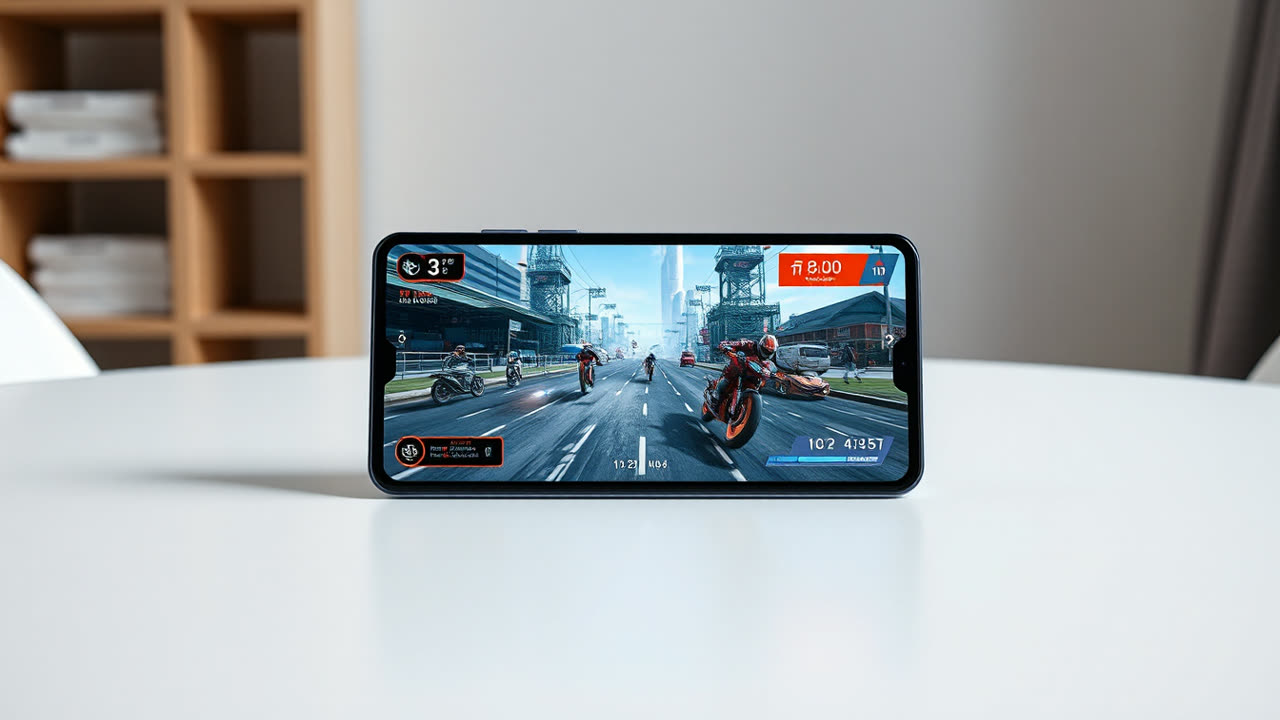
The Xiaomi 18 Fold has today launched in mainland China, featuring the groundbreaking Arm Mali G2-Ultra NX graphics processor at the heart of its custom Xring O3 chip, signaling a potentially seismic shift in mobile gaming graphics. This debut marks the first public deployment of Arm's next-generation GPU architecture, which prominently leverages neural rendering capabilities to fundamentally alter how visual fidelity is achieved on portable devices. The G2-Ultra NX, a successor to Arm's traditionally powerful yet often underappreciated Mali line, is engineered to move beyond conventional rasterization, integrating sophisticated AI inference directly into the graphics pipeline. This allows for the synthesis of complex scenes and realistic lighting effects with significantly reduced computational overhead compared to traditional methods, promising console-quality visuals without the typical power consumption penalties.
This technological leap matters immensely for both users and the broader mobile gaming industry. For players, it translates directly into richer, more immersive experiences previously confined to high-end PCs or dedicated consoles. Imagine games that dynamically generate highly detailed environments and character models in real-time, adapting to player actions and environmental conditions with unprecedented realism, all while maintaining smooth frame rates and extended battery life. Neural rendering, at its core, enables developers to train AI models on vast datasets of visual information, allowing the GPU to "learn" how to render complex scenes and lighting effects rather than explicitly calculating every pixel. This efficiency gain could unlock new genres and levels of graphical sophistication on mobile, potentially bridging the visual gap between mobile and traditional gaming platforms more effectively than ever before.
From an industry perspective, the G2-Ultra NX's introduction, particularly its neural rendering focus, presents a dual challenge and opportunity. Game developers will need to adapt their workflows to harness these new capabilities, moving towards AI-assisted asset creation and rendering pipelines. This could democratize high-fidelity graphics development, allowing smaller studios to achieve stunning visuals without massive art teams, or conversely, pushing the boundaries for AAA mobile titles. Arm's strategic decision to debut this technology in China with Xiaomi underscores the immense and rapidly growing mobile gaming market in the region, positioning the G2-Ultra NX to gain significant traction before a global rollout. Historically, Arm's Mali GPUs, while ubiquitous in a vast array of devices, have often been perceived as trailing behind rivals like Qualcomm's Adreno or Apple's custom Bionic GPUs in raw performance benchmarks for top-tier gaming. The G2-Ultra NX, with its architectural pivot to neural rendering, represents Arm's aggressive play to not just catch up, but to redefine the very metrics of mobile graphics performance, focusing on perceived visual quality and efficiency rather than just shader throughput. This shift could force competitors to accelerate their own research into AI-driven rendering, potentially sparking an innovation race that benefits the entire ecosystem.
Looking ahead, the integration of neural rendering on a mainstream mobile platform like the Xiaomi 18 Fold is merely the initial tremor of a larger earthquake. We can anticipate that within the next 18-24 months, this technology will proliferate across a wider range of Arm-powered devices, moving beyond premium flagships to more accessible price points. The real transformative power will emerge as game engines like Unity and Unreal Engine fully integrate neural rendering APIs and tools, making it easier for developers to leverage these capabilities. This will likely lead to a new generation of mobile games designed from the ground up to exploit AI-driven graphics, moving beyond simple upscaling or post-processing effects to fundamental scene generation. Furthermore, the efficiency gains from neural rendering could have profound implications for augmented reality (AR) and virtual reality (VR) experiences on mobile, enabling more complex and persistent virtual worlds without tethering to external hardware. The "first crack" in China with Xiaomi is more than just a product launch; it's a strategic beachhead for Arm, signaling a future where the distinction between rendered and real becomes increasingly blurred on the smallest screens.