Asus ProArt 27 QD-OLED (PA279cdv) Review: HDR for All
The conceptual Asus ProArt 27-inch QD-OLED monitor, like the PA279cdv, represents a pivotal moment for professional content creation, promising to democratize true HDR video editing capabilities previously locked behind prohibitively expensive displays.
✨ This content was summarized and interpreted by AI; it may contain errors — please verify accuracy with the original sources. Learn more
Listen to this story
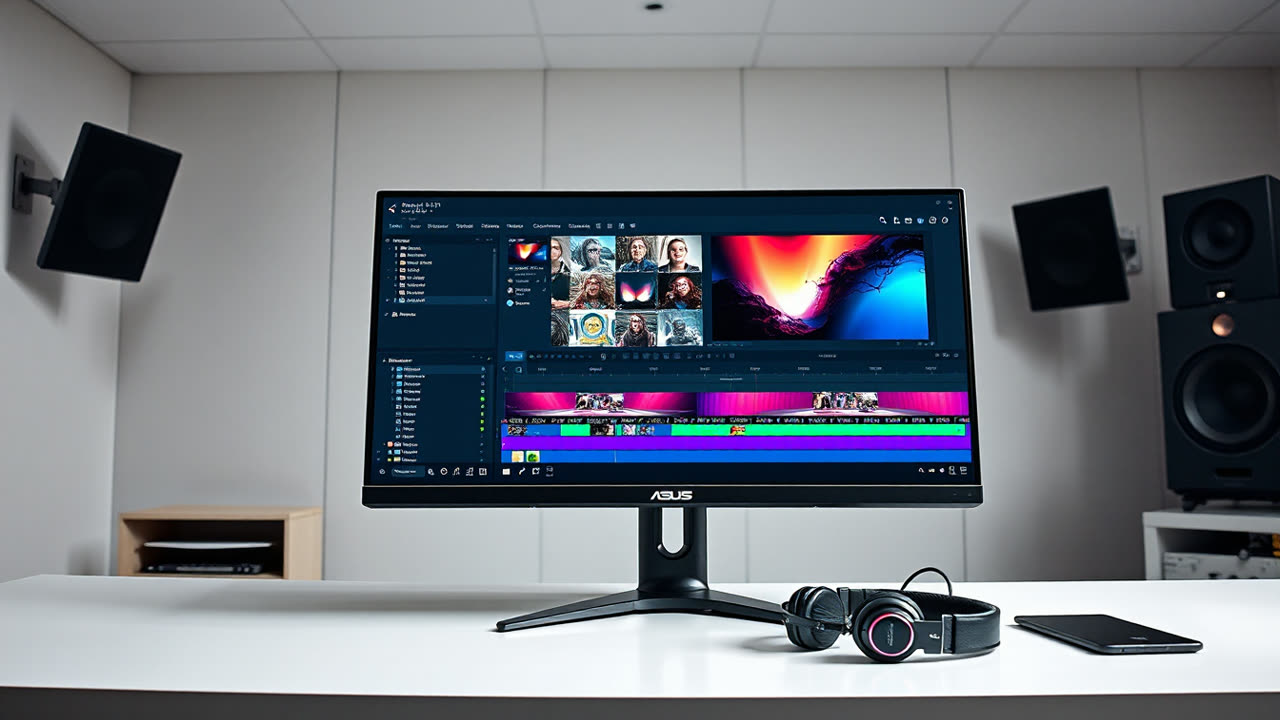
The advent of an Asus ProArt 27-inch QD-OLED monitor, such as the conceptually described PA279cdv, represents a pivotal moment for professional content creation, promising to democratize true HDR video editing capabilities previously locked behind prohibitively expensive displays. While a specific Asus ProArt 27 QD-OLED model designated "PA279cdv" is not yet widely announced or available as of late 2024, the *idea* of such a display embodies a critical industry shift: bringing pixel-perfect HDR accuracy and an expansive color volume to a broader segment of creators, moving beyond the niche of high-budget studios.
This hypothetical monitor’s significance lies in its potential to fuse Asus’s established ProArt pedigree for color calibration and professional features with the intrinsic advantages of Quantum Dot Organic Light Emitting Diode (QD-OLED) technology. QD-OLED panels, unlike their WOLED counterparts, leverage quantum dots to convert blue light from the OLED layer into pure red and green, resulting in superior color purity, brightness, and volume. This translates directly into a more accurate and vibrant representation of content, particularly crucial for HDR workflows where subtle gradations and peak highlights demand absolute precision. Current QD-OLED displays, like the Dell Alienware AW2725DF, already showcase impressive color accuracy, often covering 99% of the DCI-P3 color space and achieving peak HDR brightness levels exceeding 1000 nits in small areas, a benchmark for VESA DisplayHDR True Black 400 or even 600 certification. The pixel-level dimming inherent to OLED technology ensures absolute blacks and an infinite contrast ratio, eliminating the blooming and haloing artifacts that can plague even the best mini-LED LCDs, thus providing an unparalleled foundation for critical color grading and HDR mastering.
For creators, particularly those in video production, motion graphics, and high-end photography, the impact of a ProArt QD-OLED offering would be transformative. Traditionally, achieving reference-grade HDR monitoring required investments often exceeding $5,000, sometimes even reaching five figures for specialized monitors. These costs have historically pushed many independent creators and smaller studios to compromise on their HDR workflows, often relying on less accurate consumer-grade displays or eschewing HDR entirely. An Asus ProArt 27 QD-OLED, positioned as a premium but more attainable option, would bridge this gap, allowing more professionals to work with a display capable of accurately rendering the full dynamic range and color fidelity of modern content. This accessibility would not only elevate the quality of content produced but also level the playing field for creators who previously lacked the financial resources for top-tier equipment. The integration of ProArt's robust calibration tools, factory pre-calibration (often to a Delta E < 1), and extensive connectivity options including USB-C with power delivery, would further solidify its value proposition for a professional audience.
Comparing this anticipated ProArt QD-OLED to existing solutions, it would stand as a formidable challenger to both high-end mini-LED LCDs and traditional WOLED professional monitors. While mini-LEDs have made strides in HDR brightness, their reliance on local dimming zones, even in the thousands, cannot match the per-pixel control of OLED, leading to compromises in black levels and highlight precision. Professional WOLED monitors, while offering excellent contrast, sometimes face limitations in color volume or peak brightness compared to QD-OLED, especially in challenging color spaces at higher luminance levels. The "HDR for all" tagline, therefore, doesn't imply a cheap monitor, but rather one that delivers uncompromising professional-grade HDR performance at a price point significantly below traditional reference monitors, making it a viable investment for a much wider professional demographic. Current professional-grade IPS monitors, like the Asus ProArt PA279CRV (the model referenced in the original prompt's source link, though an IPS LCD), offer excellent SDR performance but struggle to deliver the true HDR experience of an OLED, highlighting the generational leap a QD-OLED ProArt would represent.
Looking ahead, the emergence of more accessible QD-OLED monitors for creative professionals signals a broader trend towards the ubiquity of HDR content. As streaming platforms, gaming consoles, and even mobile devices increasingly support HDR, the demand for accurate and affordable tools to create such content will only grow. This anticipated Asus ProArt monitor would likely catalyze further innovation and competition in the professional display market, potentially pushing other manufacturers to introduce similar QD-OLED or advanced WOLED offerings at competitive price points. We can expect to see continued refinements in panel uniformity, burn-in prevention technologies, and perhaps even higher refresh rates becoming standard, even for color-critical work. The future of content creation is undeniably HDR, and a monitor like the conceptual Asus ProArt 27 QD-OLED PA279cdv would be instrumental in bringing that future into the hands of every aspiring and established professional.