Audacity Unveils Major Overhaul with Dark Mode and Granular Editing
The venerable open-source audio editor receives its most significant update in years, introducing a vibrant dark mode and sophisticated granular editing tools that fundamentally reshape its user experience and professional utility.
✨ This content was summarized and interpreted by AI; it may contain errors — please verify accuracy with the original sources. Learn more
Listen to this story
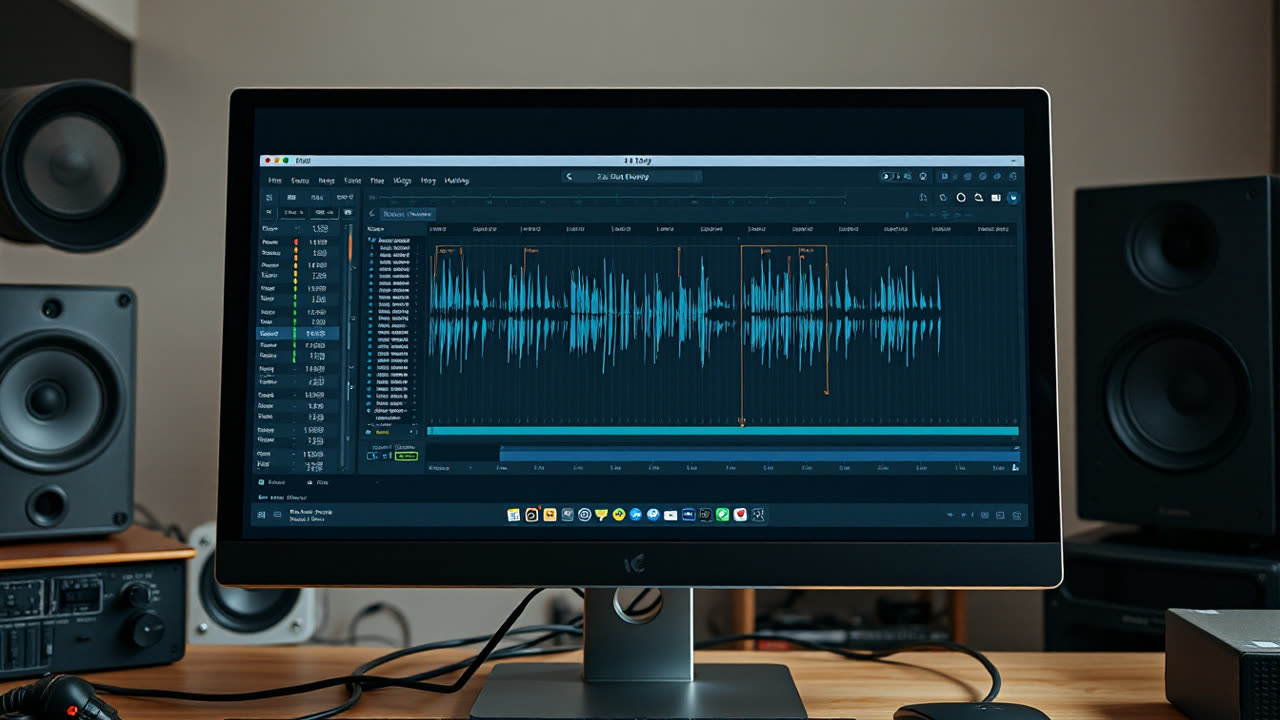
Audacity, the venerable open-source audio editor, has finally unveiled its most significant overhaul in years, introducing a vibrant new dark mode and sophisticated granular editing tools that fundamentally reshape its user experience and professional utility. This long-awaited refresh, arriving as part of its 3.7.0 release, addresses long-standing critiques regarding its dated interface and limited precision, positioning the free software as a more formidable contender against its commercial counterparts.
The immediate visual impact of the new "Dark" theme is striking, offering a choice of several color palettes, including "Dark Blue," "Dark Green," and "Dark Red," alongside the default "Dark" and "Light" options. This aesthetic modernization is more than skin-deep, significantly enhancing usability during prolonged editing sessions by reducing eye strain, a critical consideration for podcasters, musicians, and sound designers who often spend hours in front of their digital audio workstations (DAWs). Beyond cosmetics, the introduction of granular editing tools marks a profound shift. Users now have unprecedented control over individual audio samples, enabling micro-level adjustments that were previously cumbersome or impossible within Audacity. This includes advanced spectral editing capabilities, allowing for the visual identification and manipulation of specific frequencies within a waveform, making tasks like noise reduction, vocal isolation, or intricate sound design far more precise and efficient. Additional improvements include enhanced real-time effects processing, improved multi-track synchronization, and a more robust undo/redo history, all contributing to a smoother, more professional workflow.
This update matters immensely for several reasons. For its massive user base, estimated in the tens of millions, it democratizes access to advanced audio production techniques that were once the exclusive domain of expensive proprietary software. Casual users, from students creating podcasts to hobbyist musicians, now wield tools that elevate the quality and complexity of their projects without financial barriers. For the broader audio industry, Audacity's evolution underscores the persistent power of open-source development. By closing the feature gap with rivals like Adobe Audition, which costs $22.99 per month, or the Fairlight module in the free DaVinci Resolve, Audacity pressures commercial developers to innovate further or risk losing market share to a free, increasingly capable alternative. The improved UI and granular control significantly lower the barrier to entry for aspiring audio professionals, fostering a new generation of talent unburdened by costly software licenses. Furthermore, the update solidifies Audacity's role as a vital educational tool, providing a robust platform for learning audio principles and techniques without upfront investment.
Historically, Audacity's strength lay in its simplicity and accessibility, making it a go-to for quick edits and basic recording. However, its clunky interface and lack of advanced features often necessitated a jump to more sophisticated DAWs for serious projects. Previous iterations, while functional, lagged significantly behind competitors in terms of modern UI/UX and granular control. For instance, Adobe Audition has long offered spectral editing and a highly customizable interface, while even free alternatives like GarageBand on macOS provided a more polished user experience, albeit with platform limitations. The 3.7.0 update directly confronts these limitations, bringing Audacity into a contemporary context. While it may not yet rival the comprehensive mixing and mastering suites of professional DAWs like Pro Tools or Logic Pro, its enhanced capabilities now place it firmly in the mid-tier, capable of handling complex tasks that were previously out of reach. The dark mode alone is a testament to user feedback finally being integrated, a stark contrast to its historically static visual design.
Looking ahead, Audacity's trajectory suggests a continued commitment to user-centric development and a broader expansion of its feature set. The successful integration of such a significant visual and functional overhaul indicates a renewed vigor within its development community, potentially attracting more open-source contributors and accelerating future enhancements. We can anticipate further refinements to the granular editing tools, perhaps extending to AI-powered audio analysis or more sophisticated mastering plugins. There is also potential for deeper integration with cloud services or collaborative features, aligning with modern production workflows. The challenge will be to maintain its core ethos of accessibility and simplicity while continuing to add advanced functionalities. Should Audacity maintain this pace of innovation, it could fundamentally alter the landscape of entry-level and even semi-professional audio production, forcing a re-evaluation of what constitutes "free" versus "premium" in the highly competitive world of digital audio.