Australia Unveils Groundbreaking AI Framework with Net-Zero Energy Mandate
Australia's new national AI framework requires all new AI data centers to generate as much power as they consume, setting a global precedent for sustainable technology infrastructure.
✨ This content was summarized and interpreted by AI; it may contain errors — please verify accuracy with the original sources. Learn more
Listen to this story
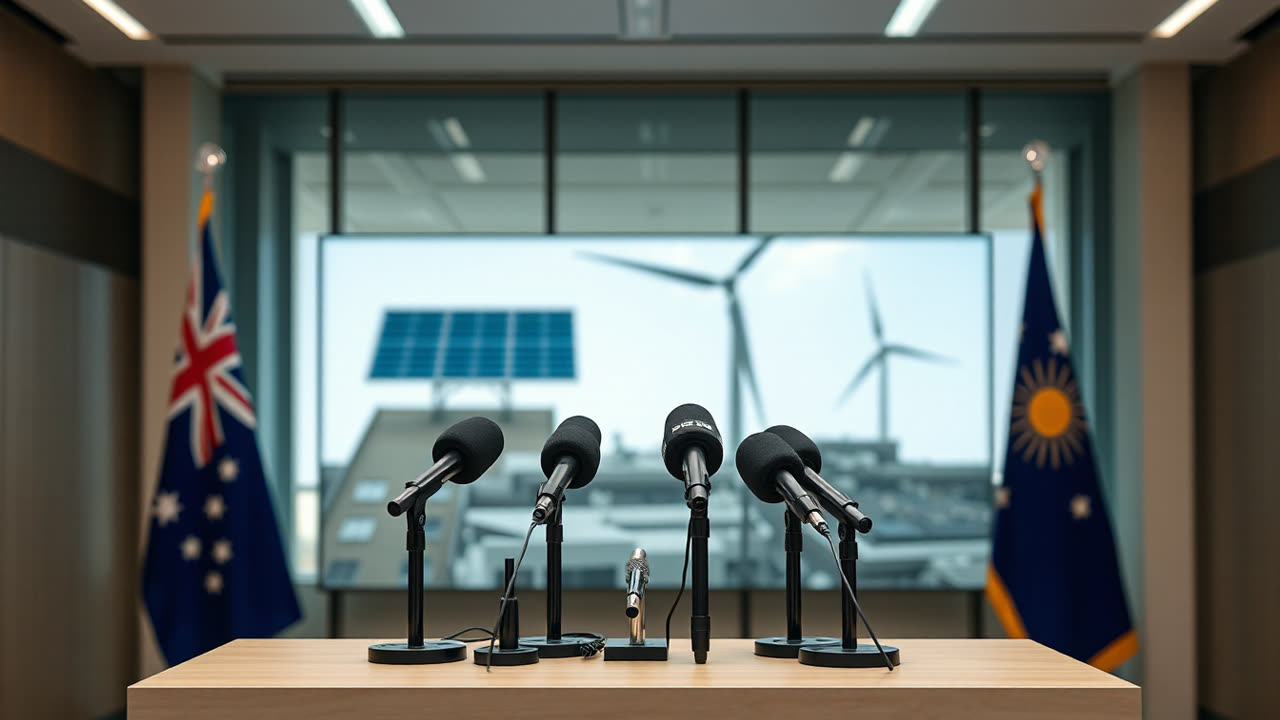
Australia's Prime Minister Anthony Albanese has unveiled a groundbreaking national AI framework, the "Australian Standards for A.I.," mandating that new AI data centers generate as much power as they consume, a directive poised to fundamentally reshape the economics and environmental footprint of the nation's burgeoning artificial intelligence infrastructure. This ambitious legislative agenda, announced in mid-July 2026, extends beyond energy parity, also stipulating stringent water efficiency requirements and robust protections for intellectual property rights within AI development. The move signals a proactive stance by a developed nation to directly address the escalating environmental and ethical challenges posed by the AI boom, setting a potential global benchmark for sustainable AI development and operations.
The core news revolves around an unprecedented "net-zero" energy requirement for AI data centers, meaning facilities must offset 100% of their operational energy demands through onsite renewable generation or direct procurement of renewable energy. This goes significantly beyond typical carbon neutrality goals, which often rely on purchasing carbon credits. While specific timelines for implementation and compliance mechanisms are still being detailed, the framework is expected to impact all new AI data center developments, forcing operators to integrate renewable energy solutions like solar farms or wind turbines directly into their project plans, or secure long-term power purchase agreements (PPAs) from dedicated renewable sources. Complementing this, the framework’s emphasis on water efficiency targets a critical, often overlooked, resource strain. Modern data centers, particularly those optimized for AI workloads with high-density GPUs, generate immense heat, necessitating sophisticated cooling systems that are typically water-intensive. Google's data centers, for instance, consumed 5.6 billion gallons of water in 2022, an increase of 20% from the previous year, highlighting the scale of the challenge. Australia's framework will likely push for advanced cooling technologies such as direct-to-chip liquid cooling, adiabatic cooling, or even air-side economizers, which significantly reduce water usage compared to traditional evaporative cooling towers.
This framework matters immensely because it shifts the burden of environmental responsibility directly onto the AI industry, rather than allowing it to externalize these costs. For users, this could translate into a slightly higher initial cost for AI services as data center operators absorb the investment in sustainable infrastructure, but it ensures the long-term viability and ethical foundation of the AI technologies they consume. More critically, it positions Australia as a leader in "green AI," potentially attracting ethical AI development and investment that prioritizes sustainability. The impact on the industry will be profound. Data center operators and AI companies looking to establish or expand operations in Australia will face significant capital expenditure increases to meet the renewable energy and water efficiency mandates. This could favor larger, well-capitalized players with the resources to invest in sustainable infrastructure, potentially creating barriers to entry for smaller startups. However, it also fosters innovation in renewable energy integration and cooling technologies, potentially accelerating the development and adoption of more efficient solutions globally. The IP protection aspect, while less directly tied to sustainability, is crucial for fostering trust and innovation within Australia's AI ecosystem, ensuring that proprietary algorithms and training data are safeguarded, which is a common concern for businesses leveraging AI.
Globally, Australia's framework represents a significant leap compared to existing regulations. While the European Union has its AI Act focusing heavily on ethical AI, transparency, and risk management, its environmental provisions for data centers are less prescriptive, often relying on broader energy efficiency directives rather than mandating net-zero power generation. Similarly, the United States has introduced voluntary initiatives and incentives for green data centers, but lacks a binding national mandate of this scope. Australia's approach directly tackles the "hidden cost" of AI – its massive energy and resource consumption – which is projected to grow exponentially. For context, global data center electricity consumption is expected to reach 8% of total electricity demand by 2030, a substantial increase from roughly 1% in 2010. By mandating self-sufficiency or direct renewable sourcing, Australia is forcing the industry to internalize its environmental footprint, a paradigm shift from simply purchasing carbon offsets. This framework also builds upon Australia's existing efforts in renewable energy, where the country is already a significant player in solar and wind power, providing a conducive environment for such mandates.
Looking ahead, the "Australian Standards for A.I." will likely serve as a powerful case study for other nations grappling with the environmental impact of AI. We can anticipate an accelerated push for advanced energy management systems, grid-scale battery storage solutions integrated with data centers, and further research into low-power AI hardware. The initial implementation period will undoubtedly present challenges, from navigating permitting for large-scale renewable projects to developing verification mechanisms for energy and water efficiency. However, the long-term outlook suggests a more sustainable and resilient AI industry within Australia, potentially attracting a new wave of "green AI" companies and talent. This framework could also spur the development of new business models for data center operations, where energy generation becomes a core competency alongside data processing. Critically, the success of this initiative will hinge on clear legislative guidance, robust enforcement, and ongoing collaboration between government, industry, and research institutions to adapt to rapidly evolving AI technologies and energy solutions. The era of unchecked AI growth, particularly concerning its environmental toll, appears to be drawing to a close in Australia, replaced by a vision of responsible and sustainable technological advancement.