AutoFigure: AI Toolkit Revolutionizes Scientific Figure Generation from Text
A new agentic document intelligence pipeline, AutoFigure, is set to transform scientific communication by automating the creation of professional figures directly from research papers, significantly reducing manual effort and accelerating discovery.
✨ This content was summarized and interpreted by AI; it may contain errors — please verify accuracy with the original sources. Learn more
Listen to this story
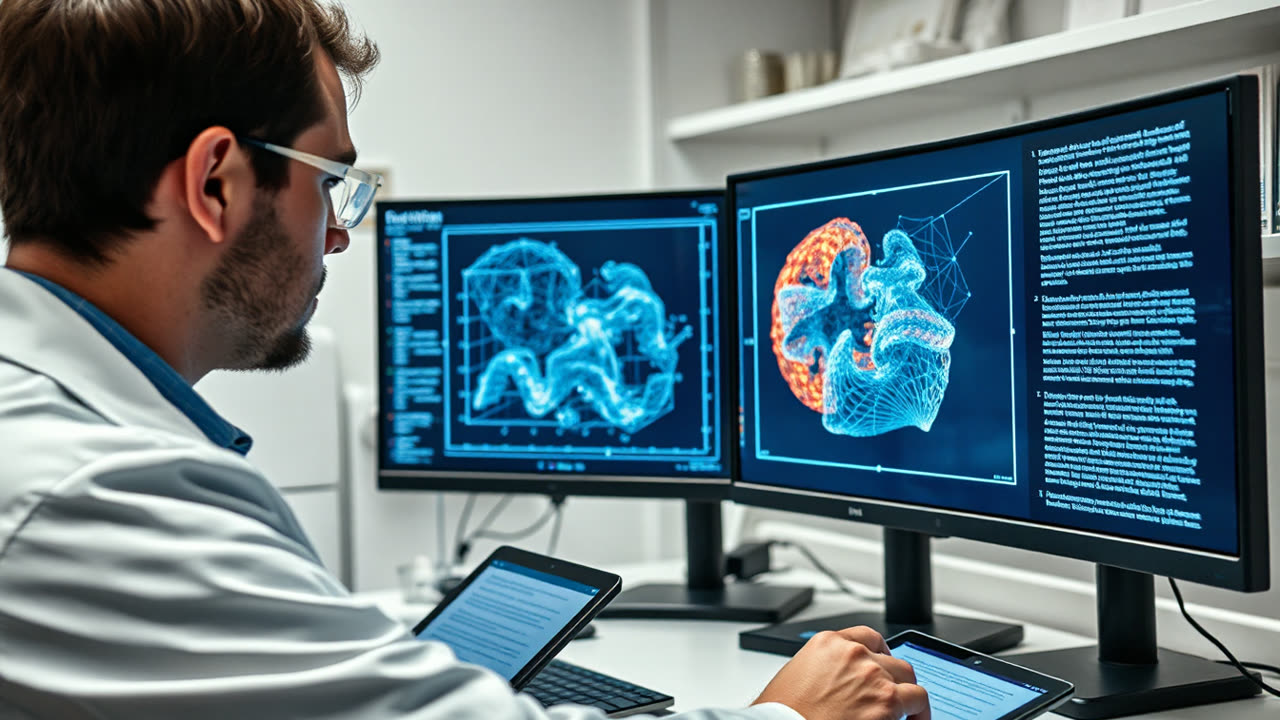
The emergence of AutoFigure, a practical toolkit designed to generate professional scientific figures directly from text descriptions and research papers, signals a pivotal shift in scientific communication, promising to drastically reduce the arduous manual effort typically involved in data visualization and conceptual illustration. This agentic document intelligence pipeline, highlighted in a recent tutorial, allows researchers to configure API-backed generation workflows, moving beyond static data plots to dynamic, context-aware visual representations of complex scientific concepts. The core innovation lies in its ability to interpret natural language and contextual information from entire research papers, translating intricate methodologies, results, and theoretical frameworks into high-quality, publication-ready figures without extensive graphical design expertise.
The significance of AutoFigure extends far beyond mere convenience for individual researchers; it profoundly impacts the efficiency and accessibility of scientific dissemination. Annually, scientists spend countless hours creating or refining figures, a process often bottlenecked by specialized software, artistic skill, or the iterative feedback loop with graphic designers. AutoFigure, by automating this, liberates researchers to focus on the science itself, potentially accelerating the pace of discovery and publication. For institutions, this could translate into reduced operational costs associated with design services and a faster pipeline from research completion to peer review and public access. Furthermore, by standardizing figure generation through an intelligent agent, it could lead to greater consistency and clarity in scientific visuals across publications, enhancing reproducibility and comprehension. The ability to generate figures "directly from text descriptions and research papers" implies a sophisticated understanding of scientific discourse, moving beyond simple keyword-to-image generation to a semantic interpretation of complex data and theoretical relationships.
Comparing AutoFigure to existing solutions reveals its unique position. Traditional figure creation relies on a patchwork of tools: statistical software like R or Python for data plotting, vector graphics editors such as Adobe Illustrator or Inkscape for refinement, and specialized scientific drawing tools for molecular structures or biological pathways. While powerful, these tools demand significant user input and expertise. More recently, general-purpose AI image generators like DALL-E 3 or Midjourney have shown promise in creating illustrative content, but they often struggle with the precision, data accuracy, and specific aesthetic conventions required for scientific figures, often hallucinating details or failing to represent quantitative data faithfully. AutoFigure, however, is purpose-built for the scientific domain, suggesting an underlying knowledge base and generation engine tailored to scientific conventions, data types, and visual language. Its "agentic" nature implies a degree of autonomous decision-making and iterative refinement, potentially allowing it to understand and adapt to the nuances of a given paper or research field, a capability largely absent in current general-purpose AI art tools. This specialized focus potentially grants it an edge in accuracy and utility over adapting broader AI models for scientific visualization.
Looking ahead, AutoFigure represents a significant stride in the broader field of agentic document intelligence, where AI systems autonomously process, understand, and act upon complex textual information. The immediate future for AutoFigure likely involves expanding its repertoire of figure types, integrating with more diverse scientific data formats (e.g., genomics, proteomics, neuroimaging), and enhancing its interpretative capabilities to handle increasingly complex and interdisciplinary research. We can anticipate deeper integration into research workflows, potentially becoming a standard plugin for manuscript preparation software or institutional repositories. The ethical implications of AI-generated scientific content, particularly regarding potential biases, data misrepresentation, or the subtle impact on scientific authorship and originality, will also require careful consideration and robust validation mechanisms. Ultimately, the success of tools like AutoFigure will hinge on their ability to maintain scientific rigor and accuracy while delivering unparalleled efficiency, paving the way for a future where intelligent agents are indispensable partners in the creation and dissemination of scientific knowledge.