Autonomous Firefighting Drones: The $11M XPRIZE Challenge and the Future of Wildfire Suppression
The $11 million XPRIZE Wildfire competition, culminating in autonomous response finals in Alaska in June 2026, represents a pivotal moment in the global struggle against increasingly destructive wildfires, challenging innovators to autonomously detect and suppress high-risk fires within ten minutes over a 1000 square kilometer area—a fourfold improvement over current best practices.
✨ This content was summarized and interpreted by AI; it may contain errors — please verify accuracy with the original sources. Learn more
Listen to this story
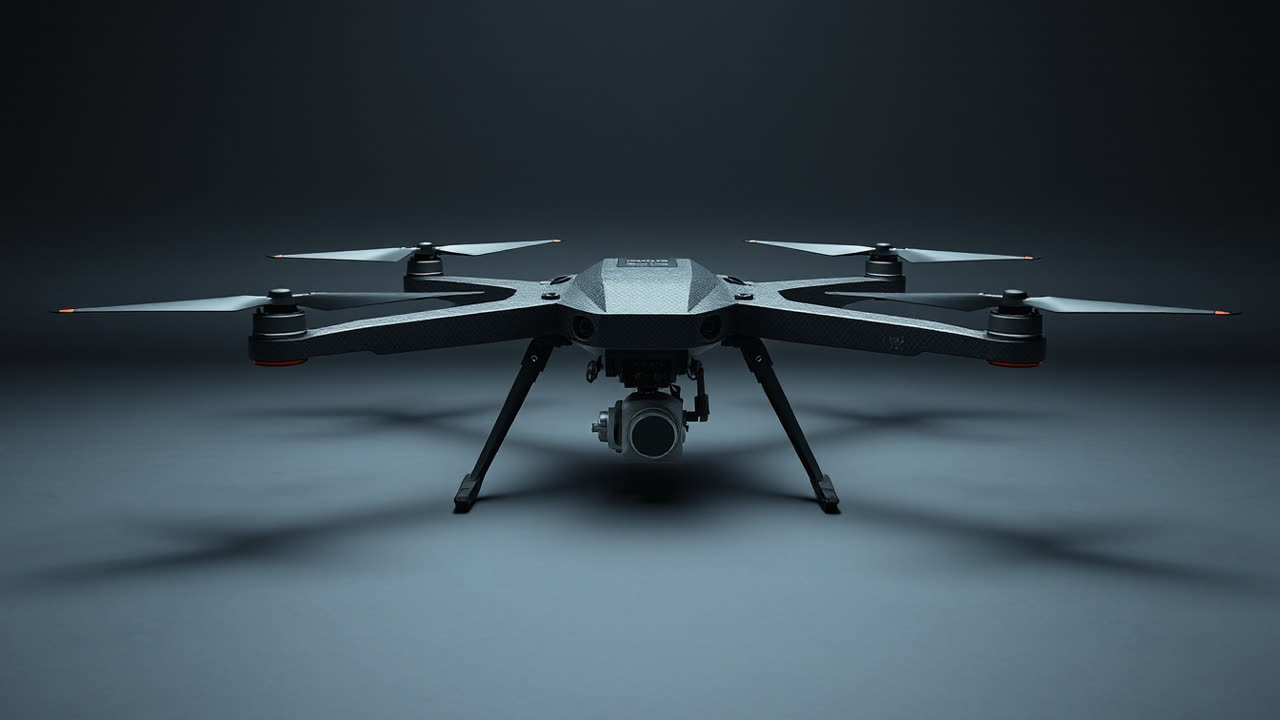
The $11 million XPRIZE Wildfire competition, culminating in autonomous response finals in Alaska in June 2026, represents a pivotal moment in the global struggle against increasingly destructive wildfires, challenging innovators to autonomously detect and suppress high-risk fires within ten minutes over a 1000 square kilometer area—a fourfold improvement over current best practices. This ambitious goal underscores the urgent need for revolutionary solutions as the United States grapples with a wildfire season that now stretches nearly year-round, impacting states like California with unprecedented intensity and frequency. Already in 2026, close to 40,000 fires have scorched over 3.6 million acres across the U.S., significantly exceeding the ten-year average for mid-July. The economic toll is staggering, with annual wildfire damages estimated between $394 billion and $893 billion, and losses reaching an estimated $57 billion in 2025 alone.
The core news details the rapid advancements in drone technology, exemplified by companies like Seneca, a California-based startup that launched in 2025 and has already secured $60 million in funding for its AI-driven autonomous suppression drones. Cal Fire is actively testing Seneca's systems, which involve packs of five carbon-fiber drones, each weighing approximately 400 pounds and capable of carrying 20 gallons of water or 500-1000 gallons of foam concentrate. These drones are designed for a rapid initial attack, aiming to reach ignitions within 3-10 minutes and deliver precise suppression using thermal imaging. Other key players include the UK's Windracers, developing the ULTRA UAV for long-range firefighting, and aerospace giant Lockheed Martin, innovating high-payload eVTOL drones with 400kg lift capabilities. FireSwarm is also advancing ultra-heavy-lift drone technology with AI-assisted coordination, capable of carrying about 105 gallons of water. Beyond suppression, companies like Fly4Future, with its DOFEC drone, integrate autonomy engines, thermal cameras, and fire-extinguishing capsules for detection and targeted response. Advanced AI Solutions, Inc. offers a comprehensive system with drones capable of carrying up to 220 pounds, long-range thermal cameras that detect fires up to five miles away, and AI-powered weather stations for predictive analysis, even deploying dry powder bombs.
This technological leap matters immensely for both affected communities and the firefighting industry. Traditional wildfire suppression often relies on ground crews battling flames with backpack pumps and hand tools, or manned aircraft that can be grounded by low visibility, heavy smoke, or extreme turbulence—conditions common during major blazes. Drones, conversely, can operate safely in these hazardous environments, providing critical real-time intelligence, thermal imaging to identify hotspots through smoke, and aerial perspectives for situational awareness and search and rescue missions. The integration of AI and machine learning allows these systems to analyze data, predict fire spread patterns, and even identify potential structural collapses, enhancing firefighter safety and operational efficiency. Furthermore, the human element of firefighting faces severe challenges, with federal wildland firefighting positions reporting 20% vacancies due to low pay, poor work-life balance, and high risks, making autonomous assistance increasingly vital. The global firefighting drone market, valued at $1.34 billion in 2025, is projected to surge to $3.40 billion by 2034, reflecting this growing demand and investment.
However, the widespread adoption of firefighting drones faces significant regulatory hurdles. Current Federal Aviation Administration (FAA) regulations, primarily Part 107, limit drones to under 55 pounds, line-of-sight operation, daylight hours, and altitudes below 400 feet. While public safety agencies can apply for Certificates of Authorization (COAs) for emergency operations, the presence of unauthorized drones near wildfires remains a critical issue, often forcing the grounding of essential manned firefighting aircraft and incurring severe penalties for violators. The XPRIZE competition aims to bridge this gap by not only incentivizing technological breakthroughs but also by fostering an "impact phase" post-competition to drive the adoption and integration of these innovations into real-world wildfire management practices.
Looking ahead, the future of wildfire management will undoubtedly be characterized by a symbiotic relationship between advanced autonomous systems and highly trained human firefighters. California’s Governor Gavin Newsom has already deployed AI-powered detection systems, invested in drones, satellite monitoring, and real-time fire modeling, showcasing a clear governmental commitment to this technological shift. The evolution will see further integration of AI-driven command software, robotic suppression systems, and real-time data analytics, creating a comprehensive "resilience infrastructure layer" as envisioned by companies like Seneca. While drones will not replace the critical decision-making and hands-on heroism of firefighters, they will exponentially enhance their capabilities, providing an indispensable "full toolbox" for early detection, rapid response, and safer operations in a world where climate change continues to fuel increasingly devastating wildfires. The challenge now lies in scaling these proven technologies, navigating regulatory complexities, and ensuring seamless integration to protect lives, property, and ecosystems from the relentless threat of fire.