AWS Unveils Strands Decider 2B, Intensifying AI Decision Model Competition
Amazon Web Services’ Strand Labs has today unveiled Strands Decider 2B, a sophisticated Jevalike decision model designed to inject advanced, autonomous analytical capabilities directly into enterprise workflows, marking a significant escalation in the race to democratize complex AI-driven decision-making.
✨ This content was summarized and interpreted by AI; it may contain errors — please verify accuracy with the original sources. Learn more
Listen to this story
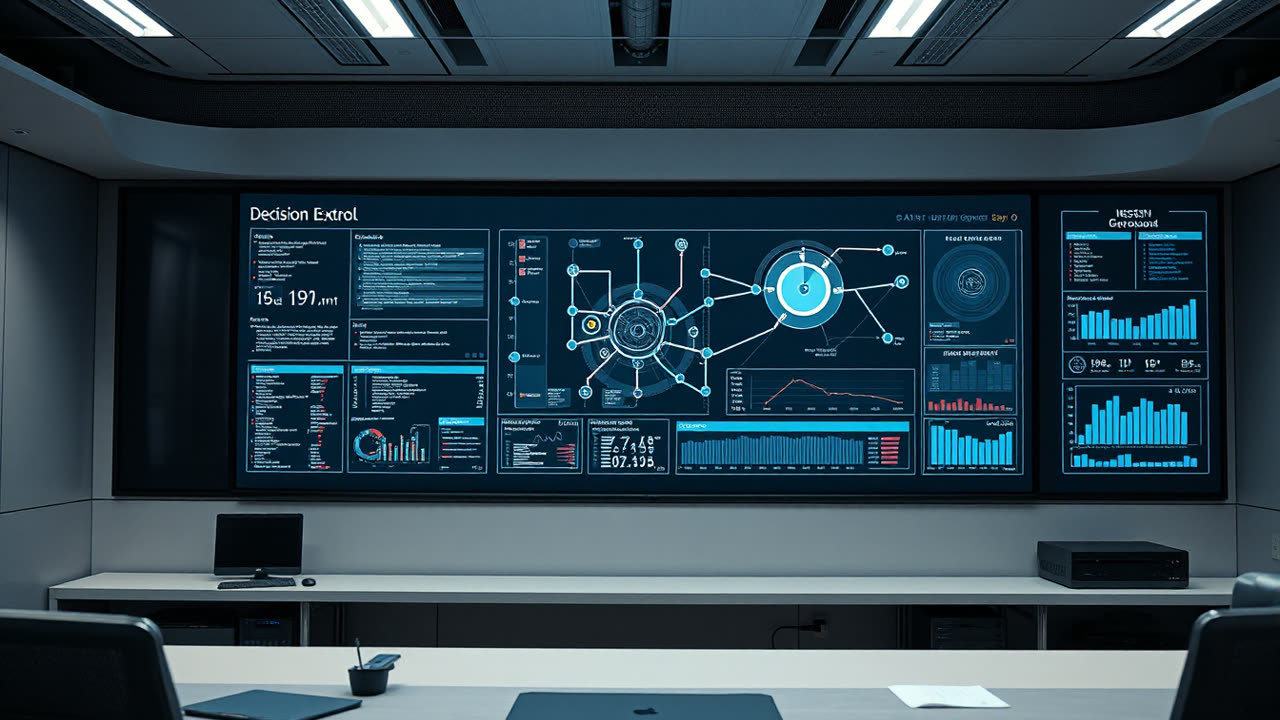
Amazon Web Services’ Strand Labs has today unveiled Strands Decider 2B, a sophisticated Jevalike decision model designed to inject advanced, autonomous analytical capabilities directly into enterprise workflows, marking a significant escalation in the race to democratize complex AI-driven decision-making. This release immediately positions AWS as a formidable contender in a rapidly saturating market of specialized AI, moving beyond generative text and image models to directly tackle the intricate, high-stakes domain of business intelligence and operational optimization. The model, reportedly boasting a 2-billion parameter architecture, is engineered to process vast datasets and evaluate multiple variables, offering predictive insights and prescriptive actions for scenarios ranging from supply chain logistics and financial risk assessment to customer behavior prediction and resource allocation.
This strategic move by AWS carries profound implications for both users and the broader AI industry, fundamentally shifting how businesses might approach operational intelligence. For enterprises, Strands Decider 2B promises to automate and optimize decisions previously requiring extensive human analysis, reducing latency, improving accuracy, and freeing up human capital for more strategic tasks. Imagine a logistics company using it to dynamically reroute shipments in real-time based on traffic, weather, and inventory levels, or a financial institution leveraging it to instantly assess loan applications with granular risk profiling. The value proposition extends beyond mere efficiency; it offers a competitive edge through hyper-personalized customer experiences, proactive problem-solving, and previously unattainable levels of operational agility. However, it also introduces a new layer of complexity regarding data governance, model interpretability, and the ethical implications of delegating critical decisions to an autonomous system.
The "Jev clone" designation is particularly telling, indicating AWS's direct intent to challenge established players in the decision model space. While specific details on the original "Jev" model are not widely publicized, its prominence as a benchmark suggests a highly effective, perhaps proprietary, system renowned for its decision accuracy and integration capabilities. Strands Decider 2B likely aims to surpass Jev by leveraging AWS's unparalleled cloud infrastructure, offering superior scalability, seamless integration with existing AWS services like S3, Redshift, and SageMaker, and potentially more flexible pricing models. This integration capability is a critical differentiator, allowing businesses already deeply embedded in the AWS ecosystem to adopt Strands Decider 2B with minimal friction, potentially accelerating its market penetration compared to standalone or less integrated solutions. The proliferation of such decision models across the web signals a maturation of AI applications, moving from general-purpose intelligence to highly specialized, domain-specific problem solvers that can directly impact bottom-line metrics.
Looking ahead, the release of Strands Decider 2B foreshadows a future where AI-driven decision intelligence becomes a standard feature, not a niche capability, across industries. AWS will likely focus on enhancing the model's explainability, crucial for regulatory compliance and user trust, and expanding its pre-trained applications for specific verticals. We can anticipate subsequent iterations, perhaps "Strands Decider 5B" or "10B," offering even greater complexity handling and predictive power, along with specialized versions tailored for industries like healthcare (diagnosis support, treatment planning) or manufacturing (predictive maintenance, quality control). The competitive landscape will undoubtedly intensify, with other cloud providers and AI giants rushing to develop or acquire similarly capable models, potentially leading to an "AI-as-a-Service" arms race for decision intelligence. The critical challenge will be ensuring these powerful autonomous systems remain aligned with human values and oversight, as the scope of decisions delegated to them continues to expand. The advent of Strands Decider 2B is not merely another product launch; it's a clear signal that the era of intelligent, automated decision-making is rapidly becoming mainstream, fundamentally reshaping how businesses operate and compete.