BMW Confirms Smaller, More Affordable Neue Klasse EV for 2028 Debut
BMW has officially announced plans for an entry-level electric vehicle, codenamed "NBO" and likely to be called "i1," joining its advanced Neue Klasse lineup in 2028, primarily targeting the European compact segment.
✨ This content was summarized and interpreted by AI; it may contain errors — please verify accuracy with the original sources. Learn more
Listen to this story
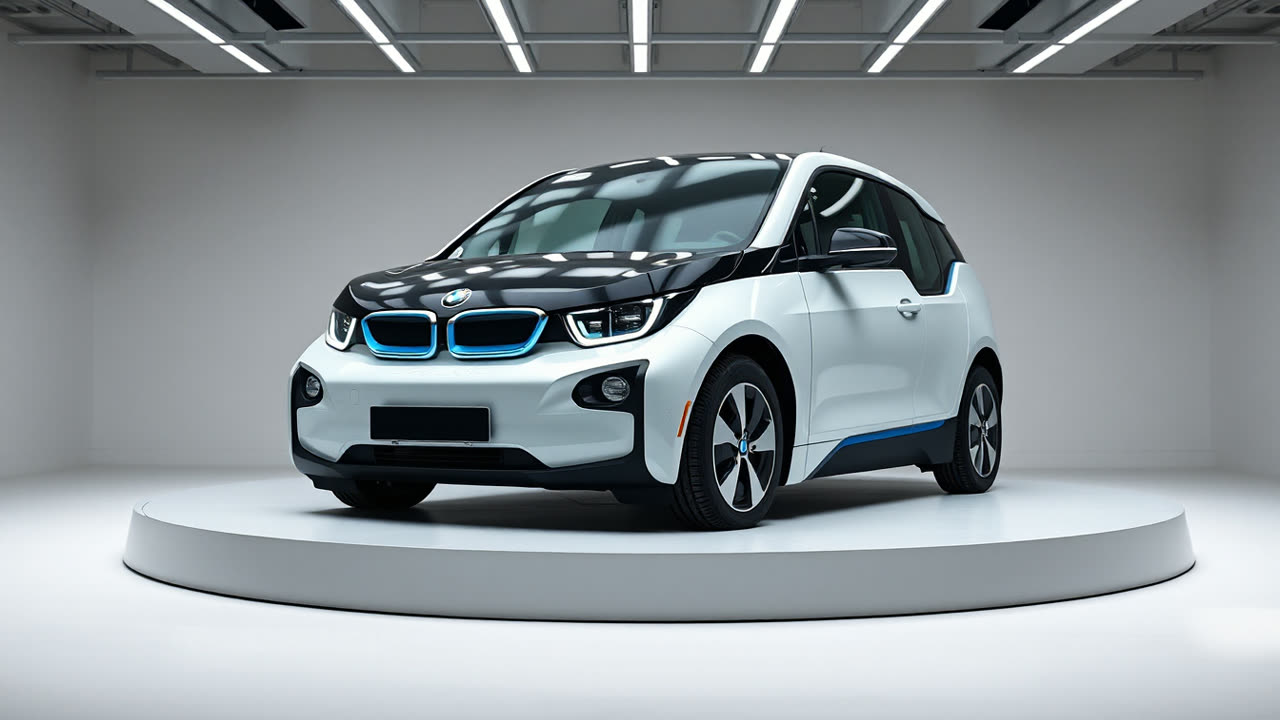
BMW has officially confirmed plans to introduce a smaller, more affordable entry-level electric vehicle (EV) within its advanced Neue Klasse lineup, slated for a 2028 debut primarily in Europe. This strategic move, announced during the company’s recent Capital Markets Day, signals a determined push into the high-volume compact segment, making premium electric mobility more accessible to a broader consumer base. Internally codenamed "NBO" (or "NB0") and widely anticipated to carry the "i1" moniker, this forthcoming model is expected to manifest as a five-door hatchback, designed to coexist with, yet be fundamentally distinct from, the internal combustion engine 1 Series. It will leverage BMW's cutting-edge Neue Klasse architecture, offering a choice between rear-wheel-drive in its more affordable trims and all-wheel-drive xDrive variants.
This expansion holds significant implications for both users and the luxury automotive industry. For consumers, the introduction of a genuinely "affordable" Neue Klasse EV lowers the barrier to entry for BMW’s electric ecosystem, promising advanced technology and brand prestige at a more digestible price point. BMW's Neue Klasse platform represents a comprehensive overhaul of vehicle architecture, encompassing sixth-generation eDrive technology, an 800-volt electrical system for ultra-fast charging, and a suite of "superbrains" that deliver over 20 times the computing power of current BMWs. These technological advancements, including the revolutionary Panoramic iDrive digital interface and enhanced driver-assistance systems, will empower the i1, offering a sophisticated and intuitive user experience previously reserved for higher-tier models. By democratizing these features, BMW aims to attract younger buyers and those transitioning to EVs, broadening its market appeal beyond traditional luxury segments.
For the industry, BMW's commitment to an entry-level Neue Klasse EV underscores the escalating competition in the compact luxury EV space. The current Neue Klasse models, the iX3 SUV and i3 sedan, have set a premium benchmark, with the 2027 iX3 50 xDrive starting at $61,500-$62,850 in the US and offering up to 434 miles of range, and the 2027 i3 sedan starting at $61,500 with an estimated 446-468 miles of range. The i1 will need to significantly undercut these figures to be truly "affordable." Rivals are already making aggressive moves: Audi launched its A2 e-tron on September 7, 2026, as a compact entry-level EV starting at approximately $45,000 (€38,200 in Germany) with over 400 miles (WLTP) of range, though its US availability is unconfirmed. Mercedes-Benz's 2026 CLA 250+ Electric Sedan, another entry-level offering, starts at $47,950 with a robust EPA-estimated 374 miles of range and 268 horsepower. Even the 2026 Tesla Model 3, a non-luxury but aspirational EV, starts at a competitive $38,630. BMW's i1 will directly challenge these offerings, particularly in the European market where compact vehicles dominate, forcing rivals to further refine their value propositions. This intensifying competition is a net positive for consumers, driving down prices and accelerating technological innovation.
BMW's strategy with Neue Klasse is not merely about electrification; it's a fundamental redefinition of the brand, echoing the original "Neue Klasse" vehicles of the 1960s that saved the company. The platform emphasizes "electric first" design, allowing for optimized packaging, enhanced driving dynamics, and improved energy efficiency, reportedly achieving a 20 percent improvement due to innovations like a 600-meter shorter and 30 percent lighter wiring harness. This dedicated EV architecture allows BMW to offer a distinct electric experience, unlike some earlier "i" models that shared platforms with internal combustion engine vehicles. The company has even demonstrated a willingness to price some EV variants $4,400 cheaper than their gasoline counterparts on shared platforms, challenging the traditional EV premium and potentially extending this aggressive pricing to new Neue Klasse models.
Looking ahead, the launch of the i1 in 2028 is just one piece of BMW's ambitious electrification roadmap. The company plans for Neue Klasse technologies to appear across 40 new models and model updates by 2027, with its Munich plant becoming exclusively EV-only from that year. While the i1 is initially focused on Europe, reports suggest an "i2" electric sedan, potentially a more affordable option for the US market, could follow around 2030. This regionalized product strategy, with an emphasis on smaller cars for Europe and a continued focus on SUVs and potentially larger luxury models for the US, reflects BMW's adaptive approach to diverse global demands. The transition will not be without challenges, particularly in balancing profitability with aggressive pricing and meeting varying regulatory landscapes. However, by leveraging the efficiency and scalability of the Neue Klasse platform and directly addressing the demand for more affordable luxury EVs, BMW is positioning itself not just to survive, but to lead in the rapidly evolving electric automotive landscape.