BMW's Electric 3 Series Undercuts Gasoline Model by $4,400, Signaling Major EV Shift
BMW's new electric 3 Series is reportedly $4,400 cheaper than its gasoline counterpart, marking a pivotal moment where EVs are not just reaching price parity but actively undercutting traditional models in the premium segment.
✨ This content was summarized and interpreted by AI; it may contain errors — please verify accuracy with the original sources. Learn more
Listen to this story
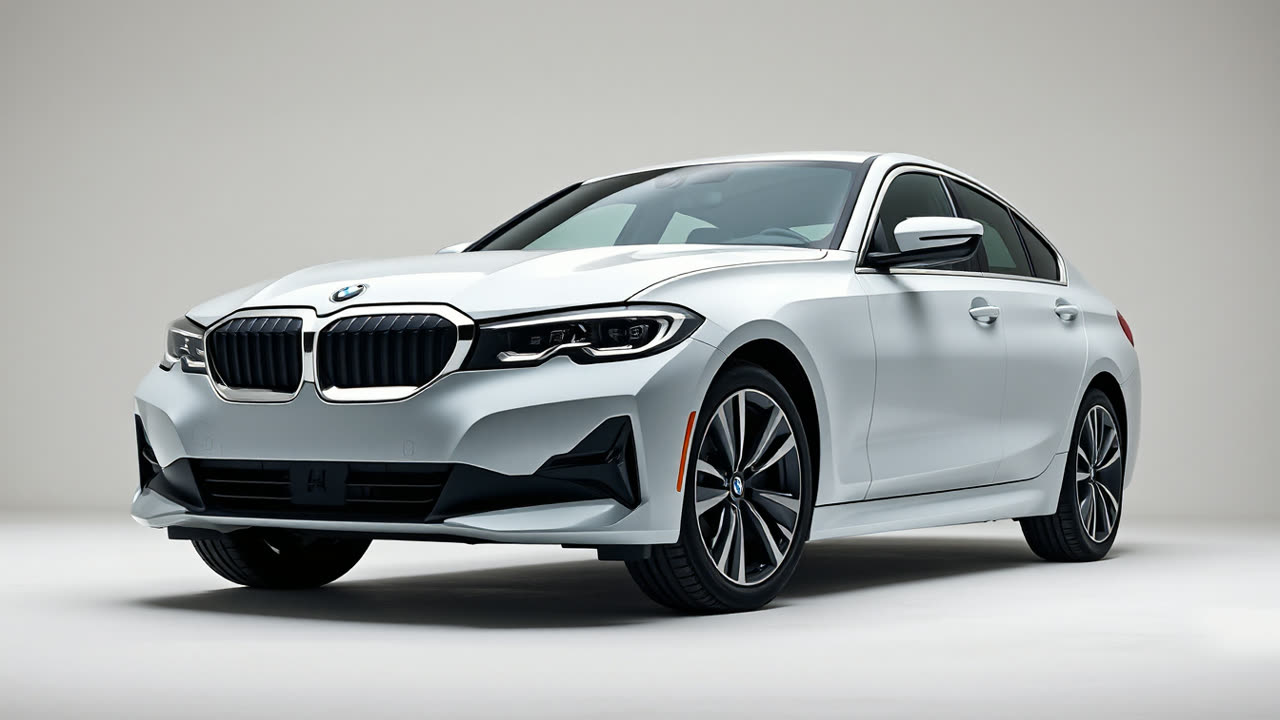
The new BMW 3 Series electric variant is reportedly $4,400 cheaper than its gasoline counterpart, marking a pivotal moment in the automotive industry where electric vehicles (EVs) are not just reaching price parity but actively undercutting traditional internal combustion engine (ICE) models in a premium segment. This unprecedented pricing strategy from a legacy automaker like BMW signals a profound shift in manufacturing economics and consumer value propositions, challenging long-held assumptions about the inherent cost of electrification.
This development matters immensely because it shatters one of the primary barriers to mass EV adoption: the sticker price. For years, EVs, particularly from established luxury brands, commanded a significant premium over their ICE equivalents, often justified by advanced technology and nascent production scales. BMW's decision to price the electric 3 Series below its gasoline sibling effectively removes this hurdle for a crucial demographic – buyers in the competitive compact luxury sedan segment. This move is poised to accelerate the transition away from fossil fuels, not through mandates or incentives alone, but through pure economic advantage. Consumers now have a compelling financial incentive to choose electric, potentially swaying millions who might have otherwise hesitated due to cost concerns. For the industry, it validates the massive investments made in battery technology and flexible manufacturing platforms, proving that scale and innovation can drive down costs to a point where EVs are not just environmentally superior but also fiscally more attractive.
Historically, the journey to EV price parity has been a gradual one, primarily driven by the falling cost of battery packs. In 2010, battery pack costs hovered around $1,200 per kilowatt-hour (kWh); by 2022, this figure had plummeted to approximately $151/kWh. While specific 2026 figures are still emerging, the trend unequivocally points downwards, with projections often targeting sub-$100/kWh in the near future, which is widely considered the threshold for mass market competitiveness. Early EVs like the first-generation Nissan Leaf or BMW's own i3, while innovative, were often more expensive than comparable gasoline cars, even after factoring in incentives. Tesla, with its vertically integrated approach and dedicated EV platforms, has been a trailblazer in bringing down costs, but even its Model 3, while competitive, didn't always start significantly *below* an equivalent premium ICE sedan from rivals without incentives. BMW's strategy with the new 3 Series, likely leveraging its highly adaptable CLAR (Cluster Architecture) platform that accommodates both ICE and electric powertrains, allows it to achieve economies of scale across both vehicle types. By sharing components and manufacturing processes, BMW can mitigate the higher cost of battery cells and electric drivetrains, ultimately passing savings onto the consumer.
Comparing this to rivals, Tesla's Model 3 has been a benchmark for performance and value in the premium EV space, with its base Rear-Wheel Drive model starting around $39,990 as of late 2026, offering competitive range and technology. Mercedes-Benz, with its EQE sedan, which is a size class up from the 3 Series, starts significantly higher, typically above $70,000, underscoring the challenge of bringing luxury EVs to a lower price point. BMW's direct pricing challenge to its own ICE model is a more aggressive move than most competitors have made, signaling a deliberate strategy to push electrification from within its core product lines. This internal competition could force other legacy automakers to re-evaluate their own pricing structures and accelerate their transition plans. The fact that the electric 3 Series is cheaper also implies that, when considering total cost of ownership (TCO) – including lower fuel costs, reduced maintenance, and potential tax credits – the savings for consumers could be substantially higher over the vehicle's lifespan.
Looking ahead, this pricing development from BMW foreshadows a future where EVs are not just a premium option but the economically rational choice across a broader spectrum of the market. We can expect other automakers to follow suit, either by aggressively pricing their EVs or by facing significant market share erosion. The focus will shift from *if* EVs will replace ICE vehicles to *how quickly* and *how universally*. This could also spur further innovation in battery technology, not just for higher energy density but for even lower manufacturing costs. Governments may find less need for direct EV purchase incentives as market forces drive down prices, potentially reallocating funds to charging infrastructure development. Furthermore, the residual value of ICE vehicles could see a faster decline as the perception of their obsolescence accelerates. BMW's move with the 3 Series is not just a pricing adjustment; it's a declaration that the era of EVs as a premium-priced niche is rapidly drawing to a close, ushering in a new phase of mainstream electric mobility driven by compelling value.