Bolt and Lucid Motors Partner to Deploy 25,000 Self-Driving EVs Across Europe
Ride-hailing giant Bolt and luxury EV maker Lucid Motors announce a massive partnership to introduce at least 25,000 autonomous electric vehicles into Europe's urban transportation, marking a significant shift in mobility.
✨ This content was summarized and interpreted by AI; it may contain errors — please verify accuracy with the original sources. Learn more
Listen to this story
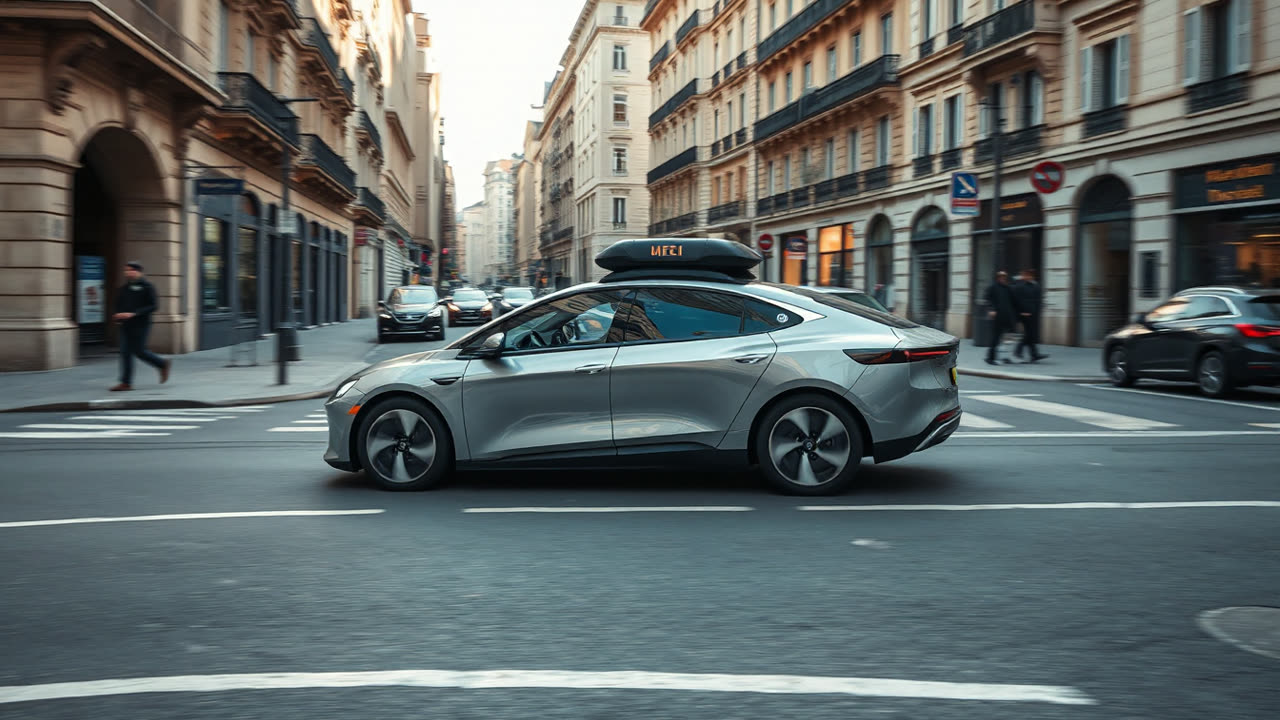
In a significant stride toward autonomous mobility, ride-hailing giant Bolt and luxury electric vehicle manufacturer Lucid Motors have announced a groundbreaking partnership to deploy at least 25,000 self-driving Lucid EVs across Europe, signaling a profound shift in the continent's urban transportation landscape. This ambitious initiative, unveiled today, marks Bolt's second major foray into autonomous fleets, underscoring a strategic pivot for the company and a critical validation for Lucid's nascent autonomous driving capabilities. The agreement aims to integrate Lucid's advanced electric vehicles, presumably equipped with their proprietary DreamDrive Pro system, into Bolt's extensive European network, potentially transforming how millions interact with ride-hailing services.
This collaboration is more than just a fleet expansion; it's a strategic gambit that addresses several critical industry vectors simultaneously. For Bolt, it promises a future of reduced operational costs by eliminating driver wages, a substantial overhead in the fiercely competitive ride-hailing market. With Bolt operating in over 45 countries and 500 cities across Europe and Africa, according to their official website, the deployment of autonomous vehicles could significantly boost profitability and allow for more aggressive pricing strategies, potentially undercutting rivals. Furthermore, an autonomous fleet offers consistent service quality, 24/7 availability, and enhanced safety protocols, which could elevate Bolt's brand perception and user trust. For users, the promise is a more affordable, readily available, and potentially safer ride-hailing experience, free from human error and driver-related inconsistencies. The widespread deployment of Level 4 or Level 5 autonomous vehicles could also open up new accessibility options for individuals unable to drive.
Lucid Motors, primarily known for its high-performance luxury EVs like the Lucid Air, stands to gain immense credibility and scale from this partnership. While Lucid has been celebrated for its powertrain efficiency and luxurious interiors, its autonomous driving system, DreamDrive Pro, has largely operated in the shadow of more established players like Waymo and Cruise. DreamDrive Pro utilizes 32 sensors, including lidar, radar, ultrasonic, and cameras, alongside a high-resolution mapping system, but has historically focused on advanced driver-assistance features rather than full autonomy. This deal catapults Lucid into the vanguard of autonomous fleet deployment, providing a real-world testing ground and a massive data acquisition opportunity crucial for refining its AI and machine learning models. The challenge for Lucid will be scaling production of its vehicles to meet the 25,000-unit demand while simultaneously proving the robustness and reliability of its autonomous stack in diverse European urban environments, which present unique complexities due to varied infrastructure, historical street layouts, and regulatory nuances.
Compared to rivals, this partnership positions Bolt to potentially leapfrog competitors in Europe. While Waymo and Cruise have made significant inroads in select U.S. cities, their European expansion has been more cautious and fragmented due to differing regulatory landscapes and consumer acceptance. Waymo One, for example, operates commercially in Phoenix and San Francisco, while Cruise has faced recent setbacks in its San Francisco operations. Tesla, a proponent of vision-only autonomy, continues to refine its Full Self-Driving (FSD) beta, but faces ongoing scrutiny and has yet to achieve widespread regulatory approval for unsupervised autonomous operation in Europe. This Bolt-Lucid alliance bypasses the typical OEM-software provider dynamic, offering an integrated solution that could accelerate deployment. Prior generations of ride-hailing were entirely human-driven, with initial forays into EVs being driver-operated. This move represents a full transition to driverless operations, leveraging the efficiency and environmental benefits of electric propulsion from the outset.
The outlook for this ambitious venture is cautiously optimistic, yet fraught with significant hurdles. Regulatory approval across multiple European Union member states and other European nations will be a labyrinthine process, requiring navigation of varying legal frameworks concerning autonomous vehicle liability, data privacy, and operational permits. Public acceptance also remains a critical factor; while early adopters may embrace the technology, widespread consumer trust will need to be built through flawless safety records and transparent communication. Infrastructure readiness, including reliable 5G connectivity for vehicle-to-everything (V2X) communication and robust charging networks for 25,000 EVs, will also be paramount. Economically, the success hinges on the cost-efficiency gains outweighing the substantial upfront investment in vehicles, R&D, and operational infrastructure. If successful, this partnership could catalyze a broader shift towards autonomous ride-hailing across Europe, forcing traditional taxi services and other ride-hailing platforms to accelerate their own autonomous strategies. It could also solidify Lucid's position as a serious contender in the autonomous vehicle space, extending its influence far beyond the luxury segment and into the realm of everyday mobility. The next few years will undoubtedly see intense competition and innovation as this vision of driverless urban transport begins to take tangible form on European streets.