Bose QuietComfort Ultra Headphones Gain Auracast, Revolutionizing Audio Sharing
Bose's flagship QuietComfort Ultra Headphones now support Bluetooth LE Audio and Auracast in beta, marking a significant step towards universal audio sharing and a new era for personal and public sound experiences.
✨ This content was summarized and interpreted by AI; it may contain errors — please verify accuracy with the original sources. Learn more
Listen to this story
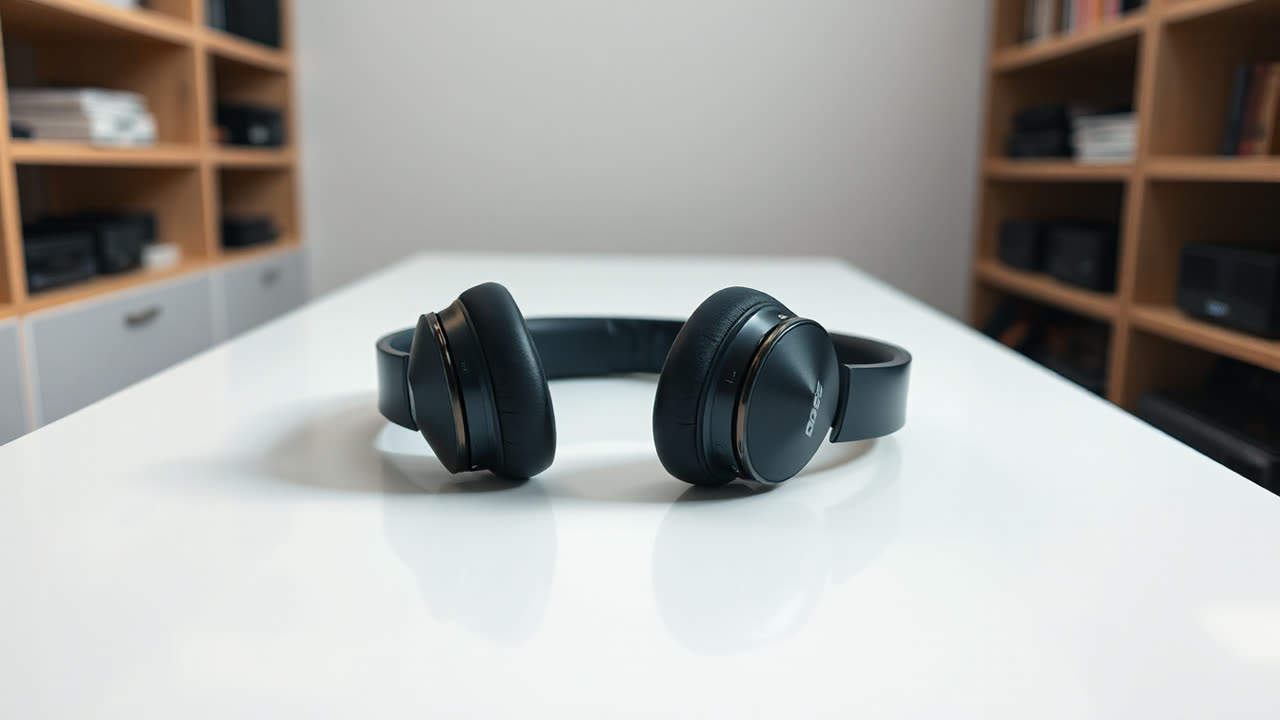
Bose has begun integrating Auracast into its flagship QuietComfort Ultra Headphones via a new firmware update, enabling Bluetooth LE Audio and Auracast as beta features for the $449 device. This move positions Bose among the early adopters of a technology poised to redefine personal and public audio experiences, moving beyond proprietary sharing solutions and towards a standardized, universally accessible soundscape.
The significance of this update extends far beyond a simple feature addition; it marks a pivotal shift in how audio is consumed and shared. Bluetooth LE Audio, the foundational technology, offers several critical advancements over classic Bluetooth, including significantly lower power consumption, improved audio quality through the new LC3 codec, and crucially, multi-stream audio capabilities. Auracast, built upon LE Audio, leverages these advancements to allow a single audio source to broadcast to an unlimited number of nearby compatible devices. This paradigm shift enables scenarios ranging from multiple users sharing audio from a single smartphone or TV to public venues broadcasting audio to individual headphones, creating a silent disco effect in a gym or providing multilingual interpretations at a conference.
For users, the immediate impact is the potential for enhanced personal sharing, breaking the current two-headphone limit of many existing Bluetooth connections. Imagine seamlessly sharing a movie's audio with several friends on a plane or a single phone broadcasting a podcast to everyone in a study group. Beyond personal use, Auracast promises a revolution in public accessibility. Airports could broadcast gate announcements directly to headphones, museums could offer guided tours without cumbersome rental devices, and sports bars could let patrons tune into specific game commentaries while still enjoying the ambient atmosphere. The beta status of Bose's implementation suggests an iterative rollout, allowing for user feedback to refine the experience before a full public release, which is a prudent approach for such a transformative technology.
Industrially, Bose's adoption of Auracast signals a strong endorsement from a major player in premium audio, applying pressure on rivals to accelerate their own LE Audio and Auracast integration. This standardization effort, spearheaded by the Bluetooth Special Interest Group (SIG) and formally adopted in July 2022, seeks to unify a fragmented landscape where proprietary solutions like Apple's Audio Sharing (which allows sharing audio between two pairs of AirPods or Beats headphones) currently dominate. While Apple's ecosystem provides a smooth experience within its walled garden, Auracast aims for universal interoperability, enabling any compatible LE Audio headphone to connect to any Auracast broadcast, regardless of brand. This open standard fosters innovation and competition, potentially leading to new product categories and services centered around shared audio.
Comparing the QuietComfort Ultra Headphones to their predecessors, the addition of LE Audio and Auracast represents a significant leap forward. Older Bose models, like the QuietComfort 45, relied on classic Bluetooth and lacked these advanced sharing capabilities. While competitors like Sony and Sennheiser have also been integrating LE Audio into their newer devices, Bose's move with its flagship model solidifies Auracast's position as a premium feature. For instance, some earbuds from Jabra and Sennheiser already support LE Audio, but the widespread adoption in high-end over-ear headphones, especially from a brand synonymous with active noise cancellation, provides significant momentum.
Looking ahead, the full potential of Auracast will hinge on broader ecosystem adoption. While compatible headphones are emerging, the infrastructure for public broadcasts needs to catch up. This involves the deployment of Auracast transmitters in public venues, which will likely be a gradual process. Bose's early entry, even in beta, primes its users for this future and provides valuable data for the development of both the technology and the user experience. We can anticipate other premium headphone manufacturers to follow suit rapidly, integrating Auracast into their next-generation devices. The focus will shift from merely supporting the technology to optimizing its implementation, ensuring seamless discovery, connection, and management of multiple audio streams. Ultimately, Auracast's success will be measured by its ubiquity, transforming public spaces into individually customizable sound environments and fundamentally altering our relationship with ambient audio.