Brave Launches Email Aliases, Boosting Browser Privacy Against Trackers
Brave browser's new Email Aliases feature, rolled out in desktop version 1.94, allows users to generate unique, forwarding email addresses directly from sign-up forms, significantly enhancing digital privacy and challenging industry giants.
✨ This content was summarized and interpreted by AI; it may contain errors — please verify accuracy with the original sources. Learn more
Listen to this story
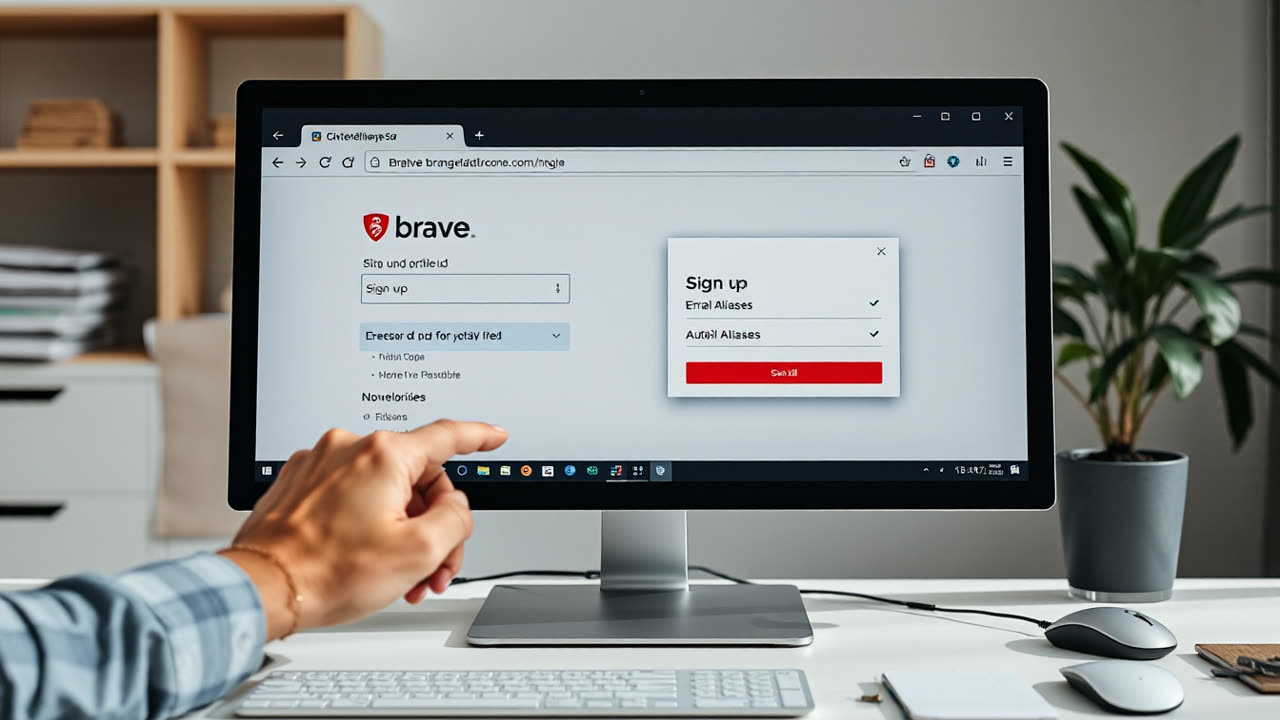
Brave has significantly advanced browser-based privacy with the immediate rollout of its new Email Aliases feature in desktop version 1.94, announced this week, allowing users to generate unique, forwarding email addresses directly from website sign-up forms. This integrated functionality, designed to shield personal email addresses from pervasive online tracking, spam, and data breaches, marks a substantial escalation in the ongoing battle for digital anonymity. Users can now create up to five free aliases, which route messages to their primary inbox while keeping their actual email hidden from the originating site. The system requires a new Brave Account, built on the OPAQUE cryptographic protocol, ensuring user passwords are never transmitted to Brave's servers.
This move is more than a mere convenience; it’s a critical defense against sophisticated, server-side tracking mechanisms that conventional browser-based ad and tracker blockers often miss. Ad tech companies frequently leverage email addresses as "durable, universal identifiers" to match user profiles across platforms, even when browser-side trackers are blocked. By providing a disposable, site-specific email, Brave empowers users to break these cross-site tracking links, drastically reduce spam, and, critically, identify precisely which service has sold or leaked their data if an alias begins receiving unwanted mail. This offers a tangible layer of control over one’s digital identity that transcends typical content filtering. Brave asserts that it does not read the content of forwarded emails, processing them only for essential spam and virus filtering before deleting them from its servers within seconds of delivery. Alias-specific notes are stored locally and are end-to-end encrypted when Brave Sync is enabled, further underscoring the privacy-first design.
The introduction of Email Aliases further solidifies Brave's position as a privacy-centric browser in a market dominated by Google Chrome, which holds a commanding 65.23% global market share as of early 2026. While Brave's global market share hovers between 1% and 1.8%, it has seen consistent growth, reaching 120.93 million monthly active users by June 2026. This new feature provides a significant competitive differentiator against Chrome, which offers no native email alias solution, forcing users to rely on third-party extensions like DuckDuckGo Email Protection or SimpleLogin for similar functionality.
Brave's implementation directly rivals Apple's "Hide My Email," a feature primarily available to iCloud+ subscribers (starting at $0.99/month) and deeply integrated within the Apple ecosystem. Unlike Apple's offering, Brave's Email Aliases are initially available on desktop across Windows, macOS, and Linux, with mobile support planned, making it a more accessible, cross-platform solution. Another key player in this space, Mozilla's Firefox Relay, provides a free tier of five aliases and a paid plan for unlimited use, but its most convenient functionality often relies on the Firefox browser extension. Brave's native integration streamlines the process, placing alias generation directly within the browser's autofill suggestions or right-click context menu on email fields. This builds upon Brave's existing suite of privacy tools, including robust ad and tracker blocking, GPU fingerprinting protections updated in August 2026, and its recently introduced "Containers" for tab isolation.
Looking ahead, the immediate availability of five free aliases is likely a strategic play to gather user feedback and build out the necessary mail forwarding infrastructure. Brave has already indicated plans for mobile support and a future premium version of the feature, which could offer an expanded number of aliases, custom alias domains, or advanced management capabilities. This could unlock a new revenue stream for Brave, diversifying its business model beyond its Basic Attention Token (BAT) Rewards system, which itself saw a "Roadmap 4.0" update in July 2026, focusing on Brave Wallet and BravePay. As user demand for privacy tools intensifies, Brave's bold integration of email aliases could pressure other major browser developers to incorporate similar native protections, potentially normalizing the use of disposable email identities as a standard expectation for online privacy. The initial challenge for Brave will be to quickly establish a strong reputation as a reliable mail provider to ensure forwarded emails don't inadvertently land in spam folders.