British AI Lab Inherent Unveils Faraday, Outperforming Giants in Scientific Replication
DeepMind alumni-founded Inherent introduces Faraday, an AI agent capable of autonomously validating scientific research, potentially surpassing Anthropic and OpenAI in reproducibility tasks.
✨ This content was summarized and interpreted by AI; it may contain errors — please verify accuracy with the original sources. Learn more
Listen to this story
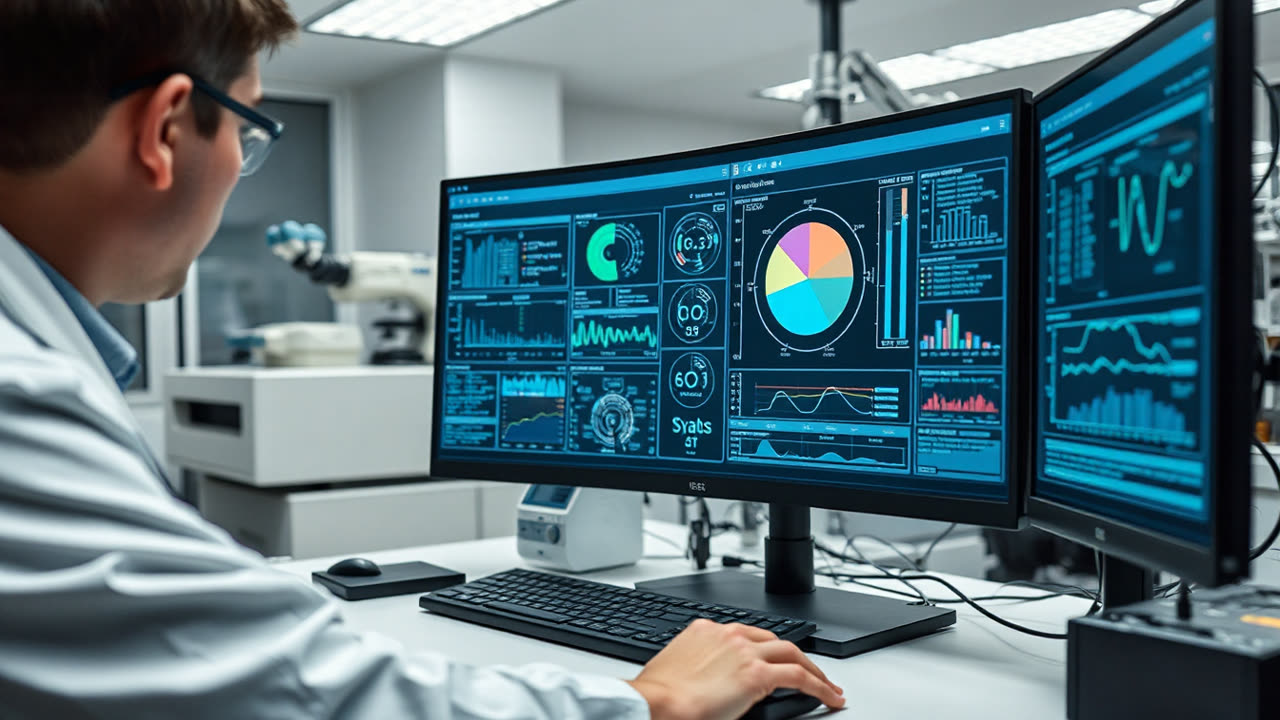
British AI lab Inherent, founded by DeepMind alumni, has unveiled Faraday, an AI agent purportedly capable of outperforming established industry giants like Anthropic and OpenAI in the complex task of replicating scientific papers. This breakthrough signals a potentially transformative moment for scientific discovery, moving beyond mere data analysis to autonomous experimental validation.
Faraday's reported ability to independently understand, plan, and execute the steps necessary to reproduce published research represents a significant leap from current large language models (LLMs) and specialized AI tools. While existing AI can assist in literature reviews, hypothesis generation, or even control laboratory equipment, Faraday aims to close the loop by autonomously verifying experimental results. This capability is critical because the scientific method relies heavily on reproducibility, a challenge that plagues many fields, with studies suggesting that a significant percentage of published research cannot be replicated. By automating this validation process, Faraday could drastically accelerate the pace of scientific progress, freeing human researchers from time-consuming, repetitive tasks and allowing them to focus on novel inquiries and interpretive analysis.
The core technology behind Faraday likely leverages advanced multimodal understanding, integrating natural language processing with the ability to interpret experimental protocols, chemical structures, and biological pathways. DeepMind's legacy, from which Inherent's founders hail, is rooted in developing AI that can master complex systems, as demonstrated by AlphaGo's strategic prowess and AlphaFold's protein folding predictions. This background suggests Faraday might employ sophisticated reinforcement learning or planning algorithms to navigate the multi-step, often ambiguous nature of scientific experimentation. The specific benchmarks against Anthropic and OpenAI are crucial; if Faraday genuinely surpasses their agents in this domain, it indicates a specialized architectural advantage or a more effective training regimen tailored to the nuances of scientific replication, rather than general-purpose reasoning. While Anthropic's Claude models and OpenAI's GPT series have shown impressive capabilities in understanding and generating text, their direct application to *executing* and *validating* scientific experiments independently has been less publicly emphasized or benchmarked at this level.
The impact on the research ecosystem could be profound, extending beyond academic labs to pharmaceutical development, materials science, and biotechnology. In drug discovery, for instance, Faraday could rapidly validate pre-clinical findings, significantly shortening the development pipeline and reducing the high failure rates associated with translating basic research into viable treatments. For industry, this means faster innovation cycles, reduced R&D costs, and a more robust foundation for product development. Furthermore, the inherent transparency and auditability of an AI-driven replication process could enhance trust in scientific findings, addressing the "reproducibility crisis" head-on. Imagine an AI agent not only confirming results but also identifying subtle methodological flaws or sources of variability that human researchers might overlook.
However, the introduction of such a powerful AI also raises questions. The "teammate" designation suggests a collaborative role, but the extent of human oversight required will be paramount. Ensuring the AI's interpretations are sound, its experimental designs ethical, and its conclusions free from algorithmic bias will necessitate robust validation frameworks and human-in-the-loop protocols. There's also the potential for job displacement in roles centered on routine experimental work, though this would likely be offset by the creation of new roles focused on AI supervision, advanced experimental design, and higher-level scientific inquiry.
Looking ahead, Faraday's success could pave the way for fully autonomous scientific discovery platforms. The next logical step would be for AI to not just replicate, but to *design* novel experiments based on its understanding of existing literature and identified gaps. This could lead to a paradigm shift where AI-driven laboratories operate with minimal human intervention, generating new hypotheses, testing them, and publishing findings at an unprecedented pace. The challenge will be scaling this capability across diverse scientific disciplines, each with its unique experimental methodologies and data types. Furthermore, the development of robust, secure, and ethical AI governance frameworks will be critical to harness this power responsibly, ensuring that the acceleration of knowledge benefits all of humanity. Inherent's Faraday is not just another AI agent; it's a harbinger of a future where AI becomes an active, indispensable partner in the very act of scientific creation.