BYD Denza Z9S Claims World's Longest EV Range at 1,100 km, Priced Under $50,000
BYD's Denza Z9S has opened pre-orders in China, claiming an unprecedented 1,100 km pure electric range with a starting price under $50,000, poised to redefine EV expectations.
✨ This content was summarized and interpreted by AI; it may contain errors — please verify accuracy with the original sources. Learn more
Listen to this story
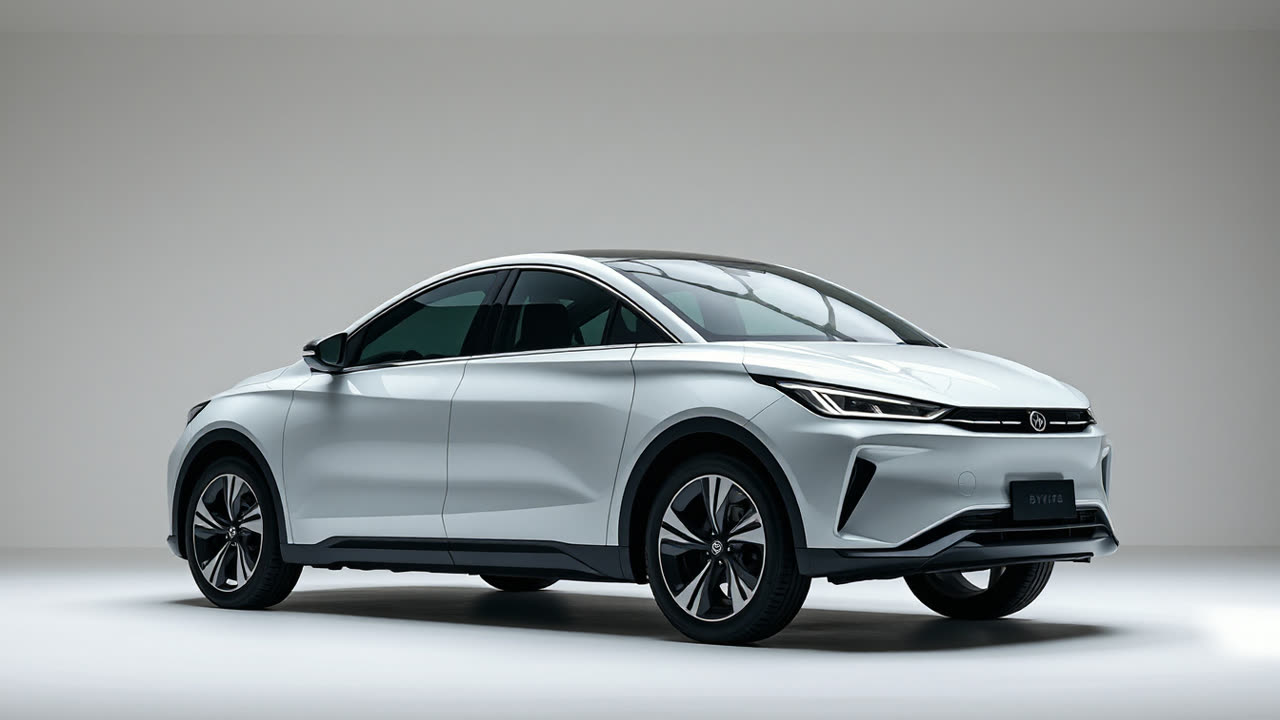
BYD's Denza Z9S has ignited the global electric vehicle (EV) market by opening pre-orders in China, claiming an unprecedented 1,100 km (683 miles) of pure electric range, with initial pricing starting under $50,000. This aggressive move by the Chinese automotive giant, a significant player in the global EV landscape, positions the Z9S as a potential game-changer, pushing the boundaries of what consumers expect from an EV's single-charge capability. The claimed range, likely under China's CLTC (China Light-Duty Vehicle Test Cycle) standard, represents a substantial leap, even as real-world performance will invariably vary.
This extraordinary range, if validated, directly addresses one of the most persistent barriers to widespread EV adoption: range anxiety. For many potential buyers, particularly in regions with less developed charging infrastructure or for those undertaking frequent long-distance travel, the perceived limitation of an EV's range has been a significant deterrent. A vehicle capable of traveling over 1,000 km on a single charge effectively eliminates this concern for the vast majority of drivers, potentially making EVs a more viable and attractive alternative to internal combustion engine (ICE) vehicles for a broader demographic. It could fundamentally shift consumer perception, moving the conversation beyond "can it make the trip?" to "how much more convenient is this?".
The Denza Z9S achieves this remarkable range primarily through advancements in BYD's proprietary Blade Battery technology, specifically a new generation of its lithium iron phosphate (LFP) cells. While specific technical details of the Z9S's battery pack capacity are yet to be fully disclosed, industry experts anticipate a pack exceeding 120 kWh, leveraging improved energy density and packaging efficiency of the latest Blade architecture. This LFP chemistry, known for its superior safety, longer cycle life, and lower cost compared to nickel-manganese-cobalt (NMC) batteries, has historically lagged in energy density. BYD's ability to achieve such a high range with LFP cells underscores significant breakthroughs in cell design and battery management systems (BMS), challenging the conventional wisdom that ultra-long-range EVs must rely solely on NMC or emerging solid-state technologies.
In comparison to its rivals, the Denza Z9S immediately sets a new benchmark. Previously, vehicles like the Lucid Air Grand Touring have offered an EPA-estimated range of up to 516 miles (approximately 830 km), while some top-tier Tesla models and Mercedes-Benz EVs hover around the 650-750 km (WLTP) mark. Even within China, competitors like Nio and Zeekr have pushed ranges beyond 800 km, but the 1,100 km figure from Denza represents a significant psychological and practical threshold. The sub-$50,000 starting price further amplifies its disruptive potential, positioning a premium-range vehicle at a price point that significantly undercuts most long-range luxury EVs from Western manufacturers, which often start well above $80,000 or even $100,000. This combination of extreme range and competitive pricing could put immense pressure on both domestic and international rivals to accelerate their own battery and efficiency innovations.
For the industry, the Denza Z9S signifies a renewed focus on raw range capability, even as the charging infrastructure continues to expand. While some analysts argue that diminishing returns apply beyond a certain range (e.g., 500-600 km), BYD's move suggests a strategic play to capture market share by offering an undeniable, headline-grabbing advantage. It also validates BYD's vertical integration strategy, controlling everything from battery cell production to vehicle manufacturing, allowing for rapid iteration and cost optimization. The Denza brand itself, a joint venture initially with Mercedes-Benz but now predominantly controlled by BYD, is being positioned as a premium sub-brand, aiming to compete with established luxury players while leveraging BYD's core strengths in battery technology and manufacturing scale. The Z9S, a sleek shooting brake, signals Denza's ambition to cater to diverse segments beyond traditional sedans and SUVs, targeting a more performance-oriented and design-conscious clientele.
Looking ahead, the Denza Z9S will likely catalyze a new wave of range competition among EV manufacturers. While the 1,100 km figure is impressive, the industry will closely watch its real-world performance under WLTP or EPA testing cycles, which tend to yield more conservative estimates. Nevertheless, this launch accelerates the timeline for mainstream EVs to routinely offer ranges exceeding 800 km, making long-distance EV travel a norm rather than an exception. Beyond range, the focus will inevitably shift to charging speed, battery longevity, and the overall cost-effectiveness of these advanced battery packs. BYD's commitment to LFP technology for such high-performance applications also suggests that while solid-state batteries are on the horizon, conventional lithium-ion chemistries still have significant room for innovation and improvement, particularly in cost and energy density. The Denza Z9S is not just a new car; it is a declaration of intent, signaling BYD's formidable ambition to dominate the global EV market through relentless innovation and aggressive pricing, setting a daunting new standard for the entire industry to chase.