BYD Formula S Dramatically Undercuts Tesla Model 3, Escalating Global EV Price War
BYD's new Formula S electric vehicle launches at 189,900 yuan ($28,080), significantly cheaper than the Tesla Model 3, intensifying the global EV price competition.
✨ This content was summarized and interpreted by AI; it may contain errors — please verify accuracy with the original sources. Learn more
Listen to this story
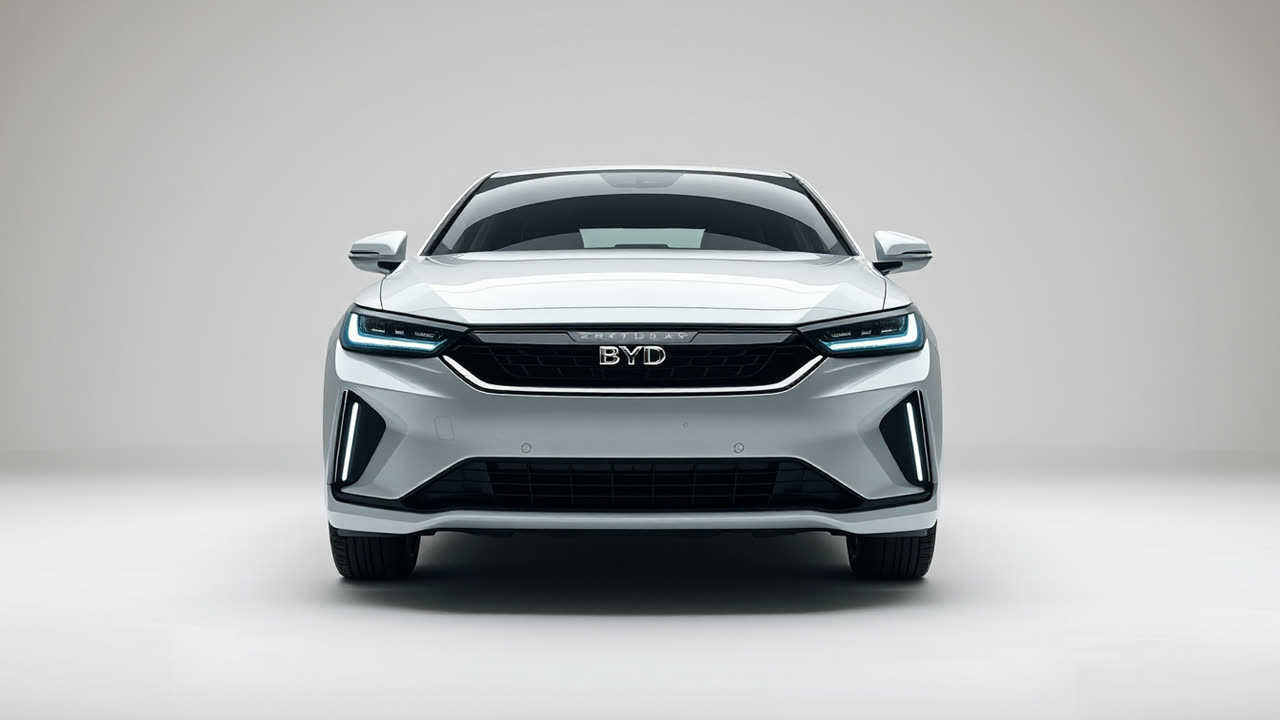
BYD's new Formula S electric vehicle, launched under its Fang Cheng Bao brand, has debuted with a starting price of 189,900 yuan (approximately $28,080), dramatically undercutting the Tesla Model 3. This aggressive pricing, significantly below its initial pre-sale range of 230,000 to 280,000 yuan, positions the Formula S as a formidable challenger in the fiercely competitive mid-to-large-size electric sedan market, directly targeting rivals like the Tesla Model 3 and Xiaomi SU7. The 2026 Tesla Model 3, by comparison, starts at around $36,990 to $38,630, making BYD's new offering at least $9,000 cheaper at its entry level.
This move by BYD, already the world's largest EV maker by volume, is not merely a product launch; it signifies a strategic escalation in the global EV price war, particularly as Chinese domestic EV sales growth has slowed. The Formula S series, which includes both a sedan and a GT shooting brake, boasts impressive specifications for its price point, including a maximum CLTC range of up to 900 km (559 miles) for the long-range rear-wheel-drive variant, and flash charging capabilities. The entry-level Formula S sedan features a 76.744 kWh LFP battery, a 730 km (453 miles) CLTC range, and DiSus-C suspension. Higher-end models offer a 92.093 kWh battery, all-wheel-drive with 490 kW (657 hp) output, and advanced features like the DiSus-M intelligent magnetorheological suspension system and a LiDAR-equipped "God's Eye B" driver-assistance system for urban and highway navigation. These features, typically associated with more premium vehicles, underscore BYD's ability to deliver high value at a lower cost.
The significance of the Formula S extends beyond its price tag and features. It marks Fang Cheng Bao's entry into the sedan market, broadening the customer base of what was initially conceived as an SUV-focused brand. Fang Cheng Bao, or Equation Leopard, was established in 2023 as BYD's "professional and personalized brand," positioned between BYD's mass-market offerings and its ultra-luxury Yangwang brand. This strategic segmentation allows BYD to target diverse consumer needs, from rugged off-road vehicles (Bao series) to urban-focused models (Tai series) and now performance sedans. The brand has seen rapid sales growth, selling 242,255 vehicles in the first eight months of 2026, exceeding its full-year 2025 total.
For consumers, BYD's aggressive pricing translates into greater accessibility to advanced EV technology, potentially accelerating global EV adoption. The Formula S offers a compelling alternative to established players, forcing the entire industry to re-evaluate pricing and feature sets. This benefits buyers who can now expect more for their money, driving competition in areas like range, charging speed, and driver-assistance systems. The inclusion of a LiDAR sensor and advanced ADAS in a sub-$30,000 vehicle sets a new benchmark for what is considered standard in the mid-range segment.
From an industry perspective, this launch intensifies the global EV price war, a battle BYD itself helped ignite and has consistently leveraged due to its unparalleled vertical integration. BYD manufactures its own batteries (Blade Battery), chips, motors, and even smaller components, giving it significant cost control and a faster innovation cycle compared to rivals reliant on external suppliers. This allows BYD to absorb tighter margins while still offering competitive pricing, a strategy that has seen its profit margins squeezed in its domestic market but has fueled its global expansion. In 2025, BYD surpassed Tesla in global battery-electric vehicle sales volume, a symbolic shift indicating the maturation of the EV market beyond a single dominant player.
Tesla, in response to this escalating competition, has resorted to price cuts on its Model 3 and Model Y in China, facing declining domestic deliveries. While Tesla maintains advantages in software integration and its Supercharger network, the gap in other areas is rapidly narrowing as Chinese automakers advance in battery chemistry, user interfaces, and driver-assistance technology. The expiry of federal EV tax credits in some Western markets further amplifies the price sensitivity of consumers, making BYD's sub-$29,000 offering even more disruptive globally.
Looking ahead, the launch of the Formula S signals BYD's continued strategic push for global dominance. The company has aggressively expanded its overseas sales, raising its 2026 export target multiple times to as much as 2 million vehicles, supported by new manufacturing plants in Indonesia, Brazil, and Hungary. This localized production strategy aims to circumvent potential tariffs and deepen its market penetration, particularly in Europe, Southeast Asia, and Latin America. The market can anticipate further price adjustments from competitors, particularly in the mid-range EV segment, as they struggle to match BYD's cost efficiencies and feature-rich offerings. The relentless pursuit of affordability, coupled with rapid technological advancements, will undoubtedly accelerate the transition to electric mobility worldwide, but it will also test the financial resilience and innovation capabilities of every automaker on the planet. The era of premium-only EVs is rapidly giving way to a new reality where mass-market accessibility, driven by players like BYD, dictates the pace of change.