BYD Launches 'Great Seagull' EV to Cement Affordable Market Dominance
BYD is poised to significantly escalate its dominance in the global electric vehicle market with the imminent launch of the 'Great Seagull' (Da Haiou), a new electric hatchback strategically positioned to bridge the gap between its highly successful Seagull (known as Dolphin Mini or Dolphin Surf in international markets) and the larger Dolphin.
✨ This content was summarized and interpreted by AI; it may contain errors — please verify accuracy with the original sources. Learn more
Listen to this story
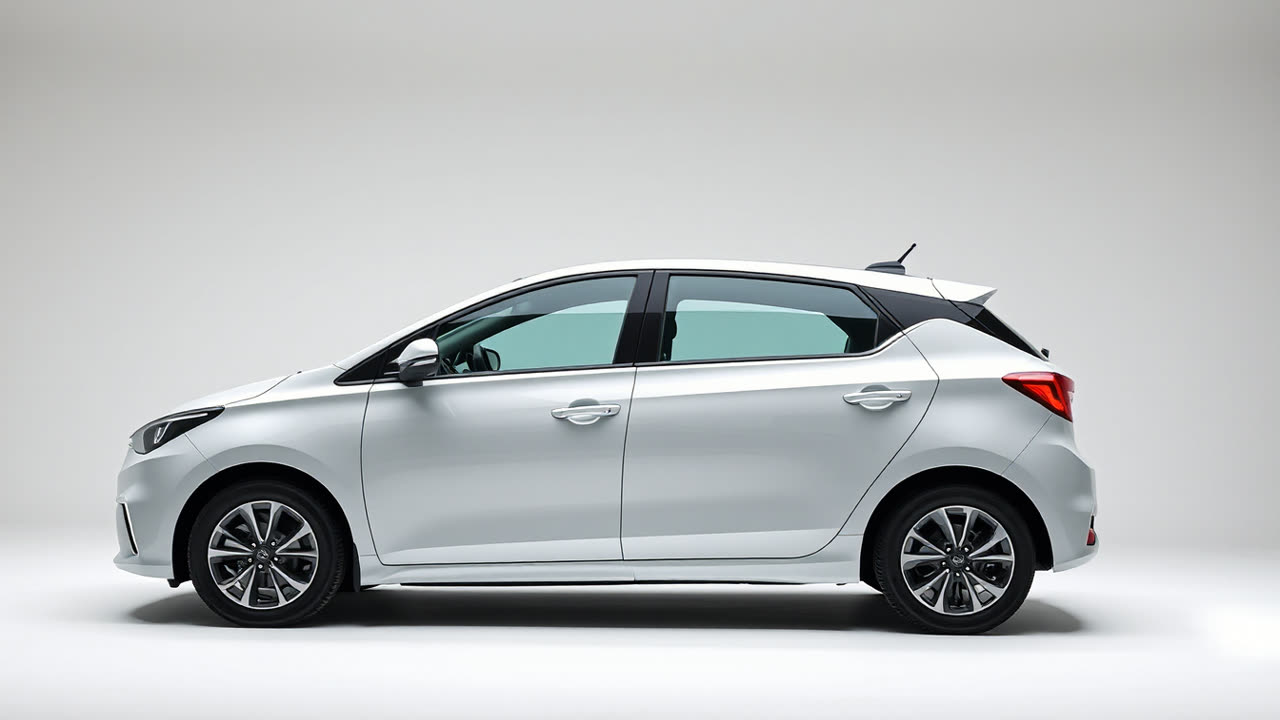
BYD is poised to significantly escalate its dominance in the global electric vehicle market with the imminent launch of the 'Great Seagull' (Da Haiou), a new electric hatchback strategically positioned to bridge the gap between its highly successful Seagull (known as Dolphin Mini or Dolphin Surf in international markets) and the larger Dolphin. Expected to debut in China before the end of 2026, this new model is a calculated move to capture an even broader segment of the burgeoning affordable EV market, offering a compelling blend of size, range, and advanced features at a highly competitive price point.
The Great Seagull measures a substantial 4205 mm in length, 1810 mm in width, and 1570 mm in height, riding on a 2650 mm wheelbase. This makes it 425 mm longer than the existing Seagull, which measures 3780 mm, and just 65 mm shorter than the Dolphin, which is approximately 4290 mm. Powering the Great Seagull will be a single electric motor delivering 95 kW (127 hp), a significant upgrade from the current Seagull's 55 kW (75 hp) motor. It will be equipped with FinDreams-made LFP Blade Batteries, available in two capacities: a 30 kWh pack offering a CLTC range of 320 km, and a larger 39.2 kWh pack extending the CLTC range to 420 km. The top speed is capped at 150 km/h, and the vehicle will roll on 16-inch wheels with 205/60 tires. Industry analysts anticipate pricing for the Great Seagull to fall within the 80,000 to 90,000 yuan range (approximately $11,100 to $12,500 USD), slotting neatly between the Seagull's starting price of around 69,800 yuan (~$9,700 USD) and the Dolphin's 99,800 yuan (~$13,900 USD) entry point in China.
This strategic introduction matters immensely for several reasons, fundamentally reshaping consumer expectations and intensifying industry competition. For users, the Great Seagull presents a compelling value proposition: a more spacious and capable EV than the ultra-compact Seagull, yet more affordable than the Dolphin. It addresses a critical demand for practical, longer-range electric mobility without the premium price tag often associated with larger EVs. This fills a vital gap for budget-conscious families and urban commuters who require more utility than a city car but don't need the full specifications or cost of a larger compact. The integration of BYD's advanced Blade Battery 2.0 and Flash Charging technology is also expected, promising enhanced safety, durability, and faster charging capabilities that further elevate its appeal. Furthermore, the potential for optional LiDAR-based "God's Eye B" intelligent driving assistance, as seen on the 2026 Seagull, signals a rapid democratization of advanced driver-assist systems into the affordable segment, a move that could significantly improve safety and convenience for a wider demographic.
From an industry perspective, the Great Seagull solidifies BYD's aggressive market segmentation strategy within its popular "Ocean Series." By offering incrementally sized and priced models, BYD can effectively corner various consumer niches, putting immense pressure on both domestic rivals like Geely Xingyuan and GAC Aion UT, and international automakers struggling to compete on cost and features in the compact EV space. BYD's unparalleled vertical integration, encompassing everything from batteries and electric motors to semiconductors and power electronics, grants it a profound cost advantage, allowing it to produce feature-rich EVs at prices few competitors can match. This structural efficiency is not a temporary pricing ploy but a fundamental aspect of BYD's business model, enabling them to drive down costs even as they scale production. The launch of the Great Seagull may also signal BYD's intent to streamline its Dolphin lineup, potentially phasing out entry-level Dolphin variants that could be cannibalized by the new model's superior size-to-price ratio.
The Great Seagull's positioning between its siblings creates a clear hierarchy. While the Dolphin, with its larger 60.5 kWh battery and up to 350 km WLTP range (in certain configurations), offers higher performance and range, it also commands a higher price, ranging from €18,000 to €37,000 in global markets or $29,990 to $36,990 in Australia. The current Seagull (Dolphin Mini/Surf), starting at around $10,000 in China, serves as a highly affordable city car, but its smaller dimensions (3780 mm length) and lower power output (55 kW) limit its versatility. The Great Seagull strikes a crucial balance, offering a 425 mm longer body and a 127 hp motor, providing better highway usability and passenger comfort than the standard Seagull, without encroaching on the Dolphin's higher-tier positioning. This tiered approach allows BYD to offer a spectrum of electric hatchbacks tailored to diverse budgets and needs, from urban dwellers seeking absolute affordability to those desiring a bit more space and power for longer trips.
Looking ahead, the Great Seagull underscores BYD's unyielding commitment to global expansion through accessible electric mobility. As BYD continues its rapid penetration into markets across Southeast Asia, Europe, Latin America, and Australia, models like the Great Seagull will be instrumental in capturing market share from legacy automakers still struggling to bring truly affordable, competitive EVs to scale. This aggressive product rollout, coupled with BYD's continuous technological advancements in battery efficiency and intelligent driving systems, will undoubtedly intensify the global EV "price war," forcing competitors to innovate faster and reduce costs more aggressively. The future of the EV market, particularly in the compact and sub-compact segments, will increasingly be defined by the fierce competition for value, a battle BYD is exceptionally well-equipped to win with models like the Great Seagull.