BYD’s Denza Z Electric Supercar Challenges Luxury Titans with Unprecedented Performance and Aggressive Pricing
BYD's Denza Z electric supercar, unveiled at Goodwood, delivers 1,582 horsepower and a 0-62 mph time of 1.96 seconds, significantly undercutting traditional luxury performance vehicles like the Porsche 911 Turbo S.
✨ This content was summarized and interpreted by AI; it may contain errors — please verify accuracy with the original sources. Learn more
Listen to this story
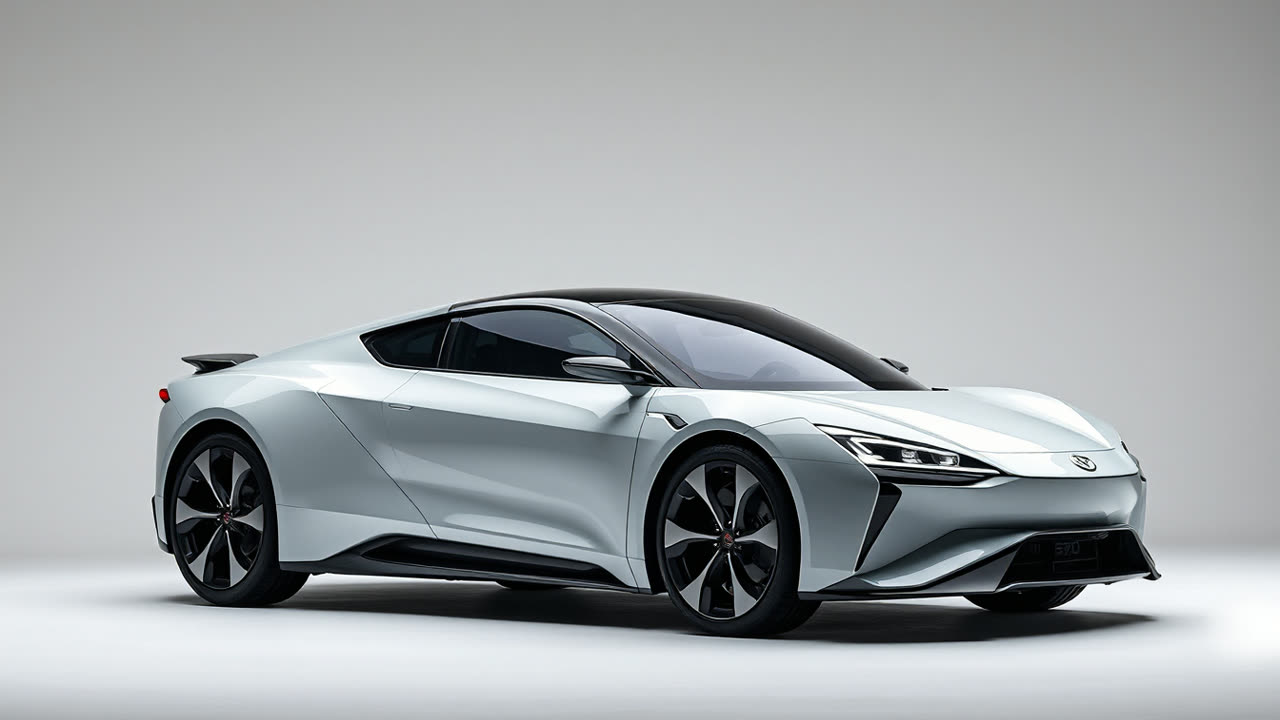
BYD’s Denza Z electric supercar, unveiled at the Goodwood Festival of Speed, marks a pivotal moment in the automotive industry, not merely for its blistering performance but for its aggressive disruption of the established luxury performance hierarchy. The flagship Racing variant, equipped with three electric motors, delivers a staggering 1,582 horsepower and 915 lb-ft of torque, propelling it from 0 to 62 mph in an astonishing 1.96 seconds with optional semi-slick tires, and reaching a top speed of 217 mph. This directly challenges traditional titans like the Lamborghini Temerario, which, with 920 hp and 1,000 Nm of torque, achieves 0-62 mph in 2.7 seconds. The Denza Z also outpaces the Porsche 911 Turbo S, which hits 62 mph in 2.5 seconds. Crucially, the Denza Z Racing is priced at £172,900 (approximately $234,000) in Europe, significantly undercutting the Porsche 911 Turbo S, which starts at £199,100 (around $270,000). In China, the Denza Z Coupe starts at an even more accessible 680,000 RMB ($100,000), with the Racing trim at 1.18 million RMB ($175,000).
This aggressive positioning fundamentally redefines the value proposition in the high-performance segment. For users, the Denza Z democratizes hypercar-level acceleration and speed, making it attainable at a price point previously reserved for high-end sports cars, not supercars. It shatters the perception that extreme performance must come with an exorbitant price tag and an exclusive badge from a legacy European manufacturer. Early demand reflects this, with BYD reporting over 1,000 global pre-orders for the Denza Z in just five days.
The implications for the industry are profound. BYD, primarily known for its volume EV production and more accessible models, is leveraging its Denza premium brand to directly challenge the dominance of Porsche, Mercedes-Benz, Audi, and BMW in the European luxury market. This move underscores BYD's strategic intent to capture market share across all segments, from mass-market to ultra-luxury. The Denza Z's advanced e3 platform, an 800V architecture with Flash Charging that allows a 10% to 70% charge in just five minutes, highlights BYD's technological prowess. This rapid charging capability, along with its comprehensive suite of advanced drive components, positions Denza not just as a competitor in performance, but also in cutting-edge EV technology.
BYD's foray into the supercar arena with the Denza Z builds upon its broader high-end strategy, which also includes the Yangwang brand. The Yangwang U9, for instance, a pure electric supercar launched in February 2024, boasts 1,300 horsepower and a 0-100 km/h time of 2.36 seconds, priced at 1.68 million RMB (approximately $236,000). While the U9 represents an even higher echelon of performance and price within BYD's portfolio, the Denza Z, with its more attainable pricing, serves as a direct assault on the premium sports car market. Compared to traditional rivals, the Denza Z is also slightly larger than a Porsche 911, closer in size to a Mercedes-AMG GT Coupe, offering a four-seat interior layout that distinguishes it from many two-seat supercars. This combination of hypercar performance with practical seating could appeal to a broader demographic of luxury buyers.
Looking ahead, the Denza Z's entry will undoubtedly intensify competition in the high-performance EV sector. Established luxury brands will be compelled to accelerate their own electric supercar development, potentially leading to a cascade of innovation and more competitive pricing across the board. The automotive high-performance electric vehicles market is already projected to grow significantly, from an estimated USD 203.53 billion in 2025 to USD 491.41 billion by 2034. BYD's aggressive pricing strategy, particularly in its home market, could force Western manufacturers to re-evaluate their global pricing models for high-performance EVs. The success of the Denza Z will also be a litmus test for brand perception, as Chinese automakers aim to shed the "value-first" image and establish themselves as leaders in luxury and performance. While the raw performance figures are undeniable, winning over enthusiasts who prioritize heritage and brand prestige will be a longer battle. However, with its compelling combination of speed, technology, and aggressive pricing, the Denza Z is poised to fundamentally reshape expectations for what an electric supercar can be, and who can afford to drive one.