BYD's Denza Z Electric Supercar Redefines High-Performance Market
BYD's Denza Z electric supercar has shattered established performance and pricing paradigms, delivering over 1,500 horsepower from a tri-motor setup, enabling it to launch from 0 to 62 mph in under 2 seconds – a benchmark that directly challenges and surpasses the acceleration of a Porsche 911 Turbo S, all while being significantly more affordable.
✨ This content was summarized and interpreted by AI; it may contain errors — please verify accuracy with the original sources. Learn more
Listen to this story
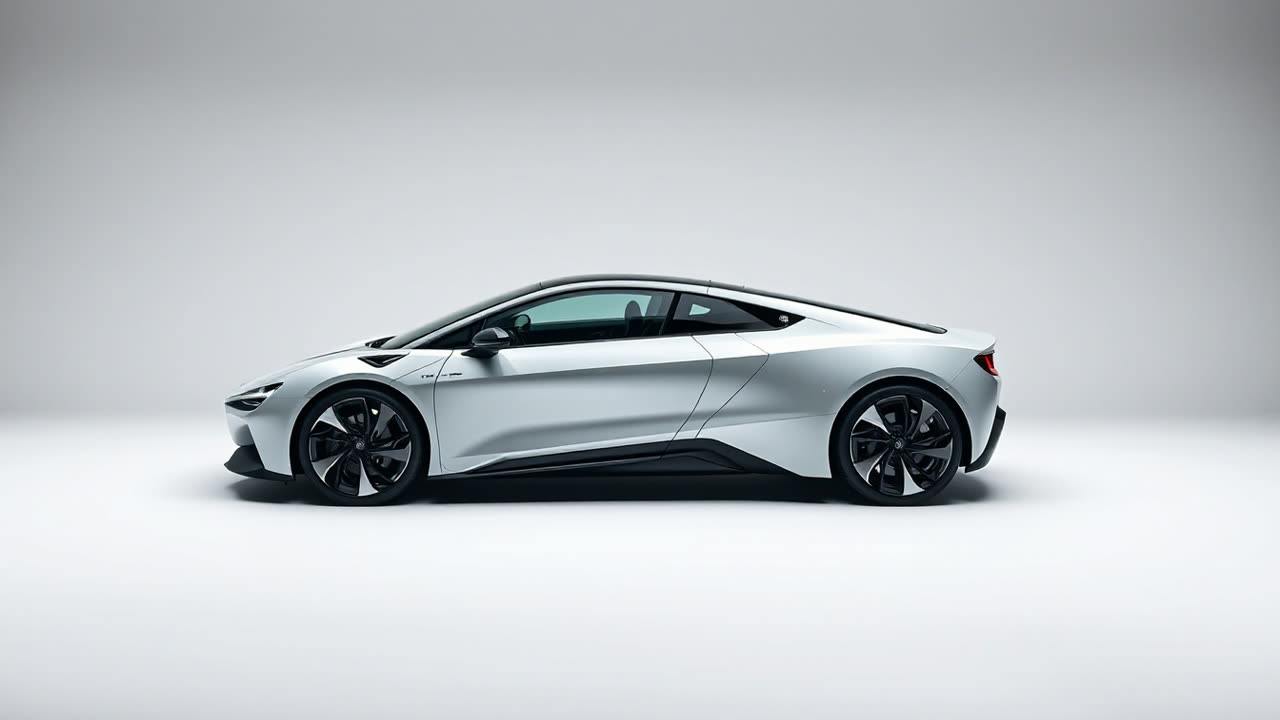
BYD's Denza Z electric supercar has shattered established performance and pricing paradigms, delivering over 1,500 horsepower from a tri-motor setup, enabling it to launch from 0 to 62 mph in under 2 seconds – a benchmark that directly challenges and surpasses the acceleration of a Porsche 911 Turbo S, all while being significantly more affordable. This audacious entry from a Chinese automaker, traditionally known for its value-oriented electric vehicles, signals a profound shift in the global automotive hierarchy and the accelerating democratization of hypercar-level performance.
The Denza Z's raw power and blistering acceleration are not merely technical achievements; they represent a strategic declaration of intent from BYD, positioning the brand not just as a volume leader in electric mobility but as a formidable contender in the ultra-high-performance luxury segment. For consumers, this means the once-exclusive domain of sub-two-second acceleration, typically reserved for seven-figure limited-run hypercars, is becoming accessible at a fraction of the cost. The Porsche 911 Turbo S, a pinnacle of internal combustion engineering, boasts a 0-60 mph time of 2.6 seconds and carries a starting price well over $200,000. While specific pricing for the Denza Z is yet to be finalized for all markets, reports indicate it will significantly undercut its German rival, making extreme performance attainable for a broader, albeit still affluent, customer base. This development forces a re-evaluation of brand value and performance expectations, challenging the long-held belief that only legacy European marques can deliver such exhilarating driving experiences.
BYD's ascent into this elite performance category is a testament to China's rapid innovation in electric vehicle technology and manufacturing scale. The company has evolved from a battery manufacturer to the world's largest EV producer, leveraging vertical integration to control costs and accelerate development cycles. The Denza brand, a joint venture initially with Mercedes-Benz, has been repositioned by BYD to target the premium and luxury segments, distinct from its more mass-market offerings. This move allows BYD to explore higher price points and showcase advanced engineering without diluting its core brand identity. The tri-motor architecture of the Denza Z is particularly significant, demonstrating advanced power delivery and torque vectoring capabilities that are crucial for harnessing such immense power efficiently and safely. This technological prowess not only rivals but, in some metrics, exceeds what many established performance brands have brought to market, especially at a comparable price point.
The impact on the automotive industry is multi-faceted. Traditional luxury and performance manufacturers like Porsche, Ferrari, and Lamborghini are now facing direct competition from unexpected quarters, not just from fellow electric vehicle startups but from established volume players with vast resources. This will undoubtedly accelerate their own electrification strategies, pushing them to develop even more potent and competitively priced electric performance vehicles. The Denza Z's aggressive pricing strategy could compress margins in the high-performance segment, forcing incumbents to find new efficiencies or differentiate through brand heritage, bespoke customization, and driving dynamics that go beyond raw speed. Furthermore, the Denza Z's arrival underscores the diminishing relevance of internal combustion engines in the pursuit of ultimate acceleration, as electric powertrains offer instant torque and precise power delivery that piston engines simply cannot match.
Looking ahead, the Denza Z is likely just the vanguard of BYD's broader ambition in the luxury and performance sectors. We can anticipate further specialization within the Denza sub-brand, potentially leading to a range of high-performance EVs that cater to different luxury niches. The challenge for BYD will be to translate its technical superiority and price advantage into brand desirability and a global premium perception, an area where established rivals like Porsche have decades of heritage and emotional connection. Building out a robust global sales and service network capable of supporting such high-end vehicles will also be critical. However, if the Denza Z can deliver on its promises of exhilarating performance, advanced technology, and compelling value, it stands to fundamentally reshape consumer expectations and accelerate the global transition towards a truly electric, high-performance future. The era of the electric hypercar, once a niche fantasy, is now firmly in the hands of mass-market innovators.