BYD's Flagship Han EV Shatters Range Expectations with 1,000 km and $37,000 Price Tag
BYD's upcoming Han EV flagship is set to launch next month, boasting an unprecedented 1,000+ km range and a starting price of approximately $37,000, poised to disrupt the global EV market.
✨ This content was summarized and interpreted by AI; it may contain errors — please verify accuracy with the original sources. Learn more
Listen to this story
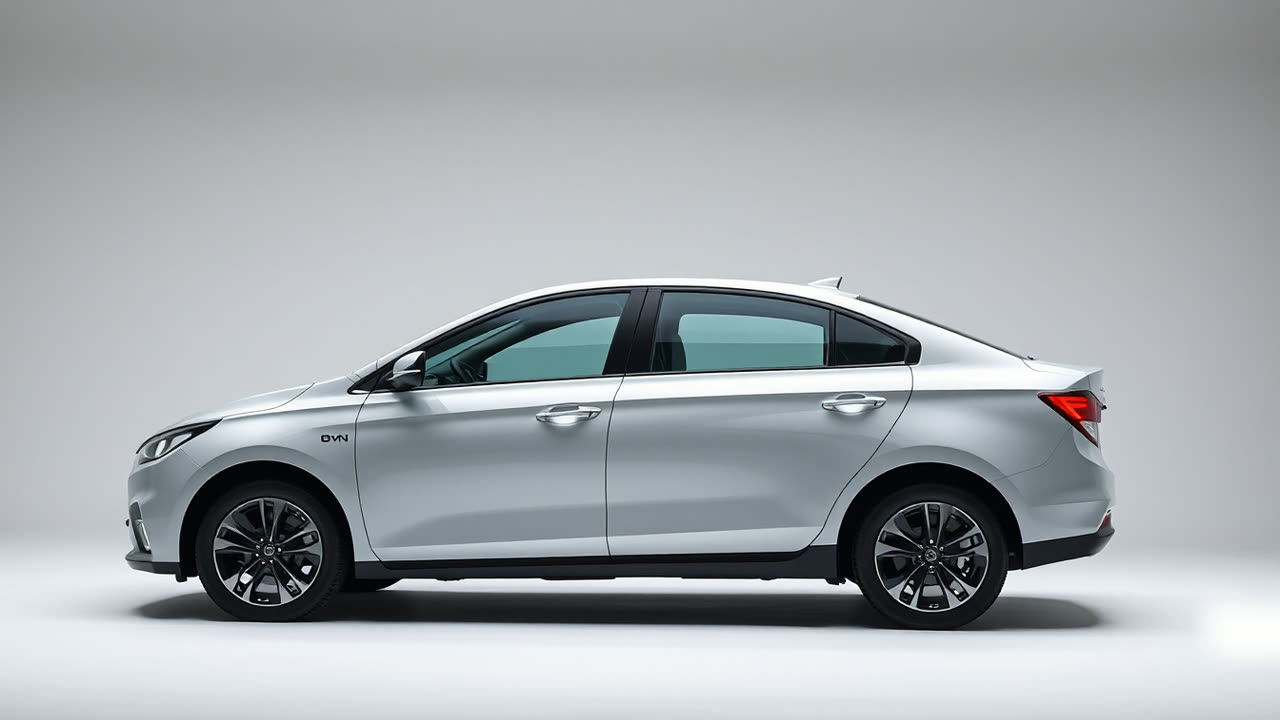
BYD's new flagship Han EV, launching next month, redefines electric vehicle capabilities with an announced range exceeding 1,000 kilometers (621 miles) on a single charge, signaling a significant leap in battery endurance and setting a new benchmark for mainstream electric sedans. Pre-orders, which began last month, start at an aggressively competitive price point of approximately $37,000, positioning the vehicle to disrupt both the premium and mid-range EV markets globally. This remarkable range is largely attributed to advancements in BYD's proprietary Blade Battery technology, likely featuring enhanced energy density and thermal management, pushing the boundaries of what consumers can expect from an EV in terms of practical usability and long-distance travel.
This extended range fundamentally alters the user experience, largely mitigating "range anxiety," a persistent psychological barrier for potential EV adopters. A 1,000 km range means most drivers could complete multiple weeks of commuting or significant regional trips without needing to charge, transforming the EV from a local commuter into a genuine long-haul alternative to internal combustion engine vehicles. For the average driver, this translates to unparalleled convenience, reducing reliance on public charging infrastructure and allowing for greater spontaneity in travel. Furthermore, the accessible starting price of $37,000 for a vehicle offering such premium specifications and range makes advanced EV technology attainable for a much broader demographic, accelerating mass adoption beyond early enthusiasts.
The industry implications are profound, directly challenging established luxury EV manufacturers and traditional automotive giants. While rivals like the Lucid Air Grand Touring achieve impressive ranges (up to 516 miles EPA estimated), their starting prices are significantly higher, often well over $100,000. The Tesla Model S Long Range, a direct competitor, offers an estimated 402 miles (647 km) of range but starts at around $74,990. Mercedes-Benz's EQS sedan offers up to 350 miles (563 km) in its EQS 450+ variant, also at a substantially higher price point. BYD's ability to deliver over 1,000 km at a fraction of the cost underscores China's growing prowess in EV innovation and cost-effective manufacturing. This move intensifies competition, forcing other automakers to accelerate their own battery and efficiency developments while simultaneously re-evaluating their pricing strategies to remain competitive. It also puts pressure on charging network providers, as longer ranges might reduce the frequency of charging but increase the demand for faster, high-power chargers when drivers do need to top up.
The current generation BYD Han EV, which launched in 2020, already offers competitive ranges, with its top-tier variants reaching up to 715 km (444 miles) on the CLTC cycle and starting around $30,000 in China. The jump to over 1,000 km represents a nearly 40% increase in range, demonstrating a rapid pace of technological advancement within just a few years. This evolution highlights BYD's vertical integration, from battery production to vehicle manufacturing, allowing for quicker iteration and optimization. Unlike many competitors who rely on external battery suppliers, BYD's in-house Blade Battery technology, known for its safety and space efficiency, gives it a distinct advantage in controlling costs and performance. This strategic independence is a significant factor in their ability to offer such a compelling package.
Looking ahead, the launch of the new Han EV is more than just a product release; it's a statement of intent from BYD, solidifying its position as a global EV leader. This vehicle, along with its expanding international sales network, will likely accelerate BYD's market share growth in Europe, Southeast Asia, and potentially North America, pending regulatory and market entry strategies. The focus will now shift to real-world performance validation of the 1,000 km range, particularly under different driving conditions and temperature extremes. Furthermore, this achievement will spur further innovation in battery chemistry and vehicle efficiency across the industry, potentially leading to a new era where 800-1,000 km becomes the expected baseline for premium EVs. The implications extend to charging infrastructure, where the emphasis may shift from ubiquitous slow chargers to fewer, but ultra-fast, charging hubs capable of quickly replenishing these massive battery packs. Ultimately, the new BYD Han EV signals a critical inflection point, demonstrating that extended range and affordability are no longer mutually exclusive in the electric vehicle landscape, paving the way for a more accessible and practical EV future.