BYD Unveils Second-Gen Seagull: Bigger, Smarter, More Disruptive EV
BYD's second-generation Seagull electric vehicle emerges as a significantly larger, smarter, and more capable offering, poised to further disrupt the global automotive market with advanced features like optional LiDAR and Megawatt Flash-Charging.
✨ This content was summarized and interpreted by AI; it may contain errors — please verify accuracy with the original sources. Learn more
Listen to this story
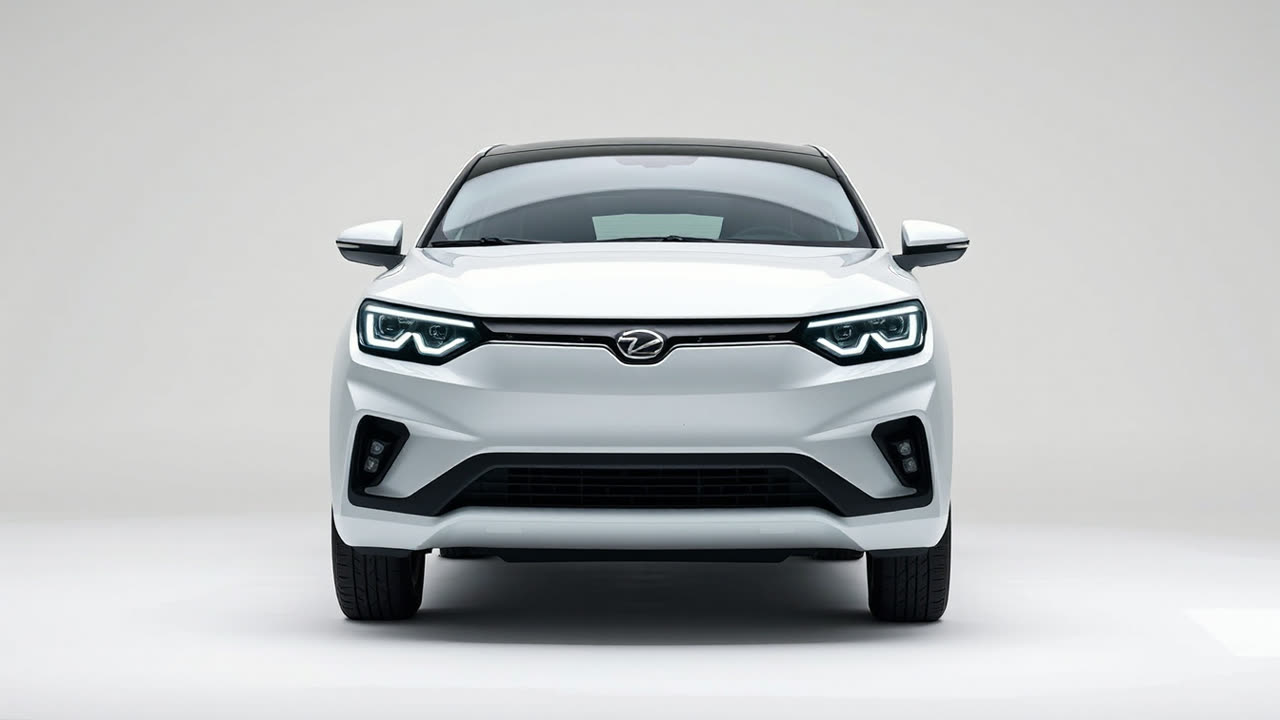
BYD has unveiled design sketches of the second-generation Seagull, signaling a substantial evolution for its most accessible electric vehicle, transforming it into a larger, smarter, and more capable offering set to further disrupt the global automotive landscape. This overhaul sees the popular urban hatchback grow significantly, with its length increasing by 425 mm to 4,205 mm and its wheelbase extending by 150 mm to 2,650 mm, effectively moving the model from China's A0-class into the B-segment supermini category. The enhanced dimensions translate directly into a more practical five-seat layout, a notable upgrade from the current four-seater configuration, bringing its overall size closer to BYD's Dolphin model.
The design sketches reveal a refreshed aesthetic, featuring distinctive trident-style headlights, a rising beltline, and a floating roof that contributes to a sportier and more dynamic profile. Beyond cosmetic changes, regulatory filings with China's Ministry of Industry and Information Technology (MIIT) on July 10, 2026, detail significant powertrain improvements. The second-generation Seagull will be powered by a permanent magnet motor delivering a maximum output of 95 kW (127 hp), a considerable increase from the prior generation's 55 kW (75 hp) motor. Two lithium iron phosphate (LFP) battery options, 30 kWh and 39.2 kWh, will be available, promising CLTC ranges of 320 km and 420 km respectively, with a top speed reaching 150 km/h. Critically, one variant will offer optional LiDAR and multiple radars (front, rear, and side), integrating BYD's "God's Eye B" system, which supports advanced urban navigation-assisted driving. Furthermore, leaked images suggest the new Seagull could incorporate Megawatt Flash-Charging technology and a second-generation Blade Battery, a feature currently reserved for BYD's more premium models like the Qin MAX EV and Seal 06 EV.
This strategic expansion of the Seagull's capabilities carries profound implications for both consumers and the broader automotive industry. For users, the second-generation Seagull represents a compelling proposition for affordable electric mobility without significant compromise. The increased cabin space and five-seat capacity make it a more viable primary family vehicle, while the enhanced power output and range address common anxieties associated with entry-level EVs. The potential inclusion of advanced driver-assistance systems (ADAS) like LiDAR-enabled urban navigation, typically found in much more expensive vehicles, would democratize sophisticated safety and convenience features, pushing the boundaries of what consumers expect from an affordable EV. Should Megawatt Flash-Charging be confirmed, it would drastically reduce charging times, further enhancing the practicality and appeal of mass-market electric vehicles.
Industrially, the new Seagull intensifies the already fierce competition within the compact EV segment and beyond. The first-generation Seagull, also known as the Dolphin Mini or Dolphin Surf in export markets, has already proven to be a formidable contender, with over 1.5 million units sold since its April 2023 launch and consistently ranking among the world's best-selling EVs, even pressuring the Tesla Model 3 in global BEV sales in November 2024. Its current price in China, starting around 69,900 yuan (approximately $10,360), has been a key differentiator. The larger, more powerful, and smarter second-generation model is designed to slot between the existing Seagull and the Dolphin, directly challenging rivals such as the Wuling Bingo, Geely Xingyuan, and GAC Aion UT. BYD's unparalleled vertical integration, manufacturing its own batteries, electric motors, and power electronics, allows it to achieve cost efficiencies that legacy automakers struggle to match, maintaining an aggressive pricing strategy globally. This enables BYD to offer feature-rich EVs at prices significantly below Western counterparts, with the first-gen Seagull selling for around €22,900 ($26,500) in Europe, well below electric models from Stellantis or Renault.
The original BYD Seagull, launched in April 2023, quickly became a benchmark for affordable yet well-built EVs. It featured a 55 kW motor, 30.08 kWh or 38.88 kWh LFP battery options, and CLTC ranges of 305 km or 405 km. Its compact dimensions of 3780 x 1715 x 1540 mm made it ideal for urban environments. The second generation represents a deliberate upscaling, not just in size but in technological sophistication, positioning it as a more versatile vehicle. The current model's success, including a peak of over 59,404 deliveries in November 2024, underscores the market's appetite for value-driven EVs. However, a slight dip in year-to-date sales for the first-gen Seagull (down 37.50% for the first eight months of the year, despite a return to growth in August 2026) suggests BYD is keen to refresh its lineup to maintain momentum amidst intensifying domestic competition.
Looking ahead, the second-generation BYD Seagull is expected to launch in the Chinese domestic market before the close of 2026. The critical unknown remains its pricing. While the "Big Seagull" promises enhanced value, the added dimensions, power, and advanced features raise questions about how BYD will balance its traditional affordability with the upgraded specifications. A significant price increase could potentially narrow the differentiation between the Seagull and the Dolphin, risking cannibalization of its own lineup, a scenario BYD will meticulously manage. Its global rollout, particularly in Europe from BYD's upcoming Hungarian manufacturing plant, will further pressure established automakers to innovate and reduce costs, accelerating the global transition to electric vehicles. The second-gen Seagull is not merely an updated model; it embodies BYD's strategic intent to democratize advanced EV technology, challenging the notion that intelligent, capable electric vehicles must come with a premium price tag and setting a new standard for the mass-market EV segment worldwide.