BYOK Writing Gadget Evolves with Deeper Customization and Software Ecosystem
The minimalist BYOK device is expanding its software ecosystem and customization options, moving beyond simple hardware integration to offer a more tailored and robust writing experience for its dedicated users.
✨ This content was summarized and interpreted by AI; it may contain errors — please verify accuracy with the original sources. Learn more
Listen to this story
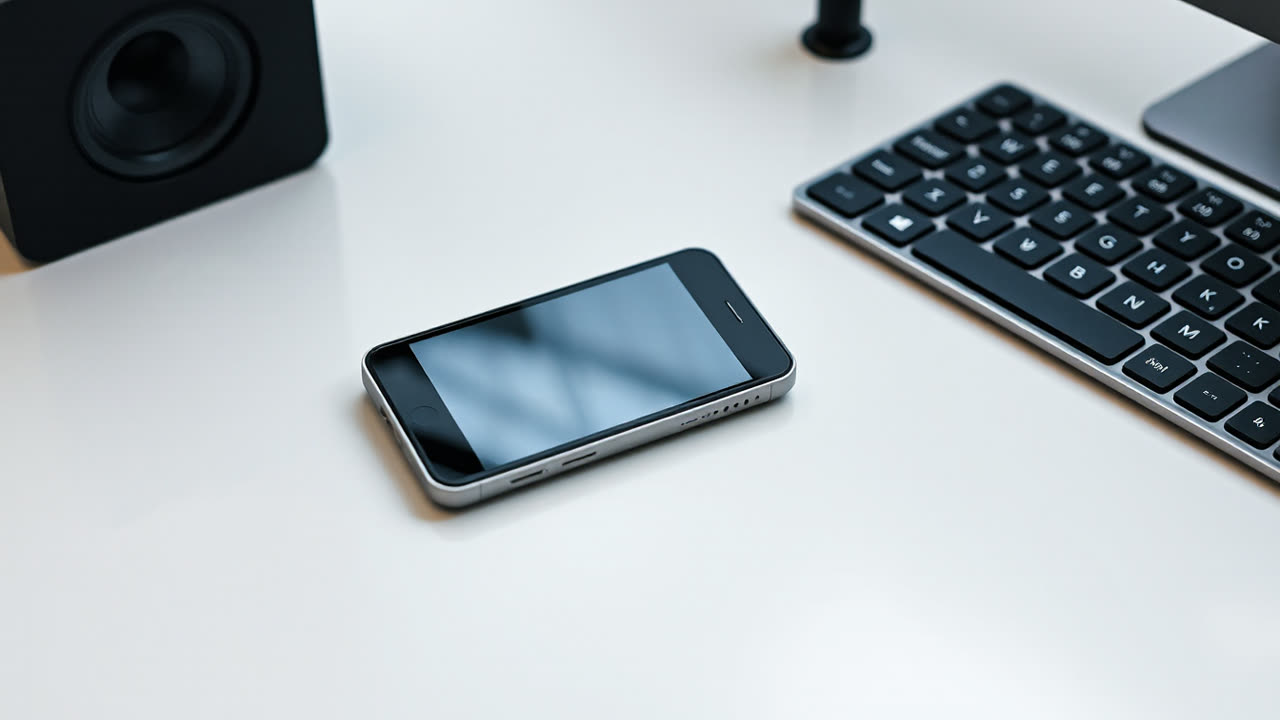
The BYOK (Bring Your Own Keyboard) distraction-free writing gadget, a device initially lauded for its stark minimalism, is subtly evolving its ecosystem to embrace a broader definition of "custom extensions," moving beyond mere hardware integration to offer a more tailored software experience for its dedicated user base. This strategic shift, while not a dramatic overhaul, signifies a deeper understanding of the nuanced demands of serious writers, pushing the device beyond its core function as a simple external display to a more adaptable, personal writing hub.
At its heart, the BYOK remains an ultra-portable, smartphone-sized device designed to eliminate digital distractions, featuring an FSTN LCD screen with a fast refresh rate, monochrome output, and an adjustable warm backlight for comfortable reading in various conditions. Its defining characteristic is the absence of a built-in keyboard, allowing users to pair their preferred wired or wireless keyboard, a critical ergonomic and tactile advantage for many wordsmiths. With up to 20 hours of battery life, it promises extended periods of focused output, syncing drafts automatically to its companion Studio app via Wi-Fi for later organization and revision. The device, which launched with a pre-order price around $169 and now retails closer to $200, or even $129-$180 depending on the package, specifically targets those for whom the ubiquitous, feature-rich nature of modern computing is a creative impediment.
The "extensions" in question manifest not as a traditional app store or scripting API – a direction that would fundamentally contradict the device's minimalist ethos – but rather through a sophisticated approach to customization and an expanding software ecosystem. Users can already select from over 80 custom fonts and fine-tune size, contrast, and backlight levels, transforming the visual experience to suit individual preferences and environments. This level of display personalization is a significant departure from the fixed interfaces of many single-purpose gadgets and represents a foundational layer of "extension" for a device whose primary output is text. More critically, the BYOK Studio app, far from being a mere cloud-syncing utility, is evolving into a comprehensive writing environment. It allows for the organization of projects, the creation of outlines, and even the management of character lists, effectively extending the device's utility beyond raw drafting into the crucial stages of planning and structuring. This integrated ecosystem means that while the BYOK itself remains a distraction-free input tool, the broader workflow it enables is increasingly robust and adaptable.
This strategic evolution matters immensely for both users and the industry. For writers, it means a dedicated device that, while maintaining its core focus, is no longer a rigid, one-size-fits-all solution. The ability to customize the visual presentation and leverage the Studio app for advanced organizational tasks means the BYOK can integrate more seamlessly into diverse writing workflows, from novelists outlining complex plots to bloggers structuring daily posts. This flexibility enhances the device's long-term value, preventing it from becoming a niche novelty and positioning it as a serious tool for sustained creative output. For the wider tech industry, BYOK’s approach challenges the prevailing paradigm of feature bloat. It demonstrates that "value-add" in minimalist hardware doesn't necessarily mean more apps or internet connectivity, but rather deeper, more thoughtful integration of customization options and a complementary software suite that respects the device's single purpose. This could inspire other manufacturers of single-task devices, from e-readers to specialized audio players, to explore similar avenues of nuanced customization rather than simply adding more general-purpose features.
Compared to rivals, BYOK's "bring your own keyboard" philosophy is its most striking differentiator. Devices like the Freewrite Traveler, while also offering a distraction-free experience with an e-ink display, come with an integrated keyboard that, while convenient for portability, might not suit every writer's tactile preferences. The Traveler's e-ink screen is often praised for its paper-like quality and eye comfort, a contrast to BYOK's FSTN LCD, which some users find less ideal despite its fast refresh rate and backlight. However, the BYOK's lower price point, often around $180 compared to the Freewrite Traveler's $550, makes it a more accessible entry into the dedicated writing device market. The BYOK’s emphasis on choice – of keyboard, of font, of backlight – positions it as a more modular and potentially future-proof option, allowing writers to upgrade their typing experience independently of the display unit.
Looking ahead, the trajectory for BYOK suggests a continued deepening of its "extended" capabilities, likely within the confines of its Studio app ecosystem. While a fully open-source scripting environment might remain antithetical to its core mission, we could anticipate more sophisticated templates, integrated research tools that maintain a distraction-free interface, or even AI-assisted outlining and brainstorming features within Studio. The device itself may see hardware refinements, perhaps a higher-resolution monochrome display, but its fundamental appeal will continue to rest on its elegant simplicity and the evolving intelligence of its accompanying software. As digital noise intensifies, BYOK's deliberate constraint, augmented by intelligent customization, provides a compelling blueprint for how single-purpose gadgets can carve out essential niches in a hyper-connected world, proving that sometimes, the most powerful features are those that facilitate focus, not those that demand attention.