California Greenlights Driverless Truck Testing on Highways
Aurora Innovation and Kodiak AI receive permits from the California DMV to operate autonomous trucks on public roads without human safety drivers, marking a major regulatory milestone for the self-driving logistics industry.
✨ This content was summarized and interpreted by AI; it may contain errors — please verify accuracy with the original sources. Learn more
Listen to this story
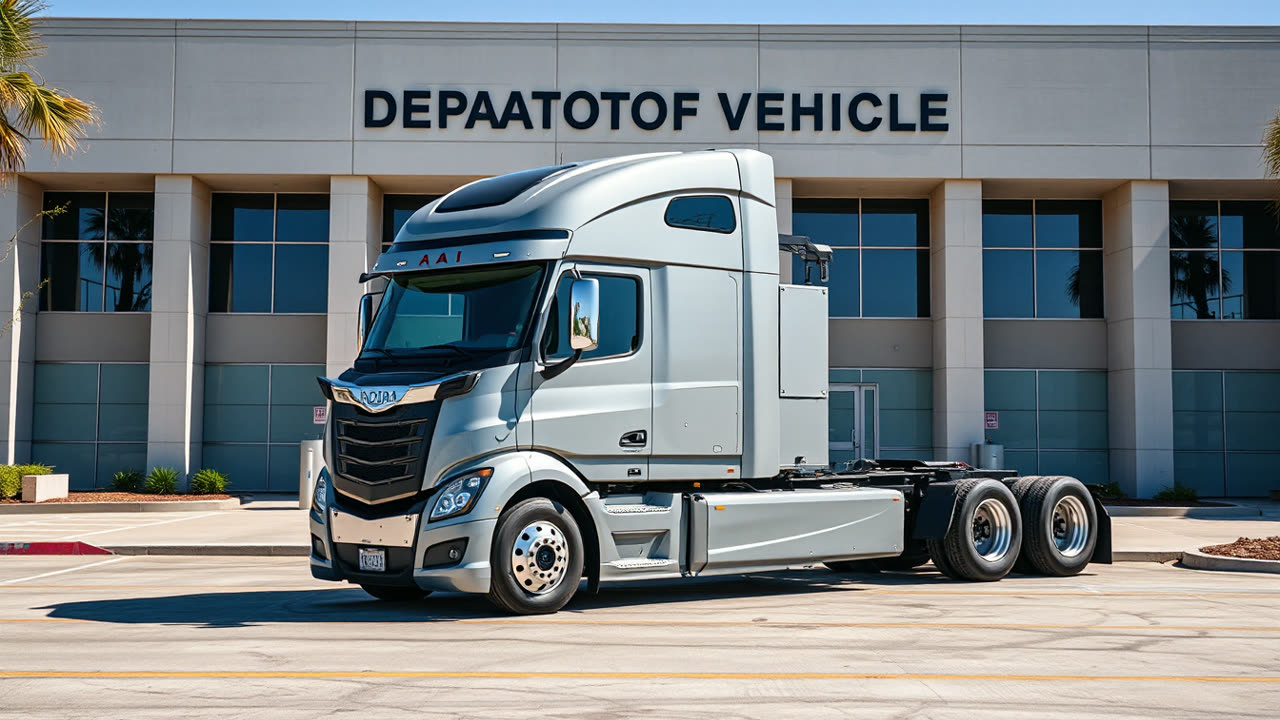
Self-driving trucks from Aurora Innovation and Kodiak AI are now officially permitted to test on California highways, marking a pivotal moment for the autonomous logistics sector in a state renowned for its stringent regulatory environment and high traffic density. This development, announced by the California Department of Motor Vehicles, signifies a crucial step beyond limited test tracks and more permissive states, pushing the boundaries of commercial autonomous freight into one of the world's largest economies. The permits allow these companies to operate autonomous trucks on public roads without a human safety driver behind the wheel, under specific conditions, accelerating the timeline for widespread deployment and fundamentally reshaping the future of trucking.
The significance of California's green light extends far beyond the state's borders, acting as a bellwether for national and even international autonomous vehicle adoption. For Aurora Innovation, which recently demonstrated its Aurora Driver technology completing a 1,000-mile commercial pilot run with FedEx, the California permit allows them to expand their "Aurora Horizon" autonomous trucking service, which aims to launch fully driverless operations in Texas by the end of 2026. Kodiak AI, known for its "Kodiak Driver" system and a focus on middle-mile logistics, similarly gains a critical operational expansion, leveraging its existing partnerships with major carriers like Werner Enterprises and C.R. England. Both companies have invested heavily in redundant hardware, advanced sensor suites combining lidar, radar, and cameras, and sophisticated AI algorithms to achieve perception, prediction, and planning capabilities essential for safe highway driving. The move to California highways, with their complex interchanges, diverse weather conditions, and high volume of mixed traffic, provides an invaluable real-world proving ground that simulators and less-congested routes cannot fully replicate.
This regulatory breakthrough directly addresses a critical industry challenge: the severe and worsening shortage of human truck drivers. The American Trucking Associations (ATA) projects a deficit of over 160,000 drivers by 2030, a gap that autonomous trucks are uniquely positioned to fill, offering a scalable solution to maintain supply chain fluidity and reduce shipping costs. Beyond labor, autonomous trucks promise enhanced safety by eliminating human error, fatigue, and distraction, which are factors in over 90% of truck-involved accidents. The systems employed by Aurora and Kodiak are designed for 24/7 operation, potentially enabling faster freight delivery and optimizing asset utilization, which could lead to significant fuel efficiency gains through optimized driving patterns and platooning technologies. Estimates suggest autonomous trucking could reduce operational costs by 30-45% per mile over time, fundamentally altering the economics of freight transportation.
Compared to previous generations of autonomous vehicle technology, which often relied on simpler sensor arrays and less robust AI, today's systems leverage vastly improved machine learning models trained on billions of miles of simulated and real-world data. The integration of high-definition mapping, vehicle-to-everything (V2X) communication capabilities, and sophisticated predictive analytics allows these trucks to navigate complex scenarios with unprecedented precision. While rivals like Waymo Via (Google's autonomous trucking division) and Daimler Truck's Torc Robotics have also made significant strides, operating in states like Arizona and Texas, California's entry into this advanced testing phase legitimizes the technology on a new level. Notably, some early pioneers in the space, such as Embark and TuSimple, have faced significant operational or financial hurdles, underscoring the capital intensity and technical complexity of bringing this technology to market. The current cohort, including Aurora and Kodiak, benefits from lessons learned, more mature technology stacks, and clearer pathways to commercialization, often through strategic partnerships with established logistics firms.
Looking ahead, the successful deployment of driverless trucks on California highways will catalyze further investment and accelerate the development of necessary infrastructure, including autonomous truckports for automated loading and unloading, and specialized maintenance facilities. The immediate next steps will involve accumulating millions of driverless miles on California's diverse roadways, meticulously collecting data to validate safety performance and refine algorithms under a broader range of real-world conditions. Regulatory frameworks will continue to evolve, with California's cautious approach potentially setting precedents for other states and federal guidelines regarding insurance liabilities, operational standards, and cybersecurity for autonomous fleets. While the full integration of autonomous trucks will undoubtedly bring challenges, particularly concerning workforce transition and public acceptance, the current trajectory suggests that driverless big rigs will transition from novelty to ubiquity within the next decade, fundamentally reshaping the logistics industry and the movement of goods across the nation.