Canon Unveils EOS R8 Mark II: Lightest Full-Frame with IBIS and Retro Flair
Canon's new EOS R8 Mark II redefines entry-level full-frame mirrorless photography by integrating in-body image stabilization into its lightest full-frame body yet, complemented by a retro-inspired redesign.
✨ This content was summarized and interpreted by AI; it may contain errors — please verify accuracy with the original sources. Learn more
Listen to this story
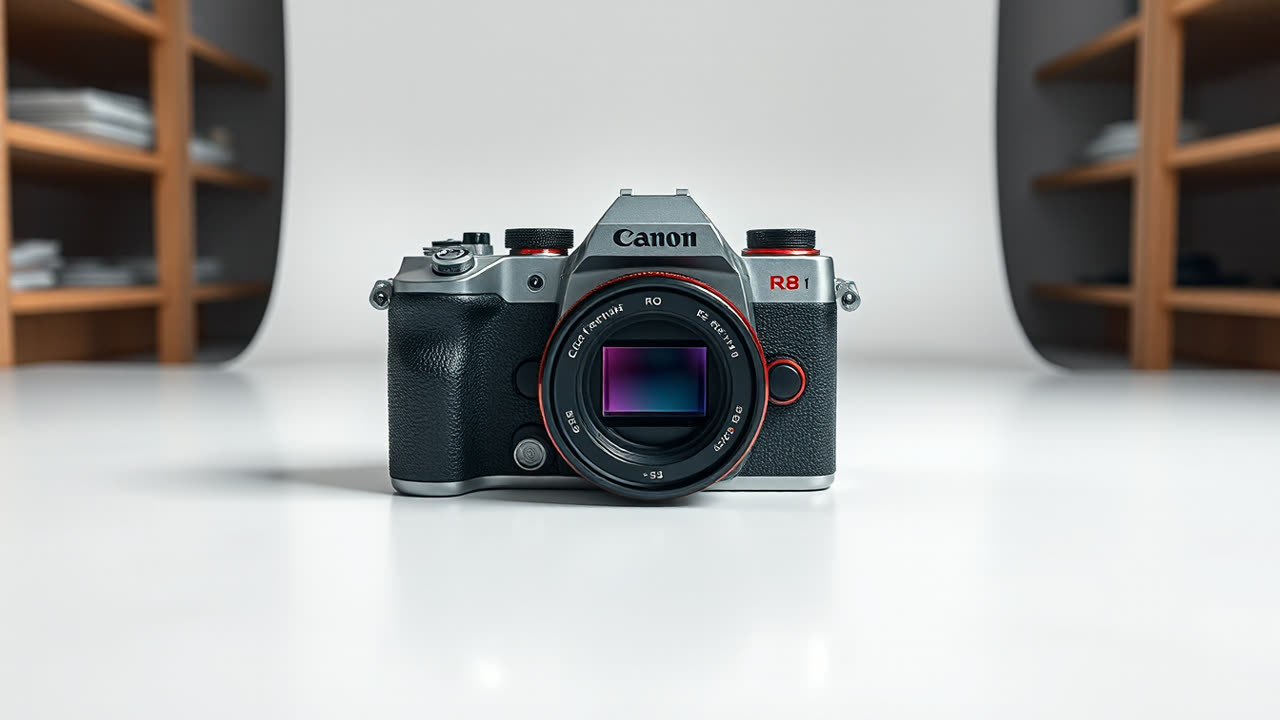
Canon's latest offering, the EOS R8 Mark II, redefines the entry point into full-frame mirrorless photography by becoming the brand's lightest full-frame camera to integrate in-body image stabilization (IBIS). This significant upgrade, arriving barely a year after the original R8's 2023 launch, is further complemented by a distinctive retro-inspired redesign, signaling a strategic shift for Canon in the competitive enthusiast segment. The original EOS R8, lauded for its potent 24.2-megapixel full-frame sensor derived from the EOS R6 Mark II and advanced autofocus system, was notably criticized for omitting IBIS, a feature increasingly standard in modern mirrorless cameras. Its predecessor's reliance solely on optical image stabilization (OIS) in RF lenses limited its versatility, particularly for video recording, low-light handheld shooting, and adapting non-stabilized lenses.
The integration of IBIS in the R8 Mark II fundamentally alters its value proposition for users. For still photographers, this means sharper images at slower shutter speeds, crucial in challenging lighting conditions and when using prime lenses lacking OIS. Videographers, in particular, will experience a transformative improvement, gaining smoother handheld footage without relying on cumbersome gimbals for many scenarios, thereby expanding creative possibilities for content creators and run-and-gun shooters. This move positions the R8 Mark II as a far more versatile tool, addressing a core limitation that previously nudged potential buyers towards rivals. Furthermore, the "lightest full-frame with stabilization" claim suggests Canon has engineered a compact and efficient IBIS unit, likely contributing to its appeal for travel and street photographers who prioritize portability.
From an industry perspective, the R8 Mark II's rapid iteration and feature addition underscore the fierce competition in the full-frame mirrorless market. Canon is directly responding to market demands and competitor advancements. Rivals like Sony have long offered compact, stabilized full-frame options such as the a7C series, with the a7C II featuring a 33MP sensor and 7-stop IBIS in a highly portable form factor. Nikon's recent retro-styled Zf, which blends a 24.5MP sensor with 8-stop IBIS and dedicated tactile controls, also demonstrated the strong market appetite for cameras that combine modern performance with classic aesthetics and robust stabilization. The R8 Mark II’s retro-inspired redesign is a clear nod to this trend, aiming to capture a segment of the market that values both cutting-edge technology and a more tactile, nostalgic user experience, much like the Zf has successfully done.
The original R8, despite its impressive sensor and autofocus, was often perceived as a stripped-down R6 Mark II, lacking the build quality, dual card slots, and crucially, IBIS, leading to a perception of compromise for its price point. The Mark II's addition of stabilization, while maintaining its lightweight nature, elevates it beyond a mere budget option. It now stands as a genuinely compelling alternative for enthusiasts and professionals seeking a secondary, highly portable body without sacrificing core stabilization capabilities. This strategic enhancement could significantly broaden the R8's appeal, potentially drawing users from APS-C systems looking to upgrade to full-frame without a substantial increase in bulk or cost, and even enticing users from competing brands.
Looking ahead, the EOS R8 Mark II's launch signals Canon's commitment to filling out its R-system lineup with highly specialized, yet accessible, options. The rapid refresh cycle suggests Canon is agile in responding to market feedback and accelerating its technological deployment across various price points. This emphasis on portability and stabilization, combined with a nod to design aesthetics, indicates a future where cameras are not just technical instruments but also extensions of personal style and workflow preferences. Expect to see Canon continue to refine its IBIS technology, potentially integrating even more sophisticated stabilization modes or computational photography enhancements that leverage the stabilized sensor. Furthermore, the success of the R8 Mark II's retro design could influence future Canon camera aesthetics, potentially spawning a sub-line of cameras that marry classic looks with modern performance, similar to how Fujifilm and Nikon have cultivated distinct design identities. The battle for the enthusiast full-frame market remains intense, and the R8 Mark II represents a strong, well-aimed counter-punch from Canon.