CASE TL100EV Electric Mini Track Loader Deploys to Real-World Job Sites
CASE Construction Equipment's fully electric TL100EV mini track loader is now in active deployment with customers, marking a pivotal shift towards zero-emission heavy equipment in sensitive and demanding environments.
✨ This content was summarized and interpreted by AI; it may contain errors — please verify accuracy with the original sources. Learn more
Listen to this story
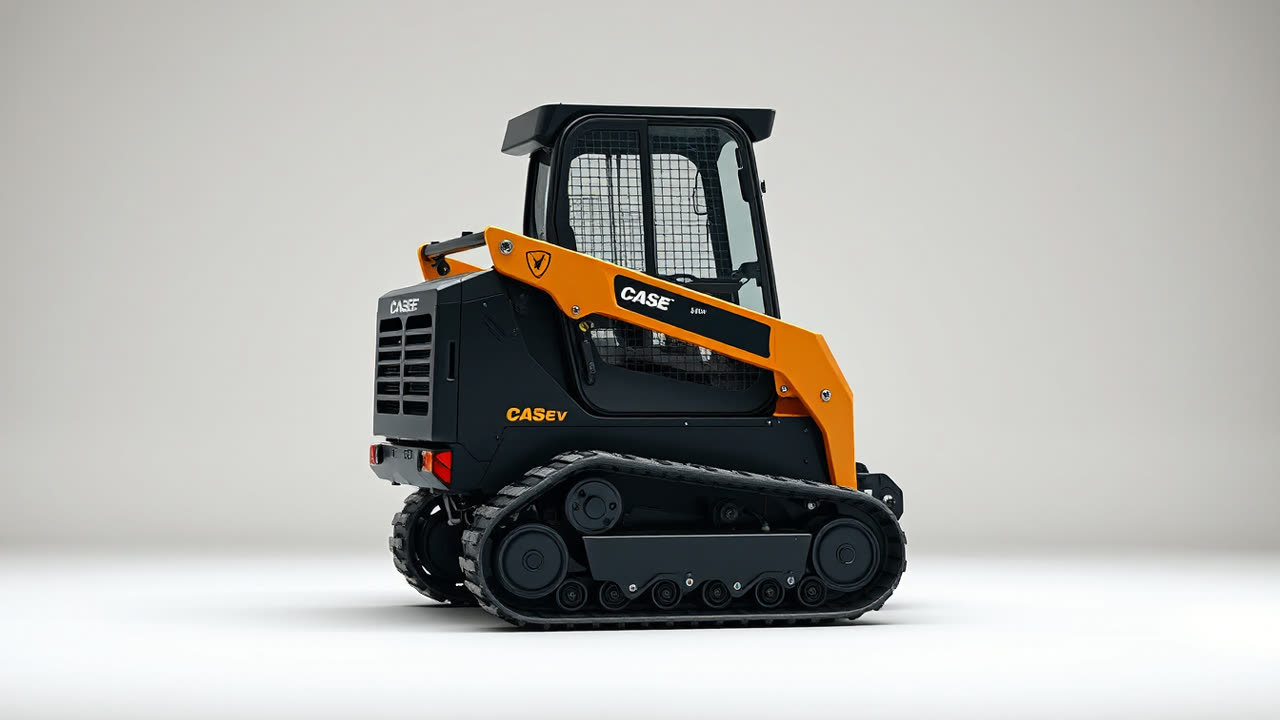
CASE Construction Equipment's TL100EV mini track loader, a fully electric machine, is now actively deployed with real-world customers, marking a pivotal moment for electric heavy equipment adoption in sensitive and demanding job sites, from urban low-emission zones to noise-restricted indoor environments. This deployment underscores a significant shift in the construction industry, moving beyond pilot programs to practical, everyday application of battery-electric power in compact machinery. The TL100EV, unveiled officially in early 2024, represents CASE's commitment to electrifying its compact equipment lineup, offering a zero-emission alternative to traditional diesel models. Its operational capabilities are particularly suited for sites requiring minimal environmental impact, such as residential areas, hospitals, and food processing plants, where exhaust fumes and noise pollution are critical concerns.
The immediate impact of the TL100EV’s real-world deployment is multifaceted, addressing both environmental mandates and operational efficiencies. For users, the absence of direct emissions allows for operation in previously restricted indoor spaces or densely populated urban areas without specialized ventilation, significantly expanding potential work hours and locations. The drastic reduction in noise levels, often cited as a major benefit, transforms job site environments, improving communication among workers and reducing disruption to surrounding communities. This translates directly into enhanced worker safety and potentially longer operating windows in noise-sensitive zones. Economically, while the upfront cost of electric machinery can be higher, the TL100EV promises lower operational expenses through reduced fuel consumption and maintenance requirements, as electric powertrains have fewer moving parts than their internal combustion counterparts. Furthermore, the elimination of diesel particulate filters (DPF) and selective catalytic reduction (SCR) systems simplifies maintenance protocols and reduces associated fluid costs. For the industry, the TL100EV’s successful integration by early adopters validates the viability of battery-electric solutions in demanding construction applications, potentially accelerating broader electrification efforts across compact and even mid-sized equipment categories.
Compared to its diesel predecessors and current rivals, the TL100EV distinguishes itself through its specific design for sustained electric operation and its robust power output. While precise comparative benchmarks against direct electric competitors are still emerging, its 52 kWh lithium-ion battery pack is designed to provide a full day’s work on a single charge, depending on the application. It features 74 horsepower and a rated operating capacity of 2,200 pounds, matching or exceeding the performance of many diesel equivalents in its class. The machine supports both Level 2 (240V) and DC fast charging, allowing for an 80% charge in approximately one hour with the latter, mitigating concerns about downtime. This quick-charge capability is crucial for multi-shift operations or rapid turnaround between tasks. Rival offerings, such as those from Bobcat with their T7X all-electric compact track loader or Caterpillar’s nascent electric mini excavators, demonstrate a growing competitive landscape, each striving to optimize battery life, power, and charging infrastructure. The TL100EV’s specific advantage lies in its targeted application for "no-drip" and "noise-sensitive" environments, highlighting a meticulous engineering approach to real-world operational challenges beyond just emissions.
Looking ahead, the successful deployment of the TL100EV signals a maturation of electric technology in the construction sector, hinting at several key developments. Firstly, we can anticipate increased investment in charging infrastructure tailored for construction sites, including mobile charging solutions and standardized connectors to support a multi-vendor electric fleet. Secondly, the data gathered from these initial real-world deployments will be invaluable for refining battery technology, optimizing power management systems, and extending operational ranges for future generations of electric equipment. This will likely lead to higher energy density batteries and more efficient electric motors. Furthermore, as economies of scale improve and component costs decrease, the total cost of ownership for electric machinery is expected to become even more competitive, potentially driving widespread adoption beyond niche applications. The regulatory landscape will also likely evolve, with more cities and regions implementing stricter emission and noise ordinances, making electric equipment not just an option, but a necessity. CASE, alongside its competitors, will likely expand its electric offerings to larger equipment classes and introduce more specialized electric attachments, creating a fully integrated zero-emission ecosystem. The TL100EV is not merely a new product; it is a harbinger of an increasingly electrified, quieter, and cleaner future for the construction industry, where operational flexibility and environmental responsibility are no longer mutually exclusive.