CATL and Octopus Energy Launch Swaptopus, Accelerating European EV Battery Swap Network with New Semi-Truck Battery
Chinese battery giant CATL and UK energy supplier Octopus Energy form Swaptopus, a joint venture poised to revolutionize European electric vehicle battery swapping, particularly for heavy-duty transport, by deploying a comprehensive network and unveiling an advanced semi-truck battery.
✨ This content was summarized and interpreted by AI; it may contain errors — please verify accuracy with the original sources. Learn more
Listen to this story
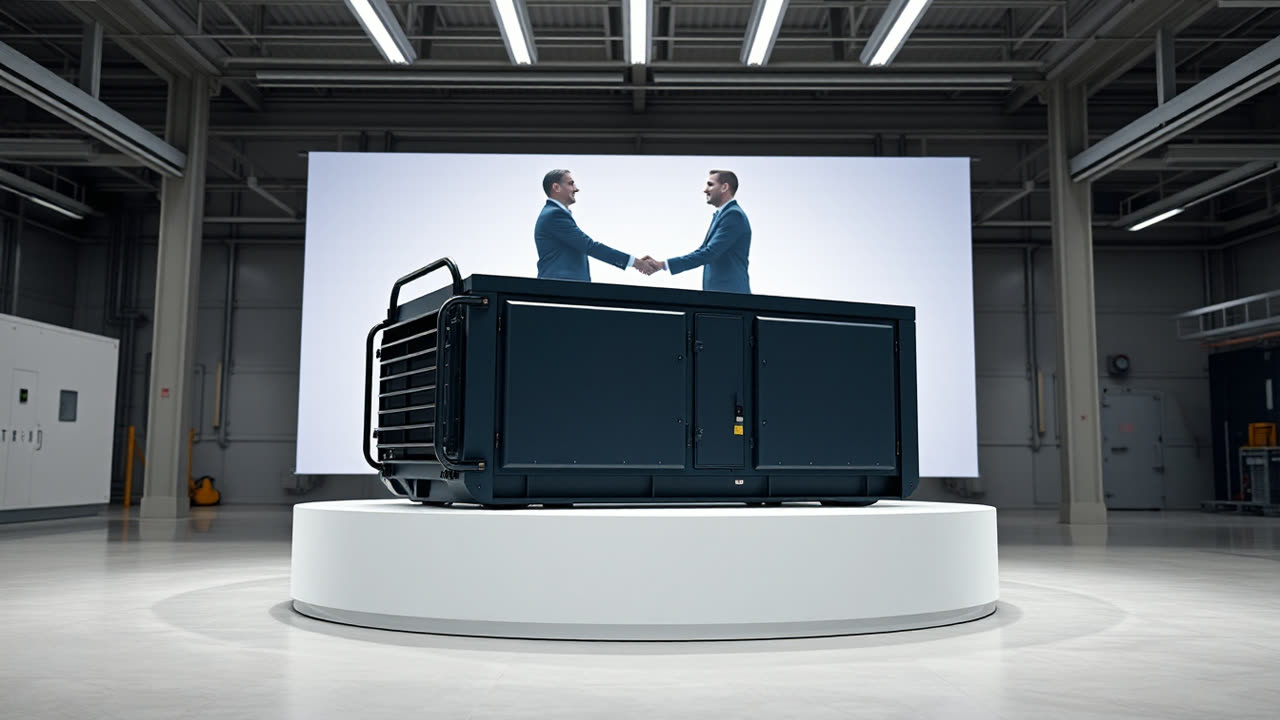
The formation of Swaptopus, a new joint venture between Chinese battery giant CATL and UK-based energy supplier Octopus Energy, marks a significant acceleration in the European battery swap network for electric vehicles, coinciding with CATL's unveiling of an advanced semi-truck battery designed to capitalize on this burgeoning infrastructure. This strategic alliance aims to deploy a comprehensive battery swapping ecosystem across Europe, targeting both passenger cars and commercial vehicles, a move that could fundamentally alter the adoption curve for heavy-duty electric transport by addressing critical issues of range anxiety and charging downtime.
The core of Swaptopus’s ambition lies in its ability to offer rapid energy replenishment, positioning battery swapping as a viable, perhaps superior, alternative to traditional fast charging for specific use cases. For the commercial trucking sector, where vehicle uptime directly translates to profitability, CATL's new semi-truck battery, reportedly boasting enhanced energy density and cycle life tailored for frequent swapping, could be a game-changer. While specific technical details like kilowatt-hour capacity, charging rates, and pricing models for the new battery or the Swaptopus service are yet to be fully disclosed, the emphasis on a "semi-truck battery" suggests a robust, modular design capable of enduring the rigorous demands of heavy-duty cycles and quick interchangeability. The partnership with Octopus Energy, a company known for its innovative energy solutions and extensive customer base, provides a crucial energy management and grid integration component, potentially optimizing battery life and energy costs through smart charging during off-peak hours.
This development matters immensely for several reasons. For commercial users, particularly long-haul logistics companies, battery swapping promises to eliminate the often prohibitive downtime associated with high-power DC fast charging, which can still take upwards of 30-60 minutes for large truck batteries. A swap, by contrast, can be completed in minutes, rivalling the time it takes to refuel a diesel truck. This efficiency gain could significantly improve operational logistics, increase fleet utilization, and reduce total cost of ownership by allowing electric trucks to maintain tighter schedules. Furthermore, Swaptopus could enable fleet operators to lease batteries rather than purchase them outright, thereby lowering the substantial upfront capital expenditure currently associated with electric semi-trucks and mitigating concerns about battery degradation over time. For the wider EV industry, the success of Swaptopus could validate battery swapping as a critical infrastructure solution, particularly in regions where grid infrastructure struggles to keep pace with rapid charging demands. It also presents a robust circular economy model for batteries, allowing for better management, second-life applications, and recycling.
Historically, battery swapping has faced significant hurdles, primarily standardization issues, high infrastructure costs, and the reluctance of major automakers to adopt a universal battery design. Companies like Better Place famously failed in the early 2010s due to these challenges. However, the landscape has shifted dramatically. Chinese EV manufacturer Nio has demonstrated a successful, growing battery swap network for passenger vehicles, completing millions of swaps and expanding rapidly across China and into European markets like Norway and Germany, proving the operational viability and consumer appeal of the model. CATL, as the world's largest battery manufacturer, possesses the scale and technological prowess to drive standardization and cost efficiencies that were unavailable to earlier ventures. Their "Choco-SEB" (CATL Hydrogen Energy Storage Battery) platform, designed for modularity and energy density, hints at a future where batteries are treated as interchangeable energy modules rather than fixed components. The collaboration with Octopus Energy, a major player in the European energy market, provides essential local market expertise, regulatory navigation, and potential access to renewable energy sources for charging the swapped batteries, further enhancing the sustainability credentials of the network.
Looking ahead, the success of Swaptopus will hinge on rapid deployment, robust partnerships with truck manufacturers and logistics companies, and the ability to achieve a sufficient density of swap stations to make the network genuinely convenient. While the initial focus appears to be on semi-trucks, the modular nature of CATL's battery technology suggests an eventual expansion into other commercial vehicle segments and potentially even passenger cars, creating a truly integrated ecosystem. This venture poses a direct challenge to the traditional charging infrastructure model, forcing charging providers and vehicle manufacturers to reconsider their long-term strategies. Should Swaptopus gain significant traction, it could accelerate the electrification of European logistics, reduce reliance on fossil fuels, and establish a new paradigm for how vehicle energy is managed and delivered. The real test will be how quickly Swaptopus can scale its operations and how effectively it can overcome the logistical complexities of managing a continent-wide network of battery assets, but the combination of CATL's manufacturing might and Octopus Energy's energy management expertise creates a compelling proposition for the future of heavy-duty electric transport.