ChatGPT's Enhanced Voice Mode Fundamentally Reshapes AI Interaction
OpenAI's latest advancements in ChatGPT's Voice Mode, particularly with GPT-4o, have transformed user interaction with AI from command-response paradigms to fluid, real-time conversational partnerships.
✨ This content was summarized and interpreted by AI; it may contain errors — please verify accuracy with the original sources. Learn more
Listen to this story
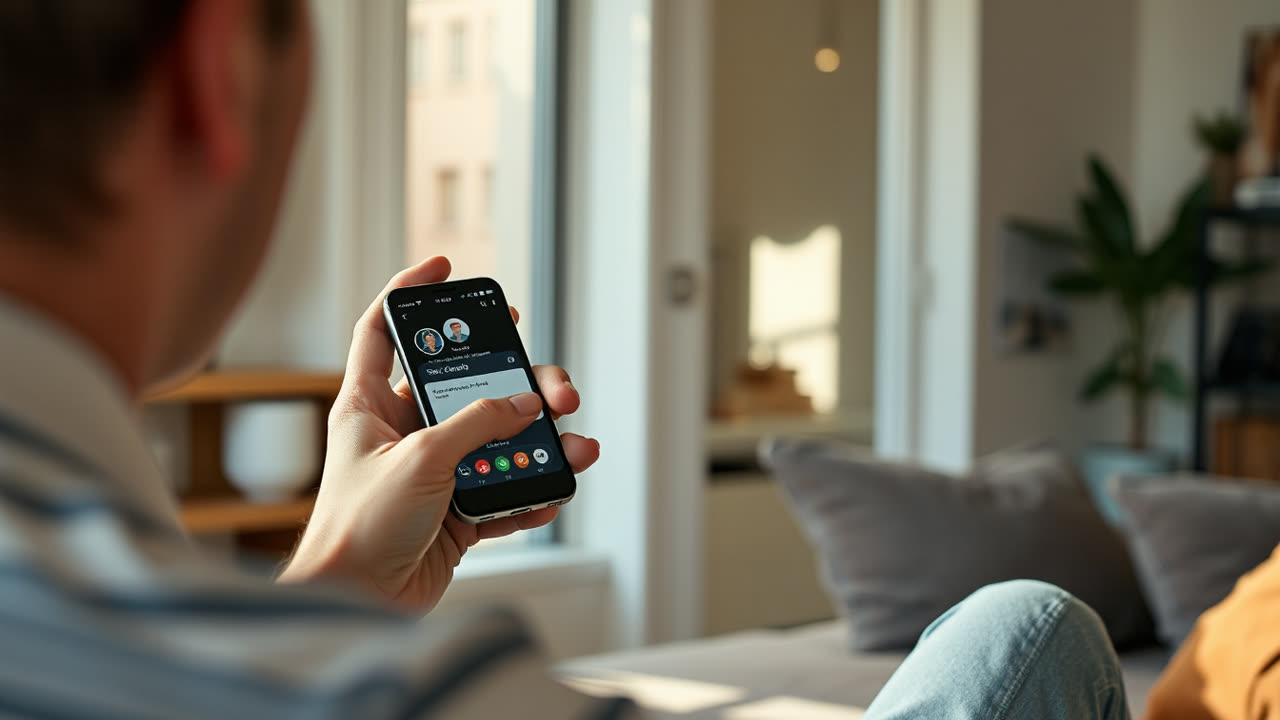
OpenAI's introduction of a significantly more natural and responsive Voice Mode for ChatGPT, particularly with the rollout of models like GPT-4o, has fundamentally reshaped user interaction with artificial intelligence, moving beyond the often-stilted, command-response paradigms of previous generations. This advancement, initially highlighted by its ability to engage in fluid, real-time conversations with human-like intonation and understanding, represents a pivotal shift from mere utility to genuine conversational partnership. The underlying technology, combining sophisticated speech-to-text (like the enhanced Whisper model) and text-to-speech capabilities with advanced large language models, allows ChatGPT to interpret complex emotional cues, manage interruptions gracefully, and maintain context across extended dialogues, a feat traditional voice assistants struggled to achieve. Users can now speak to the AI as they would another person, asking follow-up questions, brainstorming ideas, or even receiving real-time language translation, all with latency so low it feels instantaneous.
The implications for user experience are profound, democratizing access to complex AI capabilities by lowering the barrier to entry for non-technical users and those with accessibility needs. For instance, the ability to simply converse with an AI to draft an email, solve a math problem, or even get real-time coaching has broadened the practical applications of generative AI far beyond text-based interfaces. This natural interaction fosters a sense of engagement and utility previously unattainable, making AI a more integrated, less obtrusive tool in daily life. Businesses, in particular, stand to benefit from more intuitive customer service bots and internal tools that can understand and respond to natural language queries without rigid scripting, potentially leading to more efficient operations and improved customer satisfaction. The shift from typing prompts to speaking them naturally could also accelerate the adoption of AI in mobile contexts, hands-free environments, and for tasks requiring simultaneous attention elsewhere, such as driving or cooking.
Comparing ChatGPT's current Voice Mode to its predecessors and industry rivals reveals a significant leap in conversational AI. Early voice assistants like Amazon Alexa, Google Assistant, and Apple Siri, while revolutionary in their time, have largely operated within a framework of discrete commands and predefined intents. Their conversational depth often broke down quickly outside of programmed routines, leading to frustrating repetitions or irrelevant responses. While these assistants have evolved, incorporating more natural language understanding, they still typically lack the expansive generative capabilities and deep contextual memory that characterize ChatGPT's latest iterations. Google's Gemini models have made significant strides in multimodal understanding and conversational flow, positioning themselves as strong competitors, often excelling in integrating real-time information and performing web searches within a spoken dialogue. However, ChatGPT's strength lies in its profound ability to generate nuanced, creative, and contextually rich responses across a vast array of topics, a direct benefit of its advanced LLM architecture. The integration of advanced emotional intelligence and the ability to detect and respond to subtle vocal cues further distinguishes ChatGPT's Voice Mode, providing a more empathetic and less robotic interaction than many of its counterparts. Initial versions of ChatGPT's Voice Mode, while impressive, still occasionally exhibited slight delays or less natural intonation, but subsequent updates, particularly with GPT-4o, have dramatically reduced these artifacts, pushing the boundaries of what is possible in real-time AI conversation.
Looking ahead, the trajectory for conversational AI is clearly pointing towards even more seamless, multimodal, and personalized interactions. We can anticipate further advancements in real-time language processing, allowing for instantaneous translation and cross-lingual conversations that transcend current capabilities. The integration of visual input with voice, already demonstrated by multimodal AI models, will become standard, enabling users to point their device at an object and ask questions about it in natural speech, receiving contextually rich vocal responses. This could revolutionize fields from education to field service. Furthermore, as AI models become more adept at understanding individual user preferences, speaking patterns, and even emotional states, future voice modes will offer hyper-personalized experiences, anticipating needs and proactively offering assistance. The ethical implications of such intimate AI interaction, particularly regarding data privacy and the potential for deepfake voice synthesis, will require robust regulatory frameworks and transparent development practices. However, the immediate future promises an era where talking to an AI is not just less awkward, but genuinely intuitive, enriching, and an integral part of how we interact with the digital world.