ChatGPT Unlocks Advanced Automation with Free Scheduling and Paid App Integrations
OpenAI significantly expands ChatGPT's capabilities, offering free users enhanced task scheduling and paid subscribers direct, trigger-based integrations with platforms like Gmail, Slack, and GitHub, transforming it into a proactive AI agent.
✨ This content was summarized and interpreted by AI; it may contain errors — please verify accuracy with the original sources. Learn more
Listen to this story
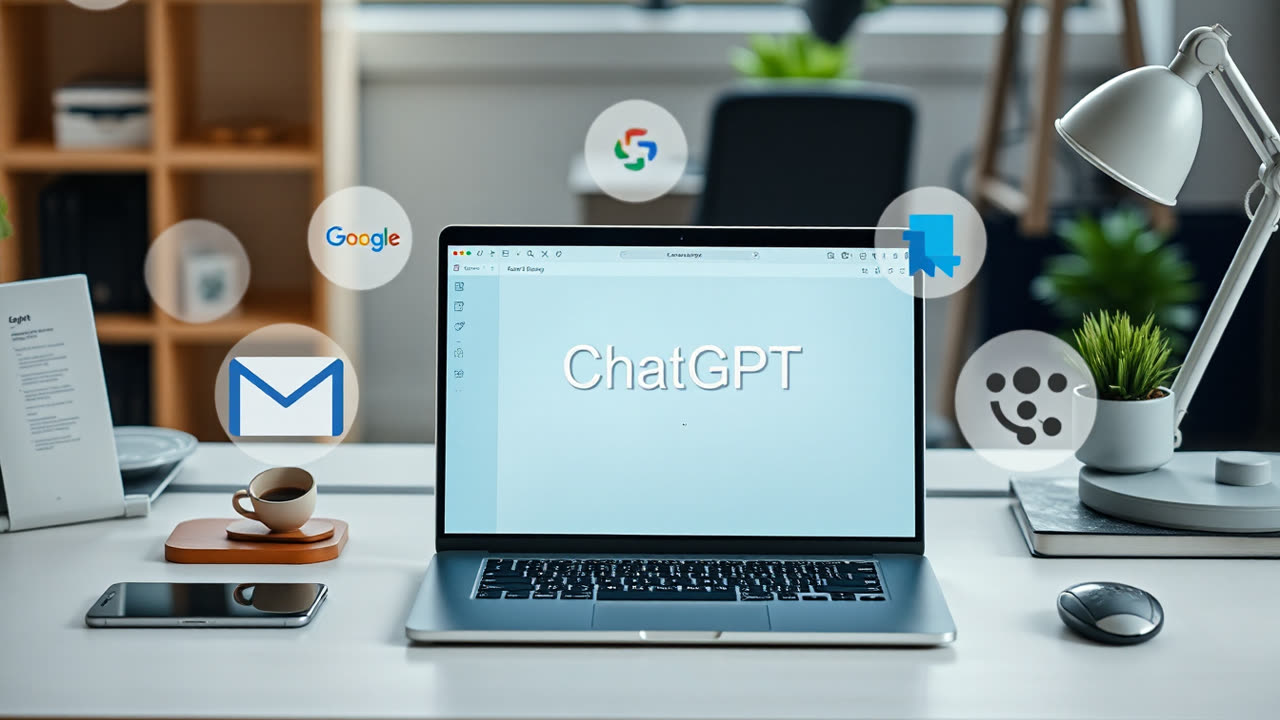
Free access to ChatGPT's upgraded task scheduling tool, alongside advanced trigger-based prompt configurations for paid accounts that integrate directly with platforms like Gmail, Slack, and GitHub, marks a significant stride in mainstreaming sophisticated AI automation beyond niche technical users. This strategic move by OpenAI substantially broadens the accessibility of AI-driven workflow management, transforming ChatGPT from a conversational interface into a more proactive, integral component of daily digital operations for both individual users and enterprises.
The core update for free accounts introduces a more robust and intuitive scheduling capability, allowing users to set specific times or intervals for ChatGPT to perform tasks, a feature previously limited or less refined. This enhancement democratizes basic AI automation, enabling users to, for instance, schedule content generation, reminders, or data summaries without needing to manually initiate each request. For paid subscribers, the functionality escalates dramatically: they can now configure prompts to activate automatically based on events occurring within external applications. Imagine receiving a new email in Gmail (triggering a prompt to summarize it), a specific message in Slack (prompting a draft response), or a pull request in GitHub (initiating code review suggestions). This moves ChatGPT beyond mere command execution to contextual awareness and proactive engagement within a user's digital ecosystem, essentially turning it into a customizable, event-driven AI agent.
The profound impact on users lies in the potential for unprecedented productivity gains and a significant reduction in digital friction. For free users, the upgraded scheduling empowers them to leverage AI for routine, time-sensitive tasks, fostering a greater understanding of AI's practical utility without an upfront financial commitment. This could lead to wider adoption and experimentation, accelerating the learning curve for a broader demographic. For paid users, the integration with critical business applications like Gmail, Slack, and GitHub transforms ChatGPT into a powerful automation hub. It shifts the paradigm from reactive prompt engineering to proactive, intelligent task delegation. Developers could automate preliminary code reviews upon commit, marketing teams could auto-summarize customer feedback from Slack channels, and executives could receive prioritized email digests, all without manual intervention. This level of integration promises to free up significant human capital, allowing professionals to focus on higher-order strategic thinking rather than repetitive, trigger-response tasks.
From an industry perspective, this development intensifies the competition in the rapidly evolving AI agent and workflow automation space. OpenAI is directly challenging established players like Zapier and IFTTT, which have long dominated the "if this, then that" automation market, by embedding similar, but AI-enhanced, capabilities directly into its flagship product. While Zapier offers a vast array of integrations, ChatGPT’s unique selling proposition lies in its generative AI core, allowing for intelligent processing and content creation *within* the automated workflow, rather than just simple data transfer or command execution. For instance, an email trigger in Zapier might forward an email; in ChatGPT, it could analyze the email's sentiment and draft a reply. This pushes the boundaries of what "automation" means, moving from rule-based systems to intelligent, context-aware processing. Furthermore, this move positions OpenAI more squarely against Microsoft's Copilot and Google's Gemini, both of which are also deeply integrating AI into productivity suites like Microsoft 365 and Google Workspace, respectively. OpenAI's approach offers a more generalized, customizable AI layer that can potentially interface with an even broader array of third-party services, depending on its API strategy and plugin ecosystem. The prior generation of ChatGPT, while powerful for generating text, lacked this inherent ability to monitor external events and proactively initiate actions, making these new features a substantial leap towards more autonomous AI agents.
Looking ahead, this integration strategy signals a clear trajectory towards more autonomous and deeply embedded AI agents. OpenAI will likely expand its roster of supported integrations, potentially including CRM systems, project management tools, and financial platforms, to capture a larger share of the enterprise automation market. We can anticipate more sophisticated conditional logic within the trigger system, allowing users to define complex chains of events and responses. Furthermore, the development of a more robust marketplace for pre-built AI workflows or "recipes" could emerge, similar to those seen in other automation platforms, empowering users to quickly deploy sophisticated AI agents without extensive configuration. The ethical and security implications of such deeply integrated AI will also become paramount, necessitating robust data privacy measures, transparent AI behavior, and user controls to manage the scope of AI's autonomous actions. The future of work will increasingly involve human-AI collaboration where AI handles not just information processing, but also intelligent task orchestration, making these new ChatGPT features a foundational step in that evolution.