Chicago Metra Unveils North America's First Battery-Electric Commuter Trainsets
Chicago Metra is set to revolutionize North American commuter rail with its new Stadler FLIRT battery-electric multiple unit (BEMU) trainsets, marking a pivotal shift from diesel dominance towards zero-emission technology.
✨ This content was summarized and interpreted by AI; it may contain errors — please verify accuracy with the original sources. Learn more
Listen to this story
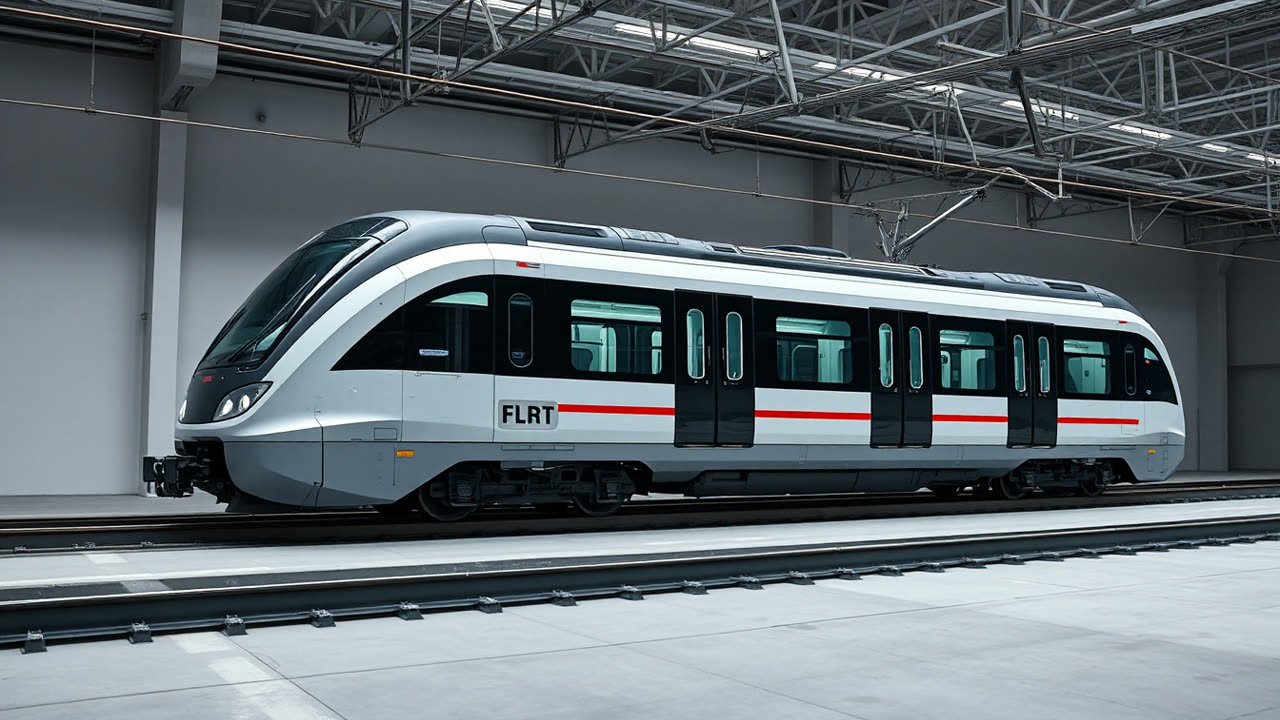
Chicago Metra is poised to revolutionize North American commuter rail with the introduction of its new Stadler FLIRT battery-electric multiple unit (BEMU) trainsets, marking a pivotal shift away from the pervasive diesel-powered fleets that have long dominated the region. Metra has placed a base order of eight two-car, battery-powered trainsets from Stadler U.S. in a $154 million contract, with options for an additional eight units and up to 32 trailer cars, signaling a substantial commitment to zero-emission technology. The first of these groundbreaking trainsets is slated for exhibition on October 5, 2026, at the American Public Transportation Association (APTA) EXPO in Chicago, with passenger service expected to commence on the Rock Island Line's Beverly Branch by 2028.
This initiative is not merely an incremental upgrade but a strategic leap, offering a genuine "first of its kind" solution for North American commuter rail, particularly for non-electrified routes. While other U.S. transit agencies are exploring battery-electric technology—such as the Massachusetts Bay Transportation Authority (MBTA) moving to procure battery-electric locomotives for its Fairmount Line by early 2028, and Union Pacific testing Wabtec FLXdrive battery-electric freight locomotives in Southern California—Metra's adoption of purpose-built battery-electric *multiple unit trainsets* for passenger service on un-electrified lines sets a new precedent. The FLIRT BEMUs are designed to operate autonomously on battery power for ranges of 45 to 65 miles, enabling zero local emissions without the significant capital expenditure and infrastructure disruption of full corridor overhead catenary electrification. This flexibility is critical in a country where less than 1% of mainline trackage is electrified, with most existing electrification concentrated in the Northeast Corridor.
The impact on users and the industry promises to be profound. For passengers, the Stadler FLIRT trainsets will deliver a markedly improved experience: significantly quieter rides, smoother acceleration due to superior tractive effort distribution, and enhanced onboard amenities including low-floor access, ADA compliance, open gangways, passenger information signs, bike racks, luggage racks, and USB outlets. Critically, the deployment on the 16.4-mile Beverly Branch of the Rock Island Line will directly benefit environmental justice communities on Chicago's South Side and in the near southern suburbs by drastically reducing nitrogen oxide and particulate matter emissions, improving local air quality and public health outcomes. This aligns with Metra's broader commitment to cleaner power and aligns with the goals of Chicago's regional transit system to achieve zero emissions.
Operationally, the BEMUs offer substantial advantages over Metra's aging diesel-electric fleet. The trains utilize onboard lithium-ion battery packs and feature fast-charging capabilities, recovering from a 20% to 80% state of charge in approximately 20 to 30 minutes. Charging can occur via existing 480V three-phase utility cabling in yards and terminals, as well as through dedicated high-power wayside charging systems, further minimizing infrastructure costs. Regenerative braking also efficiently recovers kinetic energy, feeding it back into the batteries during deceleration, which boosts energy efficiency and reduces wear on mechanical brakes. These factors contribute to lower operating costs and reduced maintenance needs compared to diesel locomotives, which require frequent oil changes and fuel filter replacements. Furthermore, Stadler has equipped the Metra FLIRT with a "winterisation package," including a battery thermal management system and layover mode for heating or cooling, addressing concerns about battery performance in Chicago's extreme cold, a known challenge for electric vehicles.
Metra's decision reflects a growing trend in global rail. Stadler's FLIRT Akku trainsets have already proven their efficacy in Germany, operating in revenue service across partially electrified networks since 2023, successfully replacing regional diesel railcars under sustained timetable conditions. Competitors like Siemens and Alstom also have battery-electric and hydrogen fuel cell trains running in Europe, demonstrating the maturity of these technologies. This move by Metra positions it at the forefront of North American commuter rail innovation, leveraging proven European technology to address local environmental and operational needs. The $169.3 million federal Congestion Mitigation and Air Quality Improvement (CMAQ) grant secured for the purchase underscores federal support for such sustainable transit solutions.
Looking ahead, the success of Metra's battery-electric FLIRT fleet could serve as a vital blueprint for other U.S. transit agencies grappling with decarbonization targets and the prohibitive costs of full electrification. Martin Ritter, CEO of Stadler North America, emphasizes that battery-electric rolling stock provides a functional approach for vehicle modernization and operational objectives as transit operators seek viable frameworks for decarbonization. The operational flexibility of BEMUs, capable of running on existing non-electrified lines, makes them particularly appealing for expanding electric service to routes where traditional catenary installation is not economically feasible. This paves the way for Metra's vision of providing more frequent, all-day regional rail service, enhancing connectivity and ridership across the Chicago metropolitan area. While challenges remain, particularly around long-term battery degradation and the continuous evolution of charging infrastructure, the deployment of Metra's FLIRT BEMUs represents a tangible and transformative step towards a cleaner, quieter, and more efficient future for commuter rail in the United States.