China Dominates EV Charging Race with Groundbreaking 2.2MW Ultra-Fast Chargers
China has decisively seized the lead in global EV charging with Geely's 2,250kW ultra-fast chargers, capable of replenishing a battery to 70% in just 4.5 minutes, already operational in five cities and set for massive expansion.
✨ This content was summarized and interpreted by AI; it may contain errors — please verify accuracy with the original sources. Learn more
Listen to this story
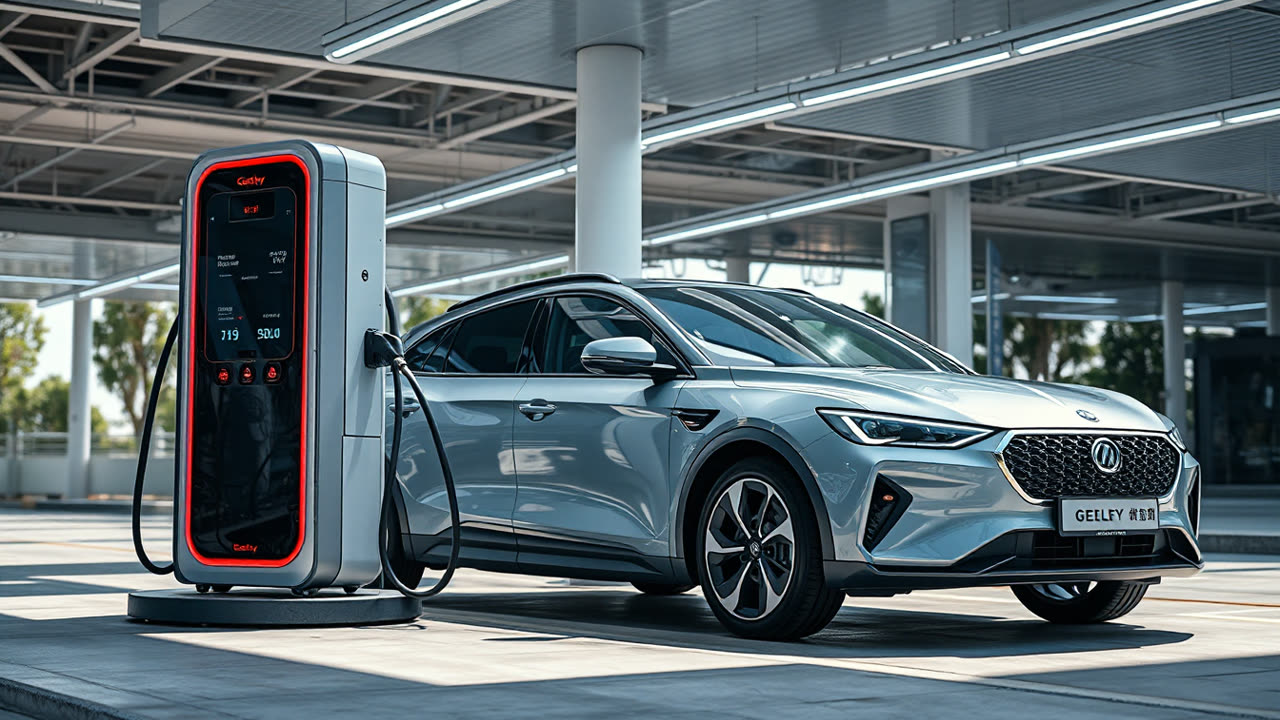
China has decisively seized the lead in the global electric vehicle (EV) charging race, with Geely's recent rollout of 2,250kW (2.2MW) ultra-fast chargers capable of replenishing an EV battery to 70% in a mere 4.5 minutes. These groundbreaking chargers are already operational in five Chinese cities, with an ambitious plan to establish 15,000 charging sites by the end of next year. This rapid deployment starkly contrasts with the United States, where the industry is still contemplating 750kW chargers for next year, with current fastest public chargers in the US typically offering up to 500kW, such as the Gravity Charging Center in New York.
This technological chasm represents more than just a difference in charging speed; it signifies a divergent strategic approach to EV adoption and infrastructure development, with profound implications for consumers, manufacturers, and national energy grids. For users, the promise of a five-minute charge fundamentally erases "range anxiety," the primary psychological barrier to widespread EV adoption. This speed rivals, and in some cases surpasses, the time it takes to refuel a gasoline car, transforming the EV ownership experience from one of planned stops to spontaneous convenience. Geely's "Shendun Golden Battery" technology, paired with its Smart Charging stations, reportedly charges from 10% to 70% in approximately 4 minutes and 30 seconds and to 97% in around 8 minutes and 40 seconds, specifically for models like the Lynk & Co 10 and Zeekr 001. This is achieved through advanced battery chemistry, optimized charging algorithms, enhanced heat management, and AI-driven energy models that predict battery temperature up to 30 seconds in advance to adjust power dynamically.
The impact on the industry is multi-faceted. China's aggressive push establishes it as the undisputed leader in ultra-fast charging technology, putting immense pressure on Western automakers and charging networks to accelerate their own research and deployment. While the US is working towards 750kW chargers, with EVgo developing a next-generation system aiming for a 2027 unveiling and deployment, no current passenger EVs in North America can even accept such high power levels. Tesla's NACS standard, now widely adopted in North America, supports DC fast charging over 1000 kW, but current Superchargers typically deliver up to 250 kW. The current fastest commercial chargers in the US and Europe often range from 350-400 kW. This disparity highlights a significant gap not only in infrastructure but also in the integrated development of vehicles and battery technology designed to handle such extreme power inputs.
Developing such high-power charging systems is a complex engineering challenge. It demands specialized high-rate battery cells, sophisticated battery management systems (BMS), aggressive liquid cooling throughout the entire charging chain (from station to cable to battery), and grid-friendly power electronics. Geely claims its technology ensures battery durability, promising 3,500 charge-discharge cycles with "limited degradation" and an extended battery warranty of 8 years/200,000 km, partly due to AI-powered thermal control and pulse restoration technology that reactivates lithium ions.
However, scaling megawatt-level charging presents substantial infrastructure hurdles. The capital expenditure for grid upgrades is staggering, with estimates suggesting $100-$175 billion in grid investment needed in the U.S. by 2030 to support widespread EV adoption, particularly ultra-fast charging. A single 350 kW ultra-fast charging station can cost $150,000-$250,000 for hardware and installation, with grid reinforcement adding millions more per site in dense urban areas. Ultra-fast charging creates intense, short-duration spikes in electricity demand, stressing local transformers and distribution lines. China, with its centralized planning, has set ambitious targets, aiming to double its EV charging capacity by the end of 2027, installing 28 million facilities nationwide, including 1.6 million new DC fast chargers, with 100,000 high-power models. The country plans to have over 40 million charging points, including approximately 300,000 high-power charging facilities, by 2030. In contrast, the Biden administration's goal is to deploy 500,000 public EV chargers by 2030, with over 206,000 publicly available ports as of January 2025.
Looking ahead, the race for charging supremacy will likely intensify, pushing battery technology towards even higher C-rates and more robust thermal management solutions. The proliferation of ultra-fast charging will necessitate significant investment in smart grid technologies, energy storage solutions at charging hubs, and dynamic load balancing to manage demand spikes. The cost of public fast charging, which currently averages $0.53/kWh in the US and can be nearly three times higher than home charging, will also be a critical factor in consumer adoption and profitability for charging networks. China's strategy of integrated development, where vehicles, batteries, and chargers are designed in concert, gives it a distinct advantage. For other regions, catching up will require not just technological innovation but also cohesive national strategies, substantial public-private investment, and a willingness to rapidly upgrade aging grid infrastructure to support the next generation of electric mobility.