China's CXMT Begins Mass Production of LPDDR6 Memory, Ahead of Western Rivals
China's ChangXin Memory Technologies (CXMT) has announced it has begun mass production of LPDDR6 memory, positioning itself ahead of Western rivals Samsung and SK Hynix in publicly confirming both production and a commercial deployment for the next-generation mobile DRAM.
✨ This content was summarized and interpreted by AI; it may contain errors — please verify accuracy with the original sources. Learn more
Listen to this story
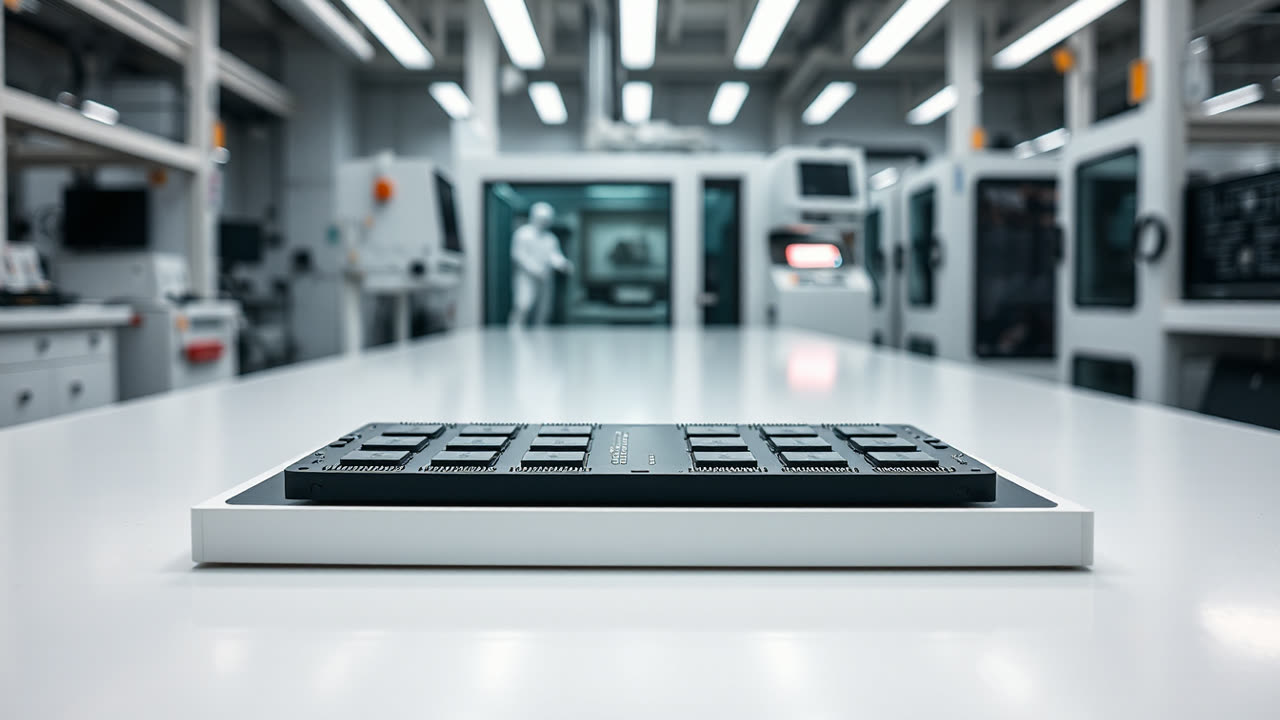
China's ChangXin Memory Technologies (CXMT) has announced it has begun mass production of LPDDR6 memory, positioning itself ahead of Western rivals Samsung and SK Hynix in publicly confirming both production and a commercial deployment for the next-generation mobile DRAM. This significant development sees CXMT's LPDDR6 chips set to debut in Xiaomi's upcoming 18 Fold foldable smartphone in September 2026, marking a pivotal moment for China's semiconductor ambitions. While the initial deployment is for a relatively niche device with targeted shipments of 200,000 to 300,000 units, the symbolic victory for CXMT and China's drive for chip self-sufficiency is substantial.
The LPDDR6 standard, ratified by JEDEC in July 2025, represents a significant leap forward in mobile memory technology. It boasts data transfer speeds of up to 14.4 Gbps, a substantial increase from the LPDDR5X's peak of around 10.7 Gbps. CXMT's initial LPDDR6 implementation operates at speeds up to 12.8 Gbps, with a base speed of 10.7 Gbps, and offers a maximum single-chip capacity of 16GB. Beyond raw speed, LPDDR6 introduces a wider 24-bit channel architecture, compared to LPDDR5X's 16-bit channels, and a dual sub-channel design (two 12-bit sub-channels) that allows for independent request processing, reducing latency and improving flexibility. Power efficiency is also significantly enhanced, with LPDDR6 rated at approximately 20-21% better than LPDDR5X, thanks to more precise voltage and power-state control and features like Dynamic Efficiency Mode and Dynamic Voltage and Frequency Scaling (DVFS). These advancements are critical for handling the increasing demands of on-device AI, advanced multitasking, and ultra-high-definition video streaming in modern smartphones.
This announcement is a stark indicator of China's accelerating progress in the semiconductor industry, particularly in DRAM, a sector historically dominated by South Korean giants Samsung and SK Hynix, and US-based Micron. For years, Chinese DRAM technology lagged considerably behind its international competitors. However, CXMT's ability to reach mass production of LPDDR6 roughly concurrently with, or even slightly ahead of, public announcements from established leaders signifies a dramatic narrowing of this technological gap. Samsung unveiled its LPDDR6 before CES 2026 and has been working with major system-on-chip makers on validation, but has not disclosed a specific mass-production timetable or named a handset customer. SK Hynix, which completed development of its 16-gigabit LPDDR6 based on its 1c DRAM process in March 2026, planned to begin customer shipments in the second half of 2026, with Xiaomi reportedly among its potential first customers. Micron also began sampling its 1-gamma 16Gb LPDDR6 product to OEM partners in December 2025. The fact that CXMT has a confirmed commercial product launch ahead of its rivals, even if for a limited volume, underscores a significant strategic win.
The partnership with Xiaomi, which will integrate CXMT's LPDDR6 with its proprietary 3nm Xring O3 processor in the 18 Fold, highlights a broader push by Chinese tech companies to reduce reliance on foreign chip suppliers. This vertical integration within China's semiconductor ecosystem is a direct response to geopolitical pressures and the "Made in China 2025" initiative aimed at achieving greater self-sufficiency. CXMT's rapid growth is evident in its market share, which surged to 7% of the global DRAM market by Q2 2026, up from an almost negligible share just a few years prior. Recent reports even suggest CXMT is close to matching Micron's DRAM manufacturing capacity in 2026. This aggressive expansion is backed by substantial investment, including a 57.9 billion yuan ($8.6 billion) IPO in Shanghai, with proceeds earmarked for production expansion and technological upgrades.
Looking ahead, while CXMT's mass production announcement is a crucial milestone, the "niche phone" caveat is important. The limited initial shipment volume for the Xiaomi 18 Fold suggests that CXMT's actual production capacity and yields for LPDDR6 may still be lower than those of its larger rivals. The true test will be CXMT's ability to scale production to meet broader market demand and to secure design wins in a wider array of devices beyond Xiaomi's ecosystem. However, this early entry into LPDDR6 mass production provides CXMT with invaluable experience and a critical head start in optimizing its manufacturing processes and improving yields. The increased competition from CXMT is expected to intensify the mobile DRAM market, potentially affecting pricing strategies and accelerating innovation across the industry. Furthermore, the broader LPDDR6 standard itself is poised to extend beyond mobile, with JEDEC outlining roadmaps for applications in AI PCs, data centers, and automotive systems, including LPDDR6-based SOCAMM modules. CXMT's demonstrated capability in advanced mobile DRAM positions it to potentially capture a significant share of these emerging segments, further solidifying China's footprint in the global semiconductor landscape and reshaping the competitive dynamics for years to come.