China's Regulatory Filings Reveal Smart #2 EV Specs, U.S. Market Excluded
The compact electric successor to the Smart ForTwo is detailed in Chinese regulatory documents, confirming its global launch but notably bypassing the American market.
✨ This content was summarized and interpreted by AI; it may contain errors — please verify accuracy with the original sources. Learn more
Listen to this story
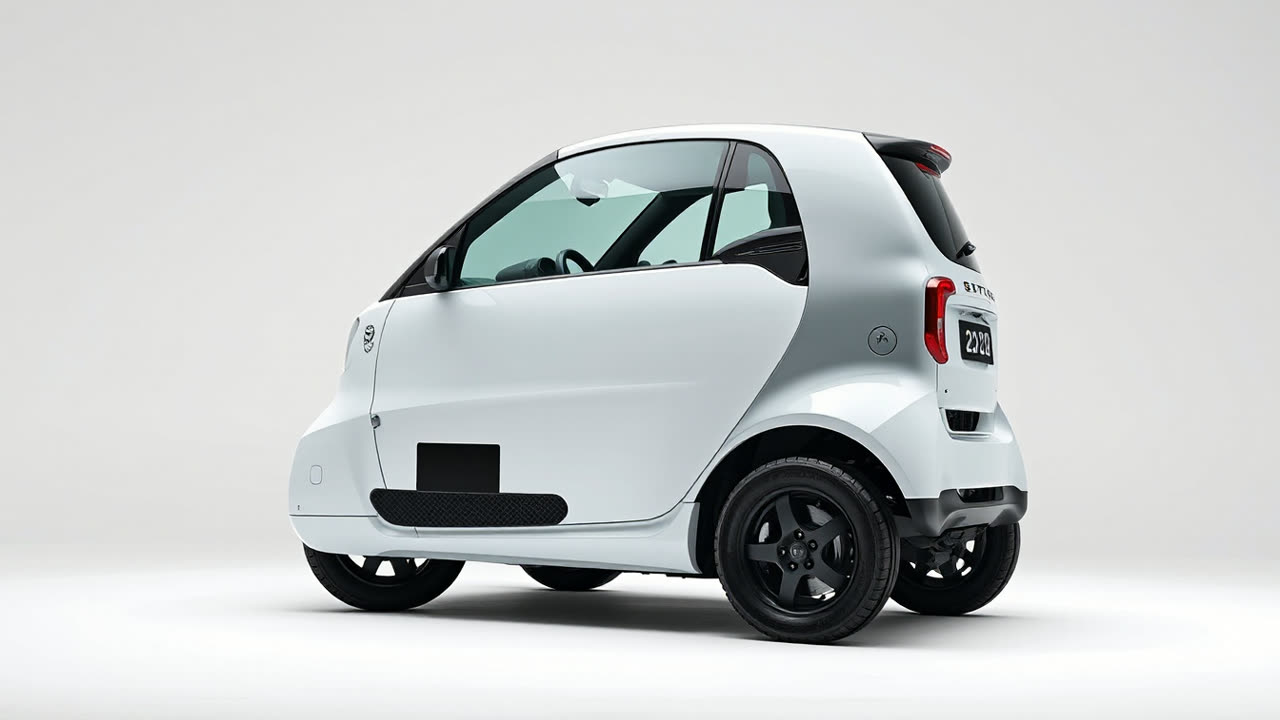
China's regulatory filings have unveiled the specifications for the Smart #2, a compact electric vehicle poised to succeed the iconic Smart ForTwo, with its global reveal anticipated in October. This new iteration, however, will notably bypass the United States market, continuing a trend of selective market engagement for the revitalized Smart brand. The regulatory documents detail a vehicle maintaining the brand's commitment to urban mobility, with specific dimensions and powertrain configurations tailored for efficiency and maneuverability, though precise battery capacity and range figures are still awaiting official confirmation.
The exclusion of the Smart #2 from the U.S. market is a strategic decision that speaks volumes about the evolving landscape of compact EVs and regional market demands. Smart, now a 50/50 joint venture between Mercedes-Benz and Geely, has pivoted its product strategy towards more substantial, premium electric vehicles like the Smart #1 and #3, which are compact SUVs and crossovers. The #2's smaller footprint likely positions it for markets where micro-mobility and urban density are paramount, such as Europe and parts of Asia, where the original ForTwo found considerable success. The U.S. market, historically gravitating towards larger vehicles, has proven challenging for ultra-compact cars. The original Smart ForTwo, despite its novelty, struggled to gain significant traction in North America, with sales peaking around 24,000 units in 2008 before a steady decline led to its withdrawal in 2019. This historical context, coupled with current consumer preferences for SUVs and trucks, makes the #2's absence a calculated move to concentrate resources on more receptive markets.
From an industry perspective, the Smart #2 represents a crucial test for the brand's ability to retain its urban identity while scaling up its electric offerings. The Smart #1, a compact SUV, has already established a new design language and technology platform shared with Geely's SEA architecture, which is expected to underpin the #2 as well. This common architecture allows for economies of scale and faster development cycles. The #2 will likely feature a single electric motor powering the rear wheels, a configuration consistent with the original ForTwo's rear-engine, rear-wheel-drive layout, emphasizing agility. While detailed performance figures are pending, it is expected to offer competitive acceleration suitable for urban driving. Its compact dimensions, rumored to be around 2.7 meters in length, would make it one of the shortest four-wheeled passenger EVs on the market, directly competing with vehicles like the Citroën Ami (though the Ami is a quadricycle) and potentially the upcoming Renault Twingo EV in terms of urban utility, rather than direct performance.
The significance for users in available markets lies in the potential for a highly efficient, maneuverable, and technologically advanced urban electric vehicle. The Smart #2 is expected to inherit the sophisticated infotainment and safety features seen in the #1, offering a premium experience in a small package. For city dwellers facing congestion and limited parking, a vehicle of the #2's proposed size offers unparalleled practicality. Its electric powertrain promises silent operation and zero tailpipe emissions, contributing to cleaner urban air and potentially lower running costs due to cheaper electricity compared to gasoline and reduced maintenance. The original ForTwo was often lauded for its ease of parking and nimble handling, and the #2 aims to elevate these attributes with modern EV technology.
Looking ahead, the Smart #2's success will be a bellwether for the viability of dedicated urban EVs in an increasingly SUV-dominated market. If it resonates with European and Asian consumers, it could solidify Smart's position as a niche but significant player in the premium compact EV segment. Its strategy of leveraging Geely's robust EV platform while retaining Mercedes-Benz's design and brand appeal is critical. The brand's decision to forgo the U.S. market entirely for this model underscores a pragmatic approach: focus resources where market demand and regulatory environments are most favorable for its specific product offerings. This could also pave the way for other manufacturers to reassess their global market strategies for ultra-compact EVs, potentially leading to a more diversified range of electric vehicles tailored to regional preferences. The full reveal in October will provide a clearer picture of Smart's vision for the future of urban mobility and its ambition to carve out a distinct identity in the crowded EV landscape.