Chinese Memory Giant CXMT Shatters DDR5-8800 Barrier on AMD Platform
ChangXin Memory Technologies (CXMT) has achieved a significant engineering feat, pushing consumer-grade memory performance boundaries and challenging global DRAM leaders with its DDR5-8800 breakthrough on an AMD system.
✨ This content was summarized and interpreted by AI; it may contain errors — please verify accuracy with the original sources. Learn more
Listen to this story
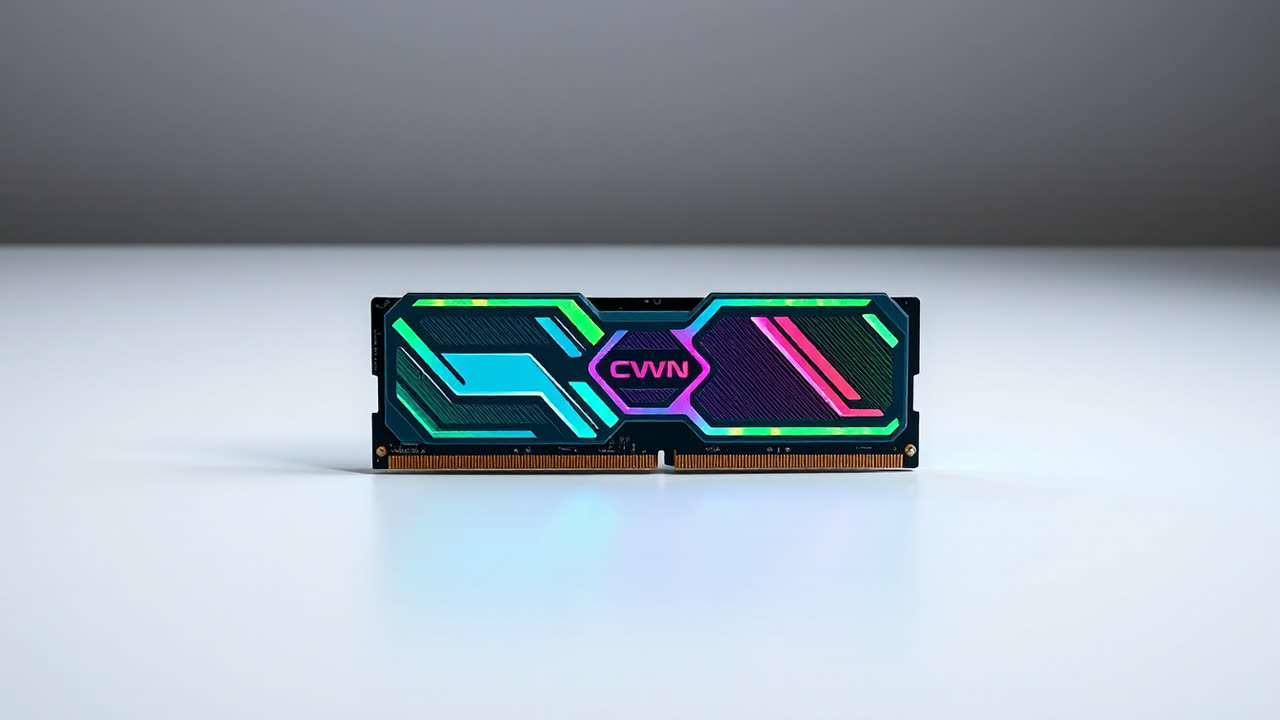
Chinese memory manufacturer ChangXin Memory Technologies (CXMT) has demonstrably shattered the DDR5-8800 barrier on an AMD platform, showcasing its internally developed DRAM chips in a Colorful CVN Icicle DDR5 memory kit. This significant engineering feat, achieved on an AMD Ryzen 7 8700G processor paired with an ASUS ROG Crosshair X670E Gene motherboard, pushes the boundaries of consumer-grade memory performance and signals a profound shift in the global DRAM landscape. The milestone, which saw the memory operate at a CAS Latency (CL) of 44, not only highlights CXMT's rapid technological maturation but also positions it as a formidable challenger to established industry titans like SK Hynix, Samsung, and Micron.
This achievement is far more than just a speed record; it represents a critical inflection point for the semiconductor industry and global supply chains. For years, the high-performance DRAM market has been dominated by a handful of non-Chinese manufacturers, with SK Hynix often leading in pushing DDR5 frequency envelopes, notably with its Hynix A-die and M-die chips. CXMT's ability to achieve DDR5-8800 suggests its manufacturing processes and chip designs are now capable of competing at the bleeding edge, closing what was once a substantial technological gap. This means greater diversity in the high-performance memory supply, potentially mitigating risks associated with over-reliance on a few key players, especially in a geopolitical climate increasingly focused on semiconductor independence. For consumers and system builders, the immediate impact is the promise of more competitive pricing and wider availability of high-speed DDR5 memory, particularly as DDR5-6000 to DDR5-7200 modules become standard, and higher frequencies like DDR5-8000+ become more accessible. The demonstrated overclocking potential on an AMD platform is particularly noteworthy, as AMD's AM5 platform has historically been perceived as more challenging for achieving peak DDR5 frequencies compared to Intel's offerings, although recent BIOS updates have significantly improved compatibility and performance.
CXMT's journey to this level of performance underscores China's persistent, state-backed drive for self-sufficiency in critical semiconductor technologies. While CXMT has been producing DRAM for several years, initially focusing on more mainstream and server-oriented modules, this DDR5-8800 breakthrough signals its successful foray into the high-frequency, enthusiast-grade segment. Historically, Chinese memory manufacturers have faced challenges in scaling production and matching the yields and performance of their international counterparts, often relying on reverse engineering or slower technological progression. However, massive investments in R&D, advanced fabrication facilities, and talent acquisition appear to be paying dividends. This competitive pressure from CXMT will likely spur further innovation from SK Hynix, Samsung, and Micron, potentially accelerating the development of even faster DDR5 modules and the eventual transition to next-generation memory standards like DDR6. The current global DRAM market, valued at approximately $90 billion in 2023, is intensely competitive, with market shares constantly shifting based on technological prowess and production capacity. CXMT's enhanced capabilities could allow it to capture a larger slice of this lucrative market, particularly within the rapidly expanding Chinese domestic market, but also internationally as its products gain validation.
Looking ahead, CXMT's achievement heralds a new era of competition in the high-performance memory sector. The immediate next steps will involve the widespread availability of CXMT-powered memory kits at these higher frequencies, with brands like Colorful likely leading the charge. Pricing will be a crucial factor in how quickly these modules gain traction against established brands, but the underlying technological capability is now undeniable. We can anticipate further optimization of CXMT's DDR5 chips, potentially leading to even tighter timings or higher stable frequencies, pushing past the DDR5-9000 mark in the near future. This advancement also has implications for server and data center markets, where high-bandwidth, low-latency memory is increasingly critical for AI workloads and high-performance computing. As China continues to invest heavily in its domestic semiconductor ecosystem, CXMT's rise could serve as a blueprint for other Chinese firms aiming to challenge global leaders in various chip segments, ultimately reshaping the global technology supply chain and fostering a more geographically diverse and resilient memory market.