Cody Wilson Claims Bypass for 3D-Printed Gun Software Blocks
The creator of the world's first 3D-printed gun asserts he has found a method to circumvent government-mandated software designed to prevent firearm manufacturing, escalating the digital arms control debate.
✨ This content was summarized and interpreted by AI; it may contain errors — please verify accuracy with the original sources. Learn more
Listen to this story
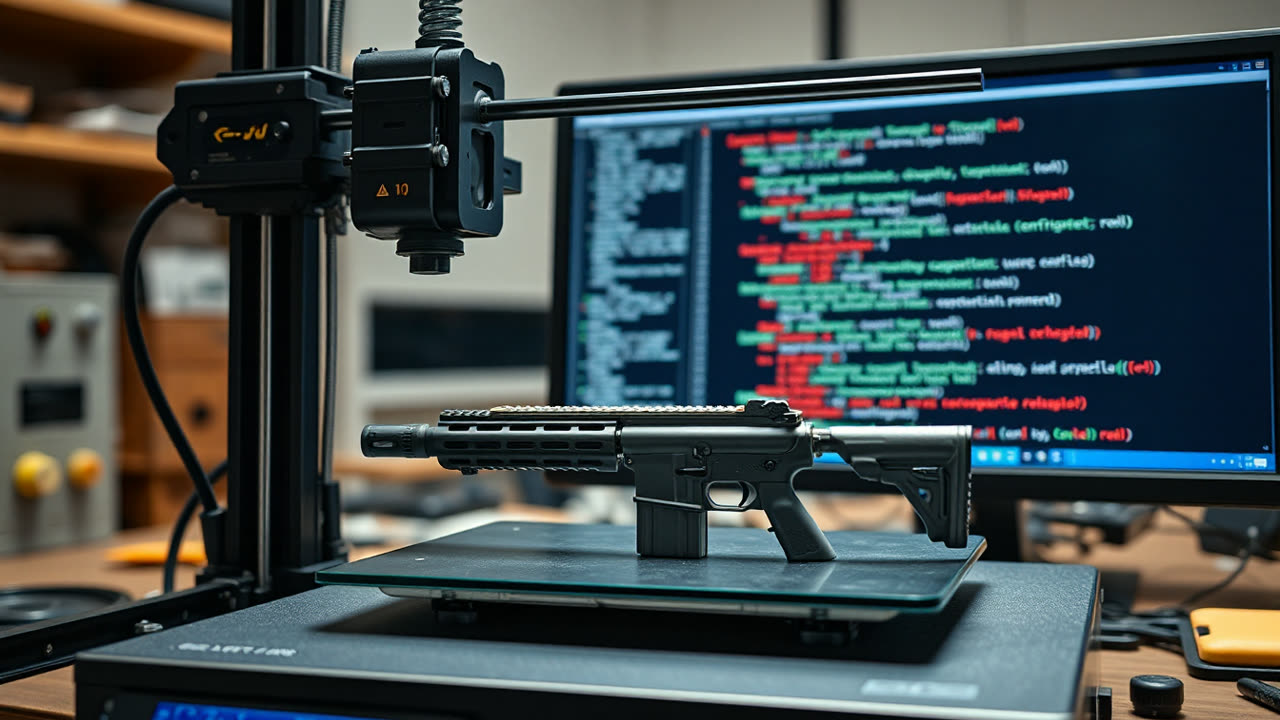
Cody Wilson, the notorious creator of the world's first fully 3D-printed gun, has reportedly developed a method to circumvent government-mandated software designed to prevent 3D printers from manufacturing firearms, marking a significant escalation in the ongoing battle between digital firearm proliferation and regulatory control. This development, if confirmed and widely adopted, directly challenges legislative efforts in states like New York, which have attempted to mandate specific printer functionalities to block the creation of "ghost guns." The core news revolves around Wilson's claim, through his organization Defense Distributed, that his new approach effectively bypasses digital safeguards, rendering ineffective the very software intended to prevent illicit firearm production.
This breakthrough represents more than just a technical workaround; it fundamentally reshapes the landscape of gun control and digital manufacturing. For users, particularly those seeking to bypass traditional firearm acquisition channels, it offers a new pathway to easily produce unregistered weapons at home, increasing the accessibility of firearms without background checks or serial numbers. The implications for law enforcement are profound, as the proliferation of untraceable, homemade firearms complicates investigations into gun violence and trafficking. The ability to print a functional firearm from readily available digital files, now potentially immune to software blocks, severely undermines existing gun control measures and creates a new frontier for illegal arms manufacturing.
From an industry perspective, this development casts a long shadow over the future of 3D printing technology. While 3D printing has revolutionized prototyping and manufacturing across numerous sectors, its association with untraceable firearms could invite more stringent regulations on printer manufacturers and software developers. The industry faces the dilemma of balancing innovation and open-source principles with the societal responsibility to prevent misuse. Furthermore, it highlights the technical limitations of relying solely on software-based solutions for hardware problems; a cat-and-mouse game where technical innovation consistently outpaces regulatory response.
The background of this conflict traces back to 2013 when Wilson first publicly demonstrated the "Liberator," a single-shot pistol almost entirely 3D-printed. This act ignited a decade-long legal and technological struggle, with Defense Distributed fighting for the right to publish firearm blueprints online, arguing First Amendment protections. After numerous court battles, including a landmark settlement with the U.S. government in 2018, Defense Distributed temporarily gained the right to distribute its files, only to face renewed legal challenges and state-level bans. Prior generations of 3D-printed guns, while functional, often required specific materials or had reliability issues. However, advancements in polymer strength, metal 3D printing, and hybrid designs (incorporating readily available metal parts like firing pins) have made these firearms increasingly robust and reliable, blurring the line between homemade and commercially produced weapons. This latest claim by Wilson signifies a pivot from merely distributing files to actively circumventing the new generation of preventative software.
Compared to traditional firearms, 3D-printed guns, often referred to as "ghost guns," lack serial numbers, making them impossible to trace through conventional means. They can be manufactured in private, bypassing federal and state background checks typically required for firearm purchases. While traditional firearms are subject to strict manufacturing, sales, and ownership regulations, 3D-printed guns currently exist in a regulatory gray area, though legislation is rapidly evolving. For instance, California's AB 1621, enacted in 2022, prohibits the sale of unfinished frames and receivers that can be easily converted into firearms without serial numbers, aiming to curb ghost gun proliferation. Similarly, New York’s "Bipartisan Gun Control Package" from 2022 includes provisions aimed at regulating ghost guns and 3D-printed firearms. Wilson's alleged bypass specifically targets the software component of such regulatory efforts, nullifying a key preventative measure.
The informed outlook suggests that this "cat-and-mouse game" will intensify. Governments and anti-gun violence advocates will likely respond with new legislative attempts, potentially focusing on hardware-level restrictions or even broader prohibitions on the dissemination of firearm printing instructions. The legal battleground may shift to the legality of sharing or using software designed to bypass these safety measures. We could see calls for international cooperation, as digital files transcend national borders, making unilateral legislative efforts less effective. Furthermore, the development could spur innovation in detection technologies, with law enforcement exploring methods to identify 3D-printed firearms through material analysis or unique structural identifiers. This ongoing conflict underscores the profound challenge of regulating rapidly advancing technology, especially when it intersects with deeply entrenched constitutional rights and public safety concerns. The next phase will undoubtedly involve a complex interplay of technological countermeasures, legal battles, and political will, with no easy resolution in sight.