Comcast Activates Wi-Fi Motion Sensing in Millions of Routers, Raising Privacy Concerns
Comcast has quietly activated an innovative motion-sensing capability within millions of its newer Xfinity Wi-Fi routers, transforming standard networking hardware into pervasive ambient home monitors without requiring traditional sensors.
✨ This content was summarized and interpreted by AI; it may contain errors — please verify accuracy with the original sources. Learn more
Listen to this story
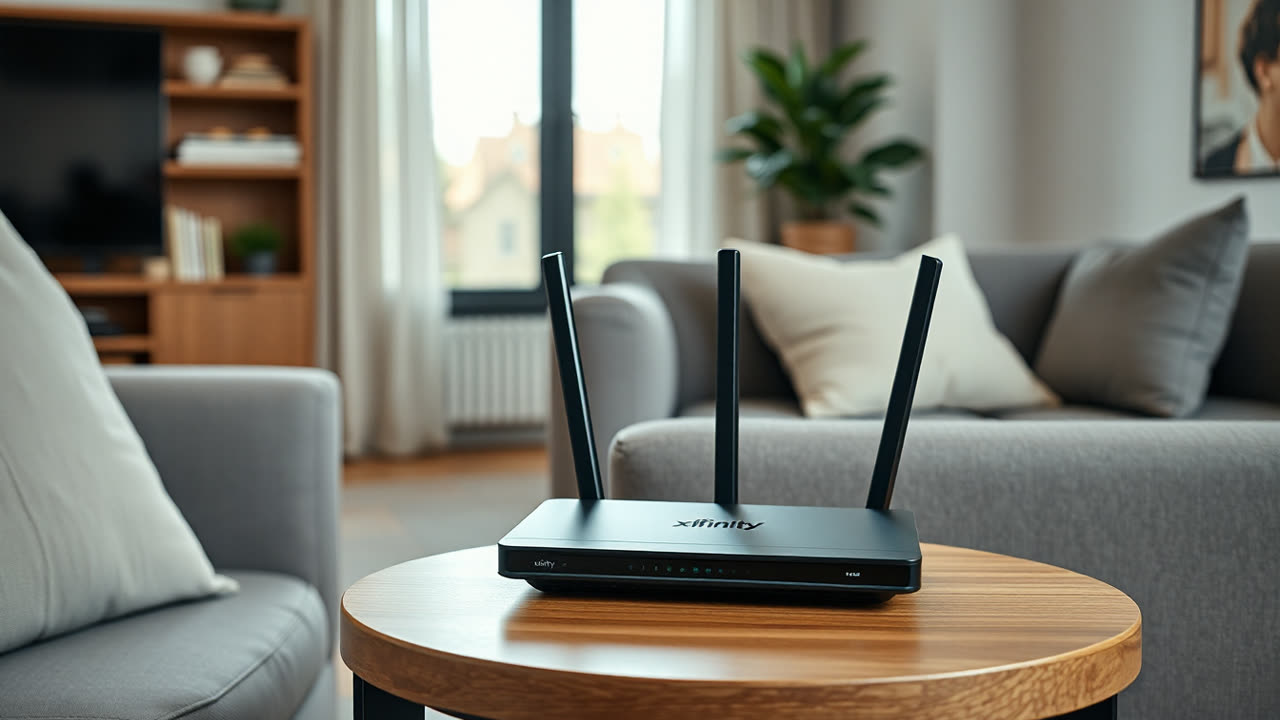
Comcast has quietly activated an innovative motion-sensing capability within millions of its newer Xfinity Wi-Fi routers, transforming standard networking hardware into pervasive ambient home monitors without requiring traditional sensors. This significant upgrade, which leverages existing Wi-Fi signals to detect movement, positions Comcast as a silent sentinel in subscribers' homes, yet it arrives with profound implications for user privacy and industry dynamics.
The core technology relies on the principle that disruptions in Wi-Fi radio frequency (RF) signals, caused by a moving body, can be precisely measured and interpreted as motion. Unlike traditional motion detectors that use infrared or cameras, this method operates without line-of-sight limitations and can theoretically "see" through walls within its signal range, offering an unprecedented level of pervasive detection. Comcast's implementation reportedly focuses on its advanced Xfinity gateways, specifically models like the XB7 and XB8, which are already deployed in millions of homes across the U.S.. The feature, dubbed "Xfinity Home Motion Detection" in some internal documents, is presented as an optional, opt-in service, but the sheer scale of its potential deployment raises immediate questions about default settings, user awareness, and the true granularity of control offered to subscribers.
This move matters immensely for users because it fundamentally alters the relationship between an Internet Service Provider and its customers, extending Comcast's reach far beyond connectivity into the very fabric of daily domestic life. On the one hand, the potential benefits are compelling: enhanced home security without installing additional hardware, passive monitoring for elderly family members, automation of smart home devices (like lights or thermostats reacting to presence), and even energy savings by detecting unoccupied rooms. Imagine a system that automatically adjusts climate control based on actual occupancy rather than a rigid schedule. However, the "privacy catch" is substantial. The ability of a router to discern human presence and movement patterns, even without identifying individuals, creates a detailed behavioral blueprint of a household. This data, if collected, stored, or shared, could be invaluable to advertisers, insurers, or even law enforcement, prompting concerns about data aggregation, potential surveillance, and the scope of Comcast's privacy policy updates surrounding this new capability. Users must grapple with the trade-off between convenience and an unprecedented level of passive oversight by their ISP.
From an industry perspective, Comcast's activation of Wi-Fi motion sensing represents a strategic pivot, aiming to expand its smart home ecosystem and create new revenue streams in an increasingly saturated market. By integrating sensing directly into existing infrastructure, Comcast bypasses the need for users to purchase and install separate smart home hubs or dedicated security systems from rivals like Ring, Arlo, or Google Nest. This could significantly disrupt the smart home security market, as Comcast offers a "zero-hardware-cost" entry point for motion detection. While dedicated security systems often provide more granular features like person detection, facial recognition, or professional monitoring services, Comcast's ambient sensing offers a compelling, low-friction alternative for basic presence detection. The integration also allows Comcast to gather valuable anonymized data on home occupancy and activity, which could inform future service offerings or network optimizations, although the ethical implications of such data use will undoubtedly face intense scrutiny.
The technology itself isn't entirely new; academic research into Wi-Fi sensing has been ongoing for years, and smaller startups have explored similar applications. However, Comcast's deployment marks the first time such a feature has been rolled out at this scale by a major ISP, leveraging millions of deployed consumer-grade routers. Previous generations of routers were solely focused on data transmission, lacking the sophisticated signal processing required for ambient sensing. This development highlights a broader trend towards "ambient intelligence," where everyday devices gain sensing capabilities to create more responsive and proactive environments. Other ISPs and router manufacturers are likely to closely watch Comcast's rollout, potentially accelerating their own research and development into similar features to avoid being left behind in the evolving smart home landscape.
Looking ahead, the success and future trajectory of Comcast's motion-sensing routers will hinge on several critical factors. User adoption will depend heavily on the clarity of Comcast's privacy policies, the ease of enabling/disabling the feature, and the perceived value proposition. A transparent, easily manageable opt-in process and robust data anonymization will be crucial to building trust. Regulatory bodies, particularly those focused on consumer privacy and data protection, are almost certain to examine this technology closely, potentially leading to new guidelines or restrictions on how ISPs can collect and utilize such sensitive behavioral data. Furthermore, the accuracy and reliability of Wi-Fi motion sensing in diverse home environments, including those with pets or multiple inhabitants, will dictate its practical utility. While the initial rollout may focus on basic presence detection, future iterations could potentially differentiate between human and animal movement, track specific individuals based on gait, or even monitor vital signs—capabilities that would amplify both the benefits and the privacy concerns exponentially. Comcast's gamble marks a significant step towards a future where our home networks are not just conduits for data, but active, pervasive participants in our daily lives, forcing a crucial re-evaluation of digital privacy in the domestic sphere.