Comcast's Xfinity Shield: Wi-Fi Motion Detection Transforms Home Security
Comcast's Xfinity Shield system leverages existing Wi-Fi signals to provide invisible motion detection, integrating home security, cybersecurity, and family protection into a unified platform.
✨ This content was summarized and interpreted by AI; it may contain errors — please verify accuracy with the original sources. Learn more
Listen to this story
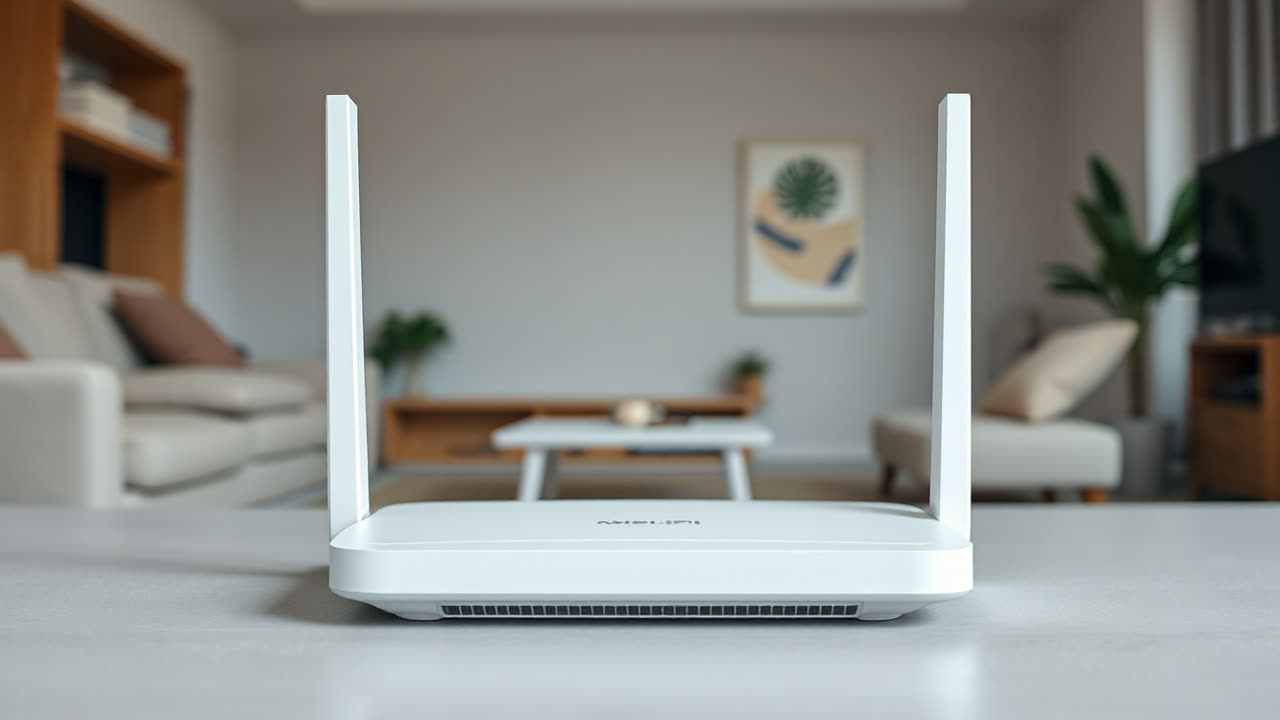
Comcast's Xfinity Shield system, launched with its headline feature of Wi-Fi-based motion detection, represents a significant strategic pivot, aiming to transform the ubiquitous home Wi-Fi signal into an invisible, always-on security grid. This innovative approach, detailed in its initial rollout, integrates traditional home security, cybersecurity, and family protection into a unified platform, moving beyond mere device-centric monitoring to a more ambient, network-level awareness of activity within a dwelling.
The core innovation lies in its utilization of existing Wi-Fi signals to detect movement. Instead of relying on dedicated motion sensors that require line-of-sight and can be prone to false alarms from pets, Xfinity Shield's technology analyzes subtle disturbances in the Wi-Fi field caused by moving bodies. This "Wi-Fi sensing" leverages the same routers that provide internet connectivity, effectively turning every corner of a home covered by Wi-Fi into a potential detection zone without additional hardware beyond the gateway itself. The system reportedly learns typical household patterns, aiming to differentiate between human movement and benign disturbances, theoretically reducing nuisance alerts. Beyond motion, Xfinity Shield also encompasses a broader suite of security features, including a secure internet gateway that monitors network traffic for cyber threats, parental controls for managing screen time and content access, and traditional components like door/window sensors and cameras for comprehensive physical security. This convergence of physical and digital protection under a single umbrella is a clear attempt by Comcast to leverage its dual role as an internet service provider and a home security provider.
This development matters profoundly for both consumers and the smart home industry, primarily due to its potential to lower the barrier to entry for robust home monitoring and its implications for privacy and data utilization. For users, the promise of "invisible" motion detection means fewer devices to install, fewer batteries to change, and potentially more comprehensive coverage than discrete sensors. The integration of cybersecurity, a growing concern for connected homes teeming with IoT devices, offers a unified defense against digital intrusions that dedicated security systems often overlook. By embedding protection at the network level, Comcast aims to secure all devices connected to the home Wi-Fi, from smart TVs to baby monitors, against malware, phishing, and unauthorized access. However, the very nature of ambient sensing raises significant privacy questions. While Comcast asserts the system only detects movement and not specific identities or activities, the continuous monitoring of a home's internal environment by an ISP could be a point of contention for privacy-conscious consumers. The effectiveness of distinguishing between humans and pets, or even between residents and intruders, remains a critical performance metric that will define user trust and adoption.
Compared to traditional home security systems, Xfinity Shield represents a distinct evolutionary step. Conventional systems typically rely on a patchwork of infrared (PIR) motion sensors, contact sensors, and cameras, each requiring specific placement and often creating "dead zones." Wi-Fi sensing, while not entirely new—companies like Cognitive Systems and Origin Wireless have been developing similar technologies for years, and even Amazon's Eero has dabbled in Wi-Fi sensing for sleep tracking—Comcast's integration into a full-fledged security and cybersecurity suite is a significant market entry. Prior generations of Comcast's own Xfinity Home security offered device-based monitoring, but Xfinity Shield's network-level detection and integrated cybersecurity push it into a new category of proactive, ambient protection. Rivals like ADT, Ring, and SimpliSafe still predominantly focus on hardware-centric solutions, although some are exploring similar ambient technologies. The potential for Xfinity Shield to offer a more seamless, less intrusive, and potentially more affordable entry point into comprehensive home security—by leveraging existing Wi-Fi infrastructure—could disrupt the market, especially if the technology proves highly reliable and accurate.
Looking ahead, Xfinity Shield's trajectory will likely depend on its ability to deliver on its promise of reliable, accurate, and privacy-respecting motion detection. The technology is still in its nascent stages for widespread consumer security applications, and its evolution will be driven by advancements in signal processing and machine learning to minimize false positives and enhance detection capabilities. We can anticipate other major ISPs and smart home platform providers to follow suit, integrating similar Wi-Fi sensing capabilities or even radar-based solutions into their offerings, further blurring the lines between internet connectivity, home automation, and security. The long-term success of Xfinity Shield, and similar systems, will also hinge on consumer education regarding how the technology works and how data is handled, addressing inherent privacy concerns head-on. As homes become increasingly digitized, the convergence of physical and cyber protection at the network level, spearheaded by innovations like Xfinity Shield, is not just a feature but an imperative, signaling a future where the home network itself becomes the first line of defense.