Community Unlocks Granular VRAM Temperature Tracking on Nvidia RTX 50-Series Blackwell GPUs
A groundbreaking community effort has successfully revealed previously hidden telemetry sensors for individual memory modules on Nvidia's cutting-edge GeForce RTX 50-series "Blackwell" graphics cards, marking a new era of transparency and control for owners.
✨ This content was summarized and interpreted by AI; it may contain errors — please verify accuracy with the original sources. Learn more
Listen to this story
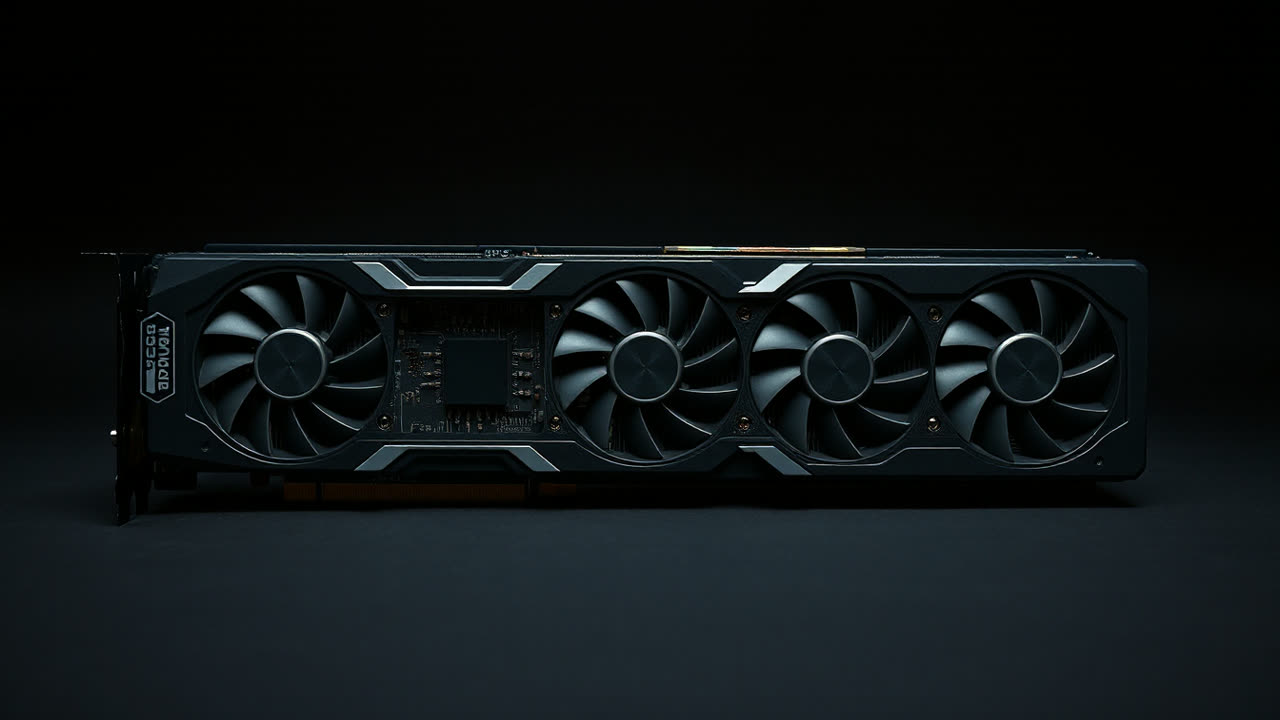
A groundbreaking community effort has successfully unlocked granular VRAM temperature tracking on Nvidia's cutting-edge GeForce RTX 50-series "Blackwell" graphics cards, revealing previously hidden telemetry sensors for individual memory modules. This significant development, spearheaded by Overclock.net member asder00 in collaboration with prominent figures like MSI Afterburner developer Alexey “Unwinder” Nicolaychuk and HWiNFO creator Martin “Mumak” Malík, marks a new era of transparency and control for Nvidia GPU owners. The new Hotspot.dll plugin, initially developed for MSI Afterburner, now provides per-chip DRAM thermal data, alongside existing GPU hotspot, die thermal channel, and memory junction temperatures. This capability extends across the entire Blackwell product stack, from the GeForce RTX 5050 to the top-tier RTX 5090, and is even compatible with GDDR6, GDDR6X, and GDDR7 memory, potentially working on previous RTX 30 and RTX 40 series cards.
The implications of this breakthrough are profound for enthusiasts, overclockers, and even average users. For years, Nvidia has restricted access to such detailed thermal data through its official NVAPI, typically offering only a single "memory junction temperature" which represents the hottest point across all VRAM modules, rather than individual chip readings. This lack of granular insight meant users were often left guessing when diagnosing thermal issues or attempting to optimize performance. Now, with the ability to monitor each of the 16 GDDR7 modules on a GeForce RTX 5090, for example, users can precisely identify thermal bottlenecks. This is crucial because high VRAM temperatures, especially exceeding 92-95°C for GDDR6X and GDDR7, can trigger thermal throttling, leading to significant performance degradation, particularly in memory-intensive workloads like AI model training where bandwidth can drop by 20-30%. Prolonged exposure to such elevated temperatures can also contribute to premature component degradation, calculation errors, or even unexpected out-of-memory errors.
For the overclocking community, this is a game-changer. Precision tuning of memory clocks, often a delicate balance of performance and stability, can now be achieved with unprecedented accuracy. Identifying which specific memory module is running hottest allows for targeted cooling solutions or adjustments, pushing stable overclocks further than before. Beyond performance, the ability to pinpoint an overheating module is invaluable for troubleshooting. Uneven cooler pressure, poorly applied thermal pads, or even a faulty memory chip can now be immediately identified, potentially preventing costly hardware failures and extending the lifespan of an expensive graphics card. As Brazilian hardware modder Paulo Gomes' team previously demonstrated on older GDDR6/GDDR6X cards, individual readings can uncover issues like a single channel reaching 86°C while others remain cooler, highlighting the limitations of a single junction temperature reading.
Nvidia's consistent decision to withhold this granular telemetry data has long been a point of contention. While the company provides NVAPI for general monitoring, it intentionally keeps certain sensor readings, including per-module VRAM temperatures and even the GPU hotspot sensor (which the community also recently unlocked), exclusive to internal diagnostic tools like MODS. This proprietary approach could stem from a desire to control performance narratives, avoid potential warranty claims from users alarmed by high individual module temperatures, or simply maintain a tighter grip on their hardware ecosystem. However, this strategy often leaves users feeling disenfranchised and lacking full control over their premium hardware. The necessity for community-led reverse engineering to access basic diagnostic information highlights a fundamental difference in philosophy compared to rivals like AMD, whose Adrenalin software and `amd-smi` utility generally offer more comprehensive, though not always per-module, thermal data.
The immediate future will likely see rapid integration of this newly unlocked functionality into widely used third-party monitoring tools. HWiNFO's latest beta version (v8.51-6304) already supports individual GDDR7 memory module temperature reporting, demonstrating the swift response of independent developers. AIDA64 is also expected to follow suit. Since MSI Afterburner is an Nvidia partner, its developer, Alexey “Unwinder” Nicolaychuk, cannot officially incorporate such "unsupported" telemetry directly due to legal and commercial restrictions, necessitating the community-developed plugin. This situation places Nvidia in a precarious position. Will they attempt to block these community efforts through driver updates, risking significant backlash from their enthusiast base? Or will they eventually embrace the demand for transparency, perhaps by officially documenting these registers or providing API access in future driver releases? Given the historical reluctance, the latter seems less probable without sustained community pressure. For now, the modding community has once again proven its ingenuity, empowering users with unprecedented insight into the thermal dynamics of their powerful Blackwell GPUs. This development not only enhances the user experience but also underscores the enduring tension between hardware manufacturers' control and the community's relentless pursuit of knowledge and optimization.