Controller Stick Drift: The Simple Cleaning Fix and Industry's Long-Term Challenge
A pervasive issue plaguing PlayStation 5 and Xbox Series X|S controllers, stick drift, often finds a surprising, temporary remedy in thorough cleaning, yet highlights a deeper industry-wide design challenge.
✨ This content was summarized and interpreted by AI; it may contain errors — please verify accuracy with the original sources. Learn more
Listen to this story
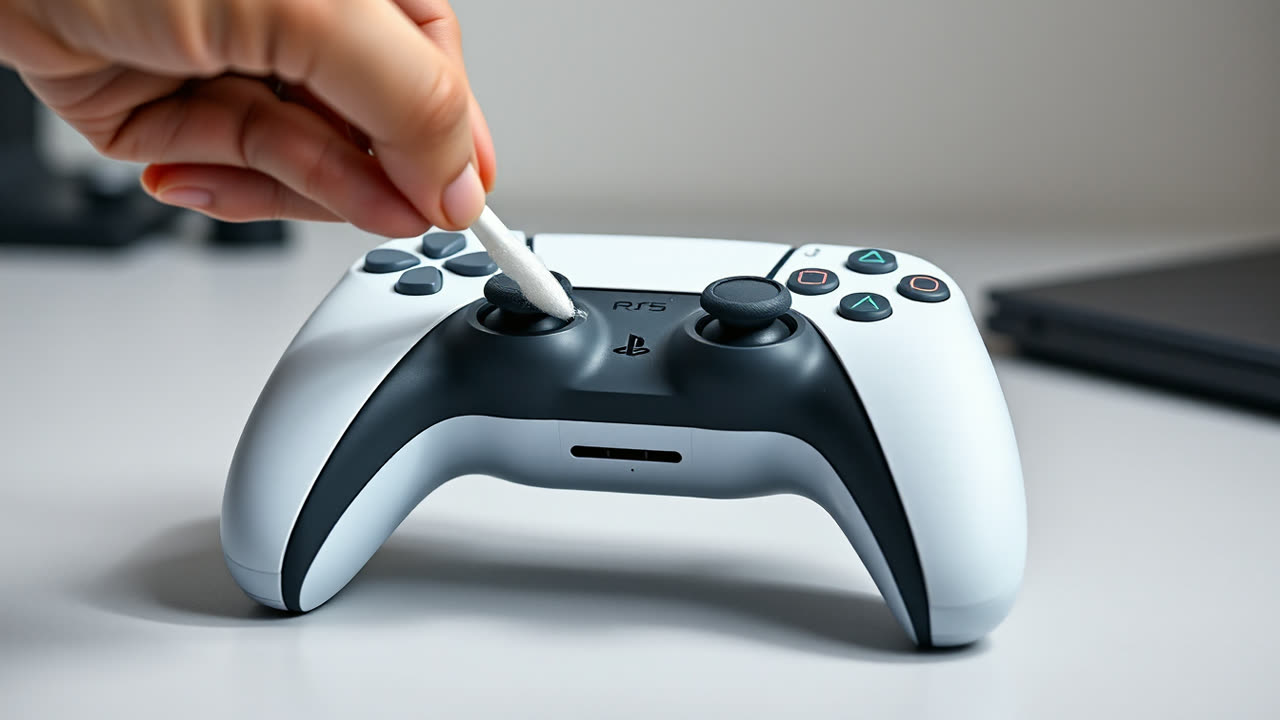
The pervasive issue of controller stick drift, a phantom input plaguing countless PlayStation 5 DualSense and Xbox Series X|S controllers, often finds its surprising remedy not in complex repairs, but in a simple, thorough cleaning. This seemingly minor maintenance task, involving the careful removal of debris and dust from beneath the joystick's housing, can frequently restore precise input, offering a tangible, immediate solution to a problem that has historically led to widespread frustration and costly replacements.
The phenomenon of stick drift manifests as unintended movement within games, where characters wander, cameras pan, or menus scroll without user input. At its core, this malfunction frequently stems from the accumulation of dirt, dust, skin flakes, or other microscopic particles that interfere with the potentiometer-based mechanisms inside the joysticks. These potentiometers, which translate physical stick movement into electrical signals, are highly sensitive; even a tiny obstruction can disrupt their readings, causing the controller to register movement that isn't happening. For both the DualSense and Xbox controllers, the process often involves using isopropyl alcohol and cotton swabs to clean around the base of the joystick, sometimes requiring partial disassembly to access the sensitive internal components more effectively. While a deep clean can breathe new life into a drifting controller, it’s a temporary fix for a persistent design challenge.
This pervasive problem carries significant implications for both consumers and the gaming industry. For users, stick drift represents a tangible financial burden and a source of considerable frustration. A new PS5 DualSense controller typically costs around $70, while an Xbox Wireless Controller hovers around $60-65. Repeated replacements due to drift can quickly add up, especially for avid gamers. Beyond the monetary cost, the disruption to gameplay, particularly in precision-dependent genres like competitive shooters or platformers, can be infuriating, diminishing the overall gaming experience. This issue can even impact accessibility, as unintended inputs make games harder to control for all players.
From an industry perspective, stick drift highlights a fundamental tension between controller durability, cost-effective manufacturing, and consumer expectations. Both Sony and Microsoft have faced scrutiny, with class-action lawsuits filed over stick drift in their respective controllers, mirroring similar legal battles previously waged against Nintendo for its Joy-Con drift issues. These legal challenges underscore a perceived design flaw in the analog stick modules widely used across the industry, often sourced from third-party manufacturers like ALPS. While manufacturers offer warranties, the process can be cumbersome, and many users find themselves outside the warranty period when drift begins, pushing them towards self-repair or replacement. The need for users to resort to cleaning their expensive, relatively new controllers suggests a gap in engineering for longevity under typical gaming conditions.
Historically, controller analog sticks have relied on potentiometers, which are susceptible to wear and tear over time. The constant friction between the moving parts and the resistive material can degrade the sensor, leading to inaccurate readings even without external debris. This mechanical wear is a known limitation of the technology. While cleaning addresses particle ingress, it doesn't solve the underlying issue of mechanical degradation. This contrasts sharply with newer, albeit less common, Hall effect joysticks, which use magnets and electrical conductors to detect position without physical contact, theoretically eliminating wear-related drift. Companies like GuliKit have already integrated Hall effect sensors into their third-party controllers and replacement modules, demonstrating the viability of this more robust technology.
Looking ahead, the prevalence of stick drift will likely accelerate the adoption of more durable analog stick technologies. While cleaning offers a stop-gap for current hardware, the long-term solution lies in a fundamental shift in controller design. The increasing demand for reliability, fueled by consumer frustration and legal pressures, will likely push major manufacturers to explore alternatives to traditional potentiometers. We may see Hall effect sensors become a standard feature in future console generations, or even mid-cycle refreshes, as the technology matures and becomes more cost-effective for mass production. Furthermore, manufacturers might invest in more robust dust-proofing mechanisms or modular designs that allow for easier, user-friendly replacement of stick modules, rather than requiring an entire controller purchase. The era of accepting stick drift as an inevitable byproduct of gaming hardware may be drawing to a close, as both consumer advocacy and technological innovation converge to demand a more resilient and reliable gaming experience.