Corsair's 2026 RMe Series PSUs Introduce ThermalProtect PCIe 5.1 Cable to Prevent GPU Melting
Corsair's 2026 refresh of its mainstream RMe series power supplies introduces a critical, patent-pending safety innovation: the ThermalProtect PCIe 5.1 600W 12V-2x6 cable, engineered to preemptively shut down the GPU if the connector temperature exceeds 65°C, effectively preventing the dreaded melting incidents that have plagued high-power graphics cards.
✨ This content was summarized and interpreted by AI; it may contain errors — please verify accuracy with the original sources. Learn more
Listen to this story
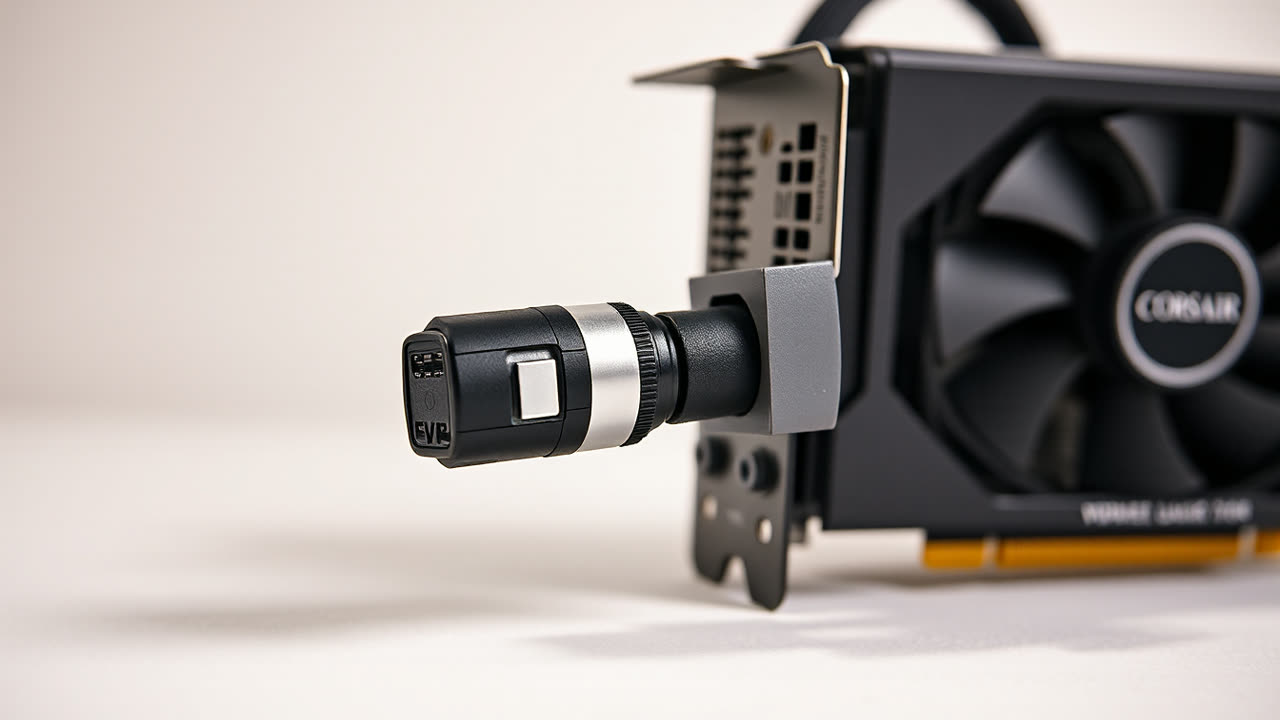
Corsair's 2026 refresh of its mainstream RMe series power supplies introduces a critical, patent-pending safety innovation: the ThermalProtect PCIe 5.1 600W 12V-2x6 cable, engineered to preemptively shut down the GPU if the connector temperature exceeds 65°C, effectively preventing the dreaded melting incidents that have plagued high-power graphics cards. This proactive hardware-level protection, paired with Cybenetics Platinum-certified efficiency and a generous 500W fanless operating window, positions the RM1000e (2026) as a significant advancement in power delivery safety and performance, available at a launch price of $179.99 in the US. The unit is also backed by a seven-year warranty.
This development matters immensely for both users and the broader PC hardware industry. For consumers, particularly those investing in top-tier GPUs like the RTX 4090 or upcoming RTX 50-series, the ThermalProtect cable offers unprecedented peace of mind. The persistent issue of 12VHPWR (and its successor, 12V-2x6) connector melting has been a source of anxiety and costly hardware damage, often stemming from improper seating or excessive cable bending near the connector. While the ATX 3.1 standard addressed some of these mechanical flaws with shorter sense pins and longer power pins in the 12V-2x6 connector, which prevent power delivery if not fully seated, real-world incidents have continued to occur. Corsair's solution moves beyond these passive safeguards by directly monitoring the thermal state of the connection. The inclusion of dual-tone connectors further assists users in visually confirming a secure plug, mitigating a primary cause of previous failures. This layered approach to safety not only protects expensive graphics cards and power supplies but also reduces potential system downtime and the frustration of dealing with warranty claims.
From an industry perspective, Corsair's ThermalProtect technology sets a new, aggressive benchmark for PSU safety. It represents a tangible, hardware-based answer to a problem that has, for too long, fallen disproportionately on the end-user. While other manufacturers like ASRock with its "TempGuard" and Gigabyte with "T-Guard" have also introduced temperature-sensing cables, the effectiveness and specific implementation vary. An ASRock TempGuard cable, for instance, was reportedly involved in a melting incident, raising questions about sensor placement or threshold settings. Gigabyte's T-Guard, conversely, aims to reduce power rather than immediately shut down, allowing users to save work. MSI has even teased PSUs with "proactive and instant protection" that monitors individual wires for even load distribution, suggesting a highly granular approach. Corsair's explicit 65°C shutdown threshold is a clear, decisive action, contrasting with solutions that merely alert or reduce power. This competitive landscape in active protection features signals a broader industry shift towards integrated safety, potentially driving future revisions of ATX and PCIe power standards to mandate such intelligent monitoring.
Beyond the headline safety feature, the RM1000e (2026) also boasts Cybenetics Platinum-certified efficiency, signifying a high level of power conversion prowess. This means the PSU operates at 90% efficiency at 20% load, 92% at 50% load, and 89% at 100% load. Such high efficiency translates directly into less wasted energy dissipated as heat, which in turn contributes to cooler internal component temperatures, quieter fan operation, and a potentially longer lifespan for the PSU and other system components. The inclusion of a 500W fanless mode, or "Zero RPM Mode," leverages this efficiency, allowing the fan to remain completely off under light to moderate loads, ensuring silent operation during less demanding tasks. This feature is a hallmark of premium PSUs, offering a quieter computing experience, and is a significant upgrade from earlier RMe series units. The fully modular design and compact 140mm chassis further enhance build flexibility and cable management, which are crucial for modern, often space-constrained, PC builds.
Looking ahead, the integration of active thermal protection directly into PSU cables, as pioneered by Corsair's ThermalProtect, represents a pivotal moment for power delivery in high-performance computing. With the continuous increase in GPU power demands, future ATX and PCIe specifications may move towards mandating such intelligent safety mechanisms, rather than relying solely on mechanical design improvements. Consumers are likely to increasingly demand these features, making them a standard expectation for premium power supplies. The next frontier might involve even more sophisticated per-pin current monitoring, or software interfaces that provide real-time thermal telemetry and user-configurable safety thresholds, further enhancing diagnostic capabilities and user control. As high-wattage GPUs become more common, the focus will undoubtedly shift from simply delivering raw power to ensuring that power is delivered safely, reliably, and with intelligent foresight against potential failure points. Corsair's RM1000e (2026) is not just a power supply; it's a statement about the future of PC component safety, offering a robust solution to a pressing industry challenge.