Deep-Diving Argo Floats to Monitor 98% of World's Oceans by 2028
A groundbreaking initiative aims to deploy a fleet of advanced autonomous drones capable of withstanding extreme pressures to revolutionize understanding of global ocean's role in climate regulation.
✨ This content was summarized and interpreted by AI; it may contain errors — please verify accuracy with the original sources. Learn more
Listen to this story
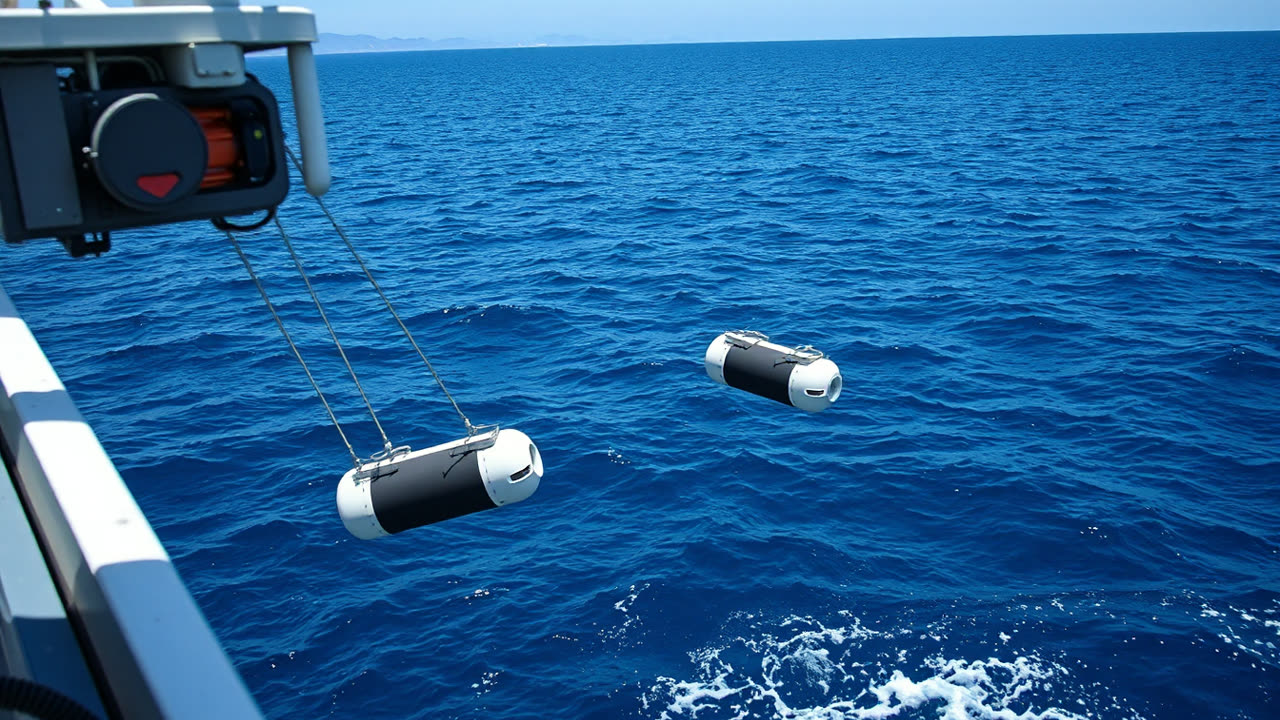
A groundbreaking initiative aims to deploy a fleet of deep-diving Argo floats capable of monitoring 98% of the world's oceans by 2028, extending unprecedented observational reach into the abyssal plains. These advanced autonomous drones are engineered to withstand the crushing pressures of the deepest ocean trenches, promising to revolutionize our understanding of the global ocean's role in climate regulation, marine ecosystems, and geological processes. The existing Argo program, which has deployed over 4,000 profiling floats, primarily monitors the upper 2,000 meters of the ocean, providing invaluable data on temperature and salinity. However, the vast majority of the ocean's volume, particularly below 2,000 meters, remains largely unobserved, representing a critical blind spot in climate models and oceanographic research.
The significance of this deep-ocean expansion cannot be overstated for climate science. The deep ocean acts as a massive heat and carbon sink, absorbing a substantial portion of anthropogenic heat and CO2 from the atmosphere. Without comprehensive data from these depths, scientists struggle to accurately quantify the ocean's heat uptake efficiency, predict future warming trends, and understand the long-term impacts of climate change on ocean circulation patterns. The new deep Argo floats, designed to descend to depths of 6,000 meters, will provide continuous, high-resolution profiles of temperature, salinity, and potentially other biogeochemical parameters, revealing how heat and carbon are sequestered and transported in the deep ocean. This granular data will refine climate models, reduce uncertainties in global energy budgets, and offer clearer insights into the Earth's climate sensitivity. For instance, understanding deep ocean currents is crucial for predicting changes in sea level and the distribution of marine life, which are currently extrapolated from limited, sporadic ship-based measurements.
Technologically, these deep-diving floats represent a significant leap from their predecessors. Conventional Argo floats typically employ buoyancy engines that rely on hydraulic pumps to move oil between an internal reservoir and an external bladder, changing the float's density to ascend or descend. Achieving 6,000-meter depths requires vastly more robust pressure housings, advanced materials, and refined buoyancy control systems capable of operating under pressures exceeding 600 atmospheres. The engineering challenges include developing batteries that maintain performance in extreme cold and pressure, and designing sensors that can accurately measure properties without being compromised by the harsh environment. The expansion also involves equipping some floats with biogeochemical sensors to measure oxygen, pH, nitrates, and chlorophyll, providing a multidimensional view of deep-sea ecosystems and their responses to environmental shifts. This contrasts sharply with the limited scope of earlier generations, which primarily focused on physical oceanography in the upper layers.
The current global ocean observing system, while extensive in the upper ocean, relies heavily on a patchwork of technologies for deep-sea monitoring, including expensive research vessel expeditions, remotely operated vehicles (ROVs), and isolated cabled observatories. These methods are either spatially or temporally limited, making it difficult to capture long-term trends or widespread phenomena. The Deep Argo program offers a cost-effective and scalable solution for sustained, global deep-ocean observation, filling critical data gaps that current systems cannot address. By providing continuous, year-round data from previously inaccessible regions, these floats will offer an unparalleled baseline for detecting subtle changes in deep-ocean properties, which are often precursors to larger-scale climate shifts.
Looking ahead, the deployment of a fully operational Deep Argo array by 2028 will unlock new frontiers in oceanographic research. Beyond climate science, the data will inform studies on deep-sea biodiversity, hydrothermal vent systems, and the geological processes shaping the ocean floor. The enhanced resolution of deep-ocean circulation patterns will also benefit industries such as offshore energy exploration and subsea cable routing, providing more accurate environmental intelligence. However, challenges remain, including the logistical complexities of deploying thousands of these advanced floats across vast ocean basins, ensuring their longevity in extreme environments, and developing robust data management and assimilation systems to handle the unprecedented volume of information. International collaboration, a cornerstone of the existing Argo program, will be even more critical for the success and sustainability of the Deep Argo initiative. The insights gleaned from these robotic explorers will undoubtedly reshape our understanding of Earth's largest and least-explored frontier, offering crucial foresight into our planet's future.