DeepSeek Enters AI Chip Race Amid Geopolitical Tensions
Chinese AI giant DeepSeek, known for its cost-effective models, is reportedly developing its own AI chips, a strategic move influenced by escalating U.S. export controls.
✨ This content was summarized and interpreted by AI; it may contain errors — please verify accuracy with the original sources. Learn more
Listen to this story
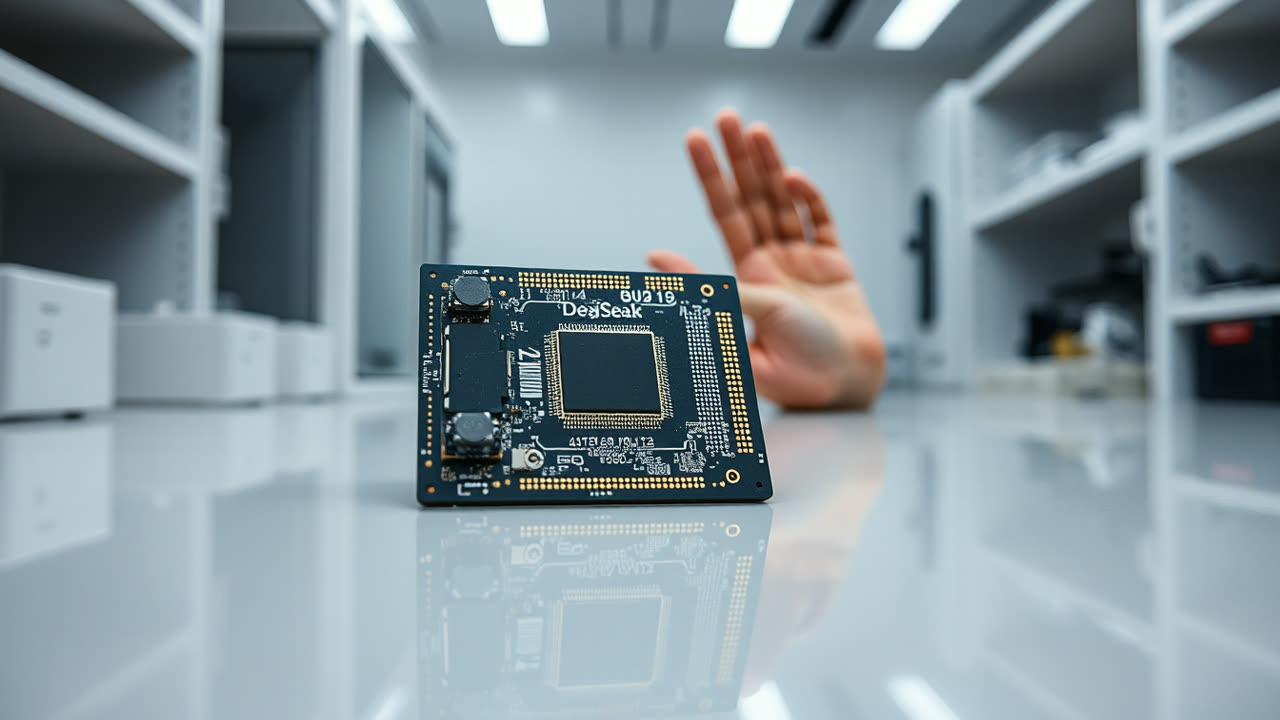
DeepSeek, the Chinese AI company renowned for its cost-effective large language models, is reportedly embarking on the development of its own AI chips. This significant strategic pivot, initially reported by Reuters, indicates a move towards vertical integration, aiming to produce silicon specifically for AI inference—the process of running trained models. The initiative seeks to lessen DeepSeek's reliance on chips from external providers, including industry giants like Nvidia and Huawei.
This venture comes as DeepSeek has already demonstrated an impressive ability to develop powerful AI models, such as DeepSeek-V3, at a fraction of the cost of its Western counterparts. The company achieved this through architectural innovations like Mixture-of-Experts (MoE) and efficient training methodologies, reportedly using just 2,000 Nvidia H800 GPUs for a training cost of approximately $5.57 million, and offering inference services at a significantly lower price point than competitors. Bolstering this ambition, DeepSeek recently closed a massive $7.4 billion funding round, pushing its valuation past $50 billion.
DeepSeek's foray into chip manufacturing is a clear response to the escalating U.S. export controls, which have severely restricted China's access to advanced AI chips and crucial manufacturing equipment. For DeepSeek, developing in-house chips promises greater control over its supply chain, potential cost reductions, and performance optimization tailored to its models. It also mirrors a broader trend among leading global AI developers, with companies like OpenAI and Anthropic reportedly exploring similar in-house silicon initiatives.
For the broader Chinese AI industry, this move underscores a determined push for technological self-sufficiency amidst geopolitical tensions. While Chinese firms have already adapted by optimizing AI models for domestically available chips, the leap into chip design and manufacturing presents formidable challenges, including high R&D costs, complex manufacturing processes, and a persistent talent gap. Despite China's significant progress in chip design, a lag in cutting-edge manufacturing capabilities remains a hurdle. DeepSeek's success or failure will be a critical barometer for China's long-term ability to navigate and overcome global technological chokepoints.