DIYer Builds 'World's Worst' USB Drive from Apollo-Era Core Memory Amidst RAM Crisis
A maker known as 'polymatt' has ingeniously, if impractically, constructed a functional 8-byte USB drive using hand-threaded magnetic core memory, a relic from the Apollo era, amidst soaring RAM prices.
✨ This content was summarized and interpreted by AI; it may contain errors — please verify accuracy with the original sources. Learn more
Listen to this story
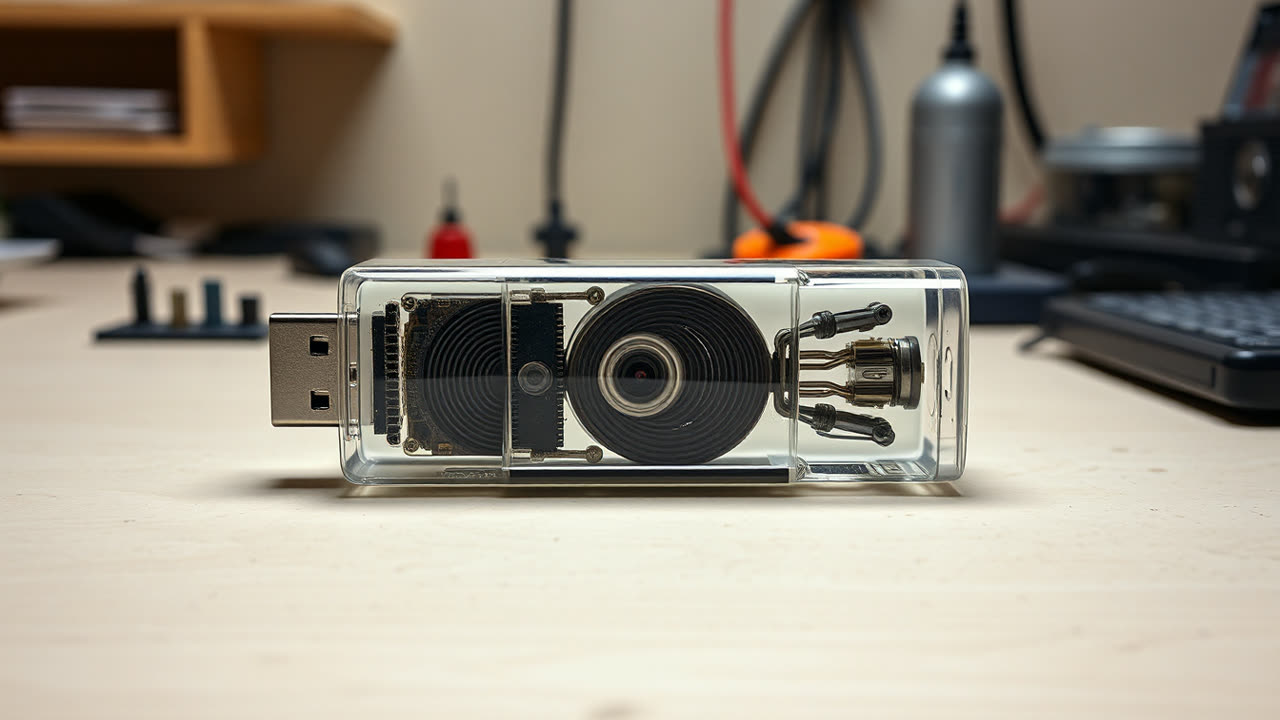
Amidst the deepening "RAMpocalyse" driving memory prices to unprecedented highs, a singular DIY project has emerged, demonstrating an ingenious, albeit impractical, approach to data storage. A maker known as "polymatt" has successfully constructed a functional USB drive utilizing hand-threaded magnetic core memory, a technology dating back to the Apollo era. This remarkable creation, detailed in a video walkthrough, leverages salvaged Russian computer parts, alongside modern home CNC and 3D printing equipment, to resurrect a computing relic.
The project showcases a beautifully crafted device, encased in an enclosure filled with silicone oil, housing 64 tiny iron rings, each storing a single bit of data. This translates to a mere 8 bytes of total storage capacity, making it, in the maker's own words, the "world's worst USB drive" when judged by capacity-to-weight ratio. Magnetic core memory, while historically significant for its role in systems like the Apollo spacecraft guidance computers, operates on the principle of magnetic polarity for non-volatile storage, retaining data even without power.
While aesthetically impressive and a fascinating educational tool, this retro endeavor offers no tangible solution to the current AI-induced memory crisis. The demand for high-bandwidth memory (HBM) from AI data centers has caused DDR5 and DDR4 RAM prices to surge dramatically, with projections indicating continued increases of 40-50% in Q3 2026 and further into 2027 and 2028. Major memory manufacturers are prioritizing AI infrastructure, leading to severe shortages and price hikes for consumer-grade RAM and, consequently, for PCs and other devices. Polymatt's 64-bit USB drive, while a testament to DIY spirit and historical computing, underscores the vast chasm between hobbyist innovation and the colossal memory demands of modern artificial intelligence. It serves as a stark reminder that while ingenuity can revive the past, it cannot easily bridge the technological divide to solve contemporary industrial-scale challenges.