DLSS 5 Mod on Ampere GPUs: Catastrophic Performance Confirms AI Upscaling's Hardware Lock
An unofficial DLSS 5 modification on NVIDIA's RTX 30-series cards results in unplayable single-digit frame rates, starkly demonstrating that bleeding-edge AI upscaling remains fundamentally tied to specialized, next-generation hardware.
✨ This content was summarized and interpreted by AI; it may contain errors — please verify accuracy with the original sources. Learn more
Listen to this story
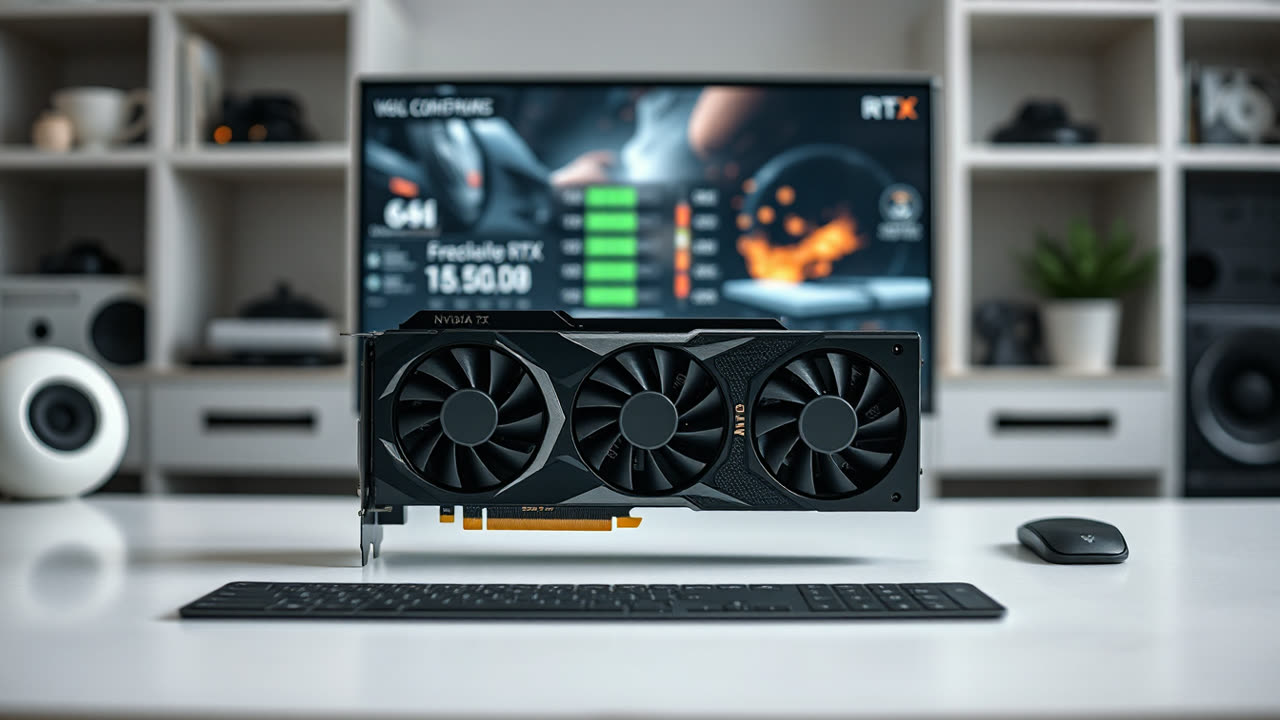
Frame rates plummeting to single digits on older Ampere GPUs when attempting to run a purported DLSS 5 mod underscore a stark reality: bleeding-edge AI upscaling technology remains inextricably tied to specialized hardware, even as community efforts strive to bridge generational gaps. This unofficial modification, which replaces a standard DLSS DLL with one purportedly containing features of a future DLSS iteration, allows owners of NVIDIA's RTX 30-series cards to enable what is colloquially referred to as "DLSS 5" functionality. While the mod does technically activate the newer code paths on Ampere, the performance hit is catastrophic for the vast majority of games, with frame rates frequently collapsing to unplayable single digits. Even in highly optimized, best-case scenarios with minimum in-game settings, high-end Ampere GPUs struggle to achieve more than 30-40 frames per second. This stark performance disparity highlights the fundamental architectural differences that separate current and next-generation GPU capabilities, particularly concerning advanced AI-driven rendering techniques.
The core news here is less about the functionality of a "DLSS 5" that NVIDIA has yet to officially announce, and more about the profound limitations of attempting to force future-gen features onto current-gen hardware. NVIDIA's DLSS 3, introduced with the Ada Lovelace architecture (RTX 40 series), notably brought Frame Generation, a technique that interpolates entirely new frames using AI, significantly boosting perceived frame rates. This capability is fundamentally reliant on the Optical Flow Accelerator (OFA) found in Ada Lovelace GPUs, a dedicated hardware component designed to analyze consecutive frames and motion vectors with extreme efficiency. Ampere GPUs, while powerful and equipped with Tensor Cores for AI acceleration, lack this specific, advanced OFA unit, meaning any attempt to replicate Frame Generation on them must fall back to less efficient, software-driven or general-purpose compute methods. The abysmal frame rates observed with the DLSS 5 mod on Ampere precisely illustrate this hardware bottleneck, demonstrating that the computational overhead without the specialized OFA is simply too high to be practical.
This situation matters immensely for users, particularly those who invested heavily in RTX 30-series cards just a few years ago. There's a natural desire to extend the lifespan of high-end hardware and access the latest features. The mod offers a glimpse, however fleeting and unplayable, into what future DLSS versions might entail, potentially including enhanced image quality, more sophisticated upscaling algorithms, or further advancements in frame generation. For the user base, the mod serves as a sobering confirmation that while software can be flexible, fundamental hardware limitations often create insurmountable barriers to true next-generation performance. It quashes hopes for a simple software update to magically unlock Ada Lovelace-level frame generation on Ampere, pushing users towards new hardware for the full DLSS 3/3.5 experience.
From an industry perspective, this development reinforces NVIDIA's strategy of tying significant performance uplifts to new hardware generations through proprietary, architecture-specific accelerators. While DLSS 2 and its subsequent iterations (up to 3.5, sans Frame Generation) are widely compatible across RTX GPUs thanks to their reliance on Tensor Cores, the most impactful performance feature—Frame Generation—remains an RTX 40-series exclusive. This exclusivity incentivizes upgrades and differentiates NVIDIA's latest offerings from their predecessors and competitors. The existence of a mod, however flawed, also highlights the ongoing cat-and-mouse game between hardware manufacturers and the enthusiast community, with the latter constantly probing the limits of official support.
Comparing this to rivals, AMD's FidelityFX Super Resolution 3 (FSR 3) offers a stark contrast in its approach to frame generation. FSR 3 is designed to be hardware-agnostic, running on a much broader range of GPUs, including older AMD Radeon cards, NVIDIA GeForce cards (down to GTX 10 series), and even Intel Arc GPUs. While FSR 3's frame generation might not always match the visual fidelity or input latency optimization of DLSS 3 in every scenario, its wide compatibility offers a compelling alternative for users not on the latest NVIDIA hardware. Similarly, Intel's XeSS upscaling technology also boasts broader hardware compatibility, utilizing either XMX units on Arc GPUs or DP4a instructions on a wider array of modern GPUs from all manufacturers. The "DLSS 5 mod" saga underscores the differing philosophies: NVIDIA's deep integration of AI features with specific hardware versus AMD and Intel's broader, more software-centric compatibility.
Looking ahead, the trajectory of AI upscaling and frame generation points towards continued reliance on specialized hardware for optimal performance and quality. While future DLSS iterations will undoubtedly bring further refinements to image reconstruction and potentially new AI-driven rendering techniques, the core Frame Generation technology is likely to remain tethered to the OFA or its successors. NVIDIA may eventually introduce more efficient software fallbacks or less demanding versions of frame generation for older architectures, but these would likely come with significant compromises in quality or performance compared to the dedicated hardware solution. The constant push for higher resolutions and frame rates, combined with increasingly complex game worlds, ensures that the role of AI upscaling will only grow. However, the "DLSS 5 mod" debacle serves as a clear indicator that while software can enable, hardware ultimately dictates the practical ceiling of performance, cementing generational divides in gaming technology for the foreseeable future.